
Science Rocks!
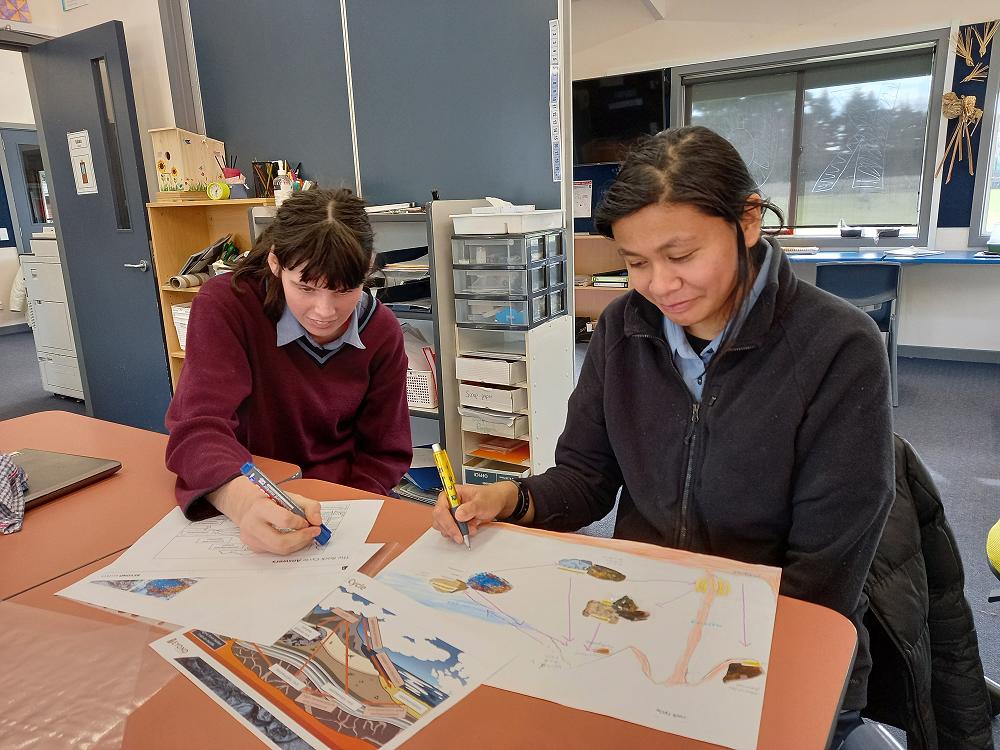
The rock cycle study by Crystal and Camille
In Science we learned about the Rock Cycle. We examined different types of rocks in the science lab. We watched videos and Youtube clips. We found out that there are three main types of rock; sedimentary, metamorphic and igneous. Rocks continuously change. They are eroded and weathered by wind and rain. They are transported from the top of the mountain and are formed on or near the Earth’s surface, eventually becoming sedimentary rock . Sedimentary rock has undergone compaction and cementation to make the layers we see.
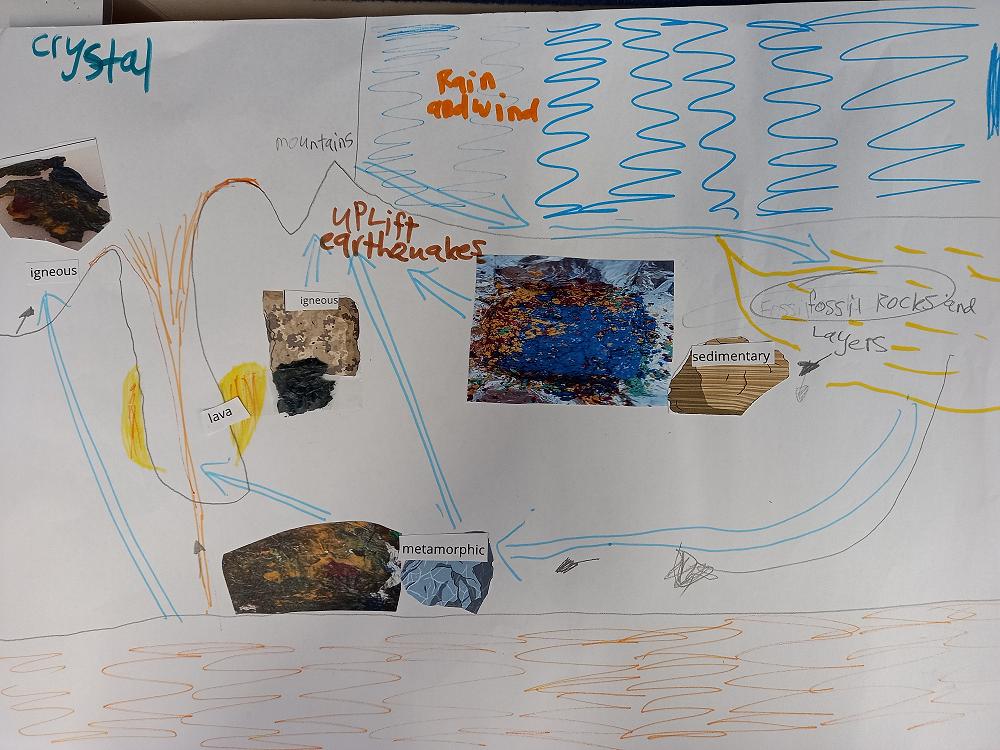
Igneous and metamorphic rocks are formed deep within the Earth. They are made from high temperature and pressure. When earthquakes and volcanoes happen the rocks that have been formed in the earth come up to the surface. Then that is where they are weathered and eroded from the wind and rain and transported back down to be deposited and become sedimentary rock and so the cycle continues.
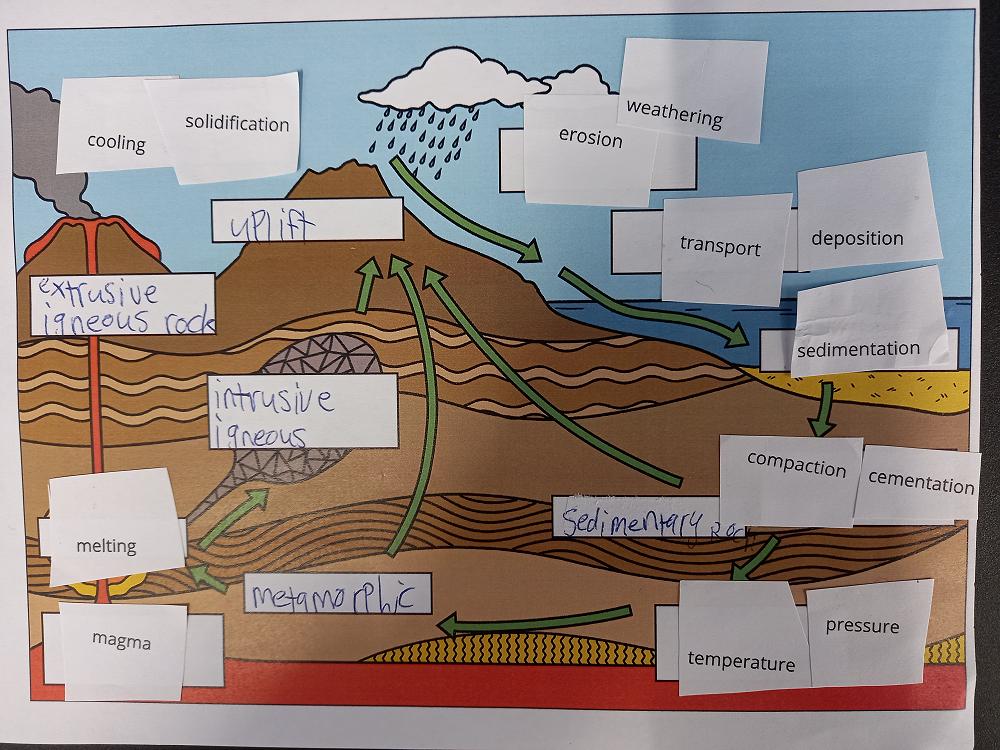
We discovered that rocks can change from igneous to sedimentary to metamorphic, but this is not done in a year or two. It takes millions of years for this process to happen.
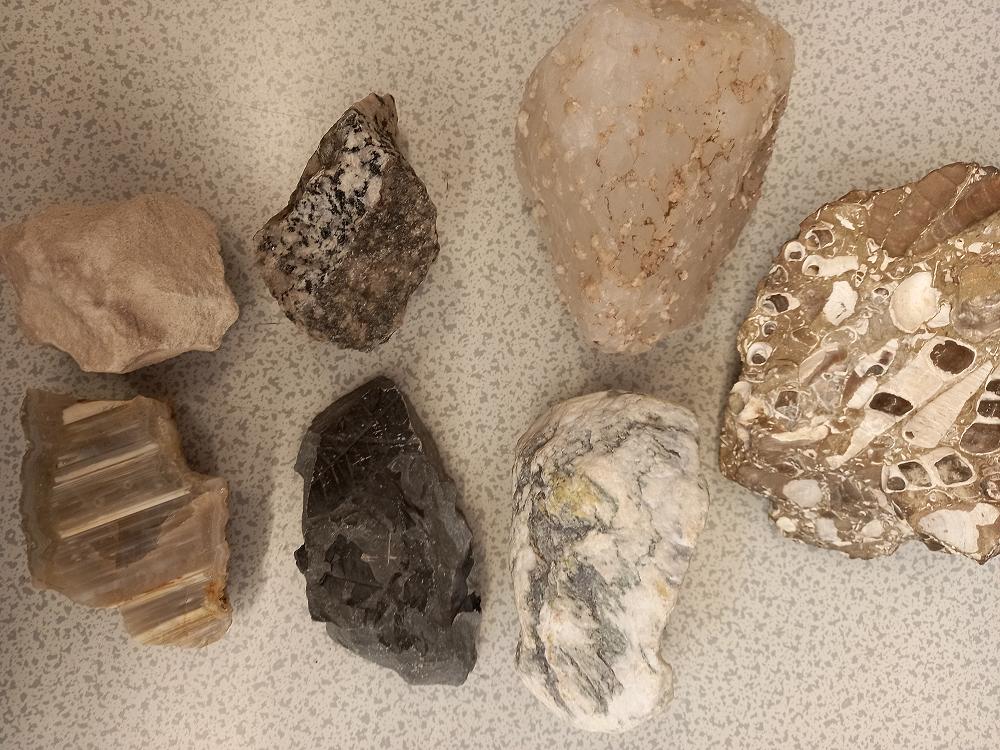
Rocks from the Waimakariri are mainly greywacke which is both a sedimentary rock.and a metamorphic rock as it has undergone both processes. The amazing rocks at Castle Hill are limestone which are a sedimentary rock. Example of igneous rock found in New Zealand are basalt, granite and obsidian and a metamorphic rock example is schist and quartzite.
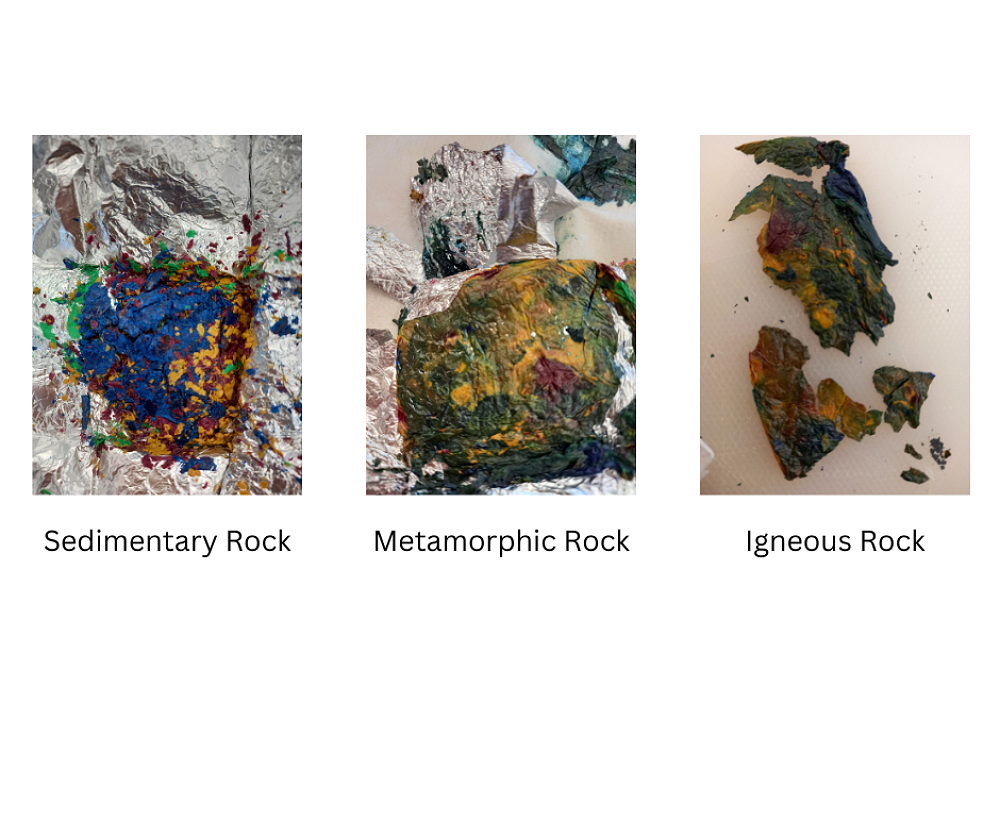
We did an experiment with wax crayons to help us understand how the different types of rocks are formed. First we grated four different colours of crayon. We piled the layers onto tin foil and folded it into a packet. We hit the packet with our fists. This hitting action was to compact and cement so we had a representation of sedimentary rock.
Next we held the packet in our hands and pressed firmly to make a metamorphic rock that had been heated through the pressure of our hands. Lastly we popped the tin foil packet into a jug of very hot water for one minute. This provided a very high heat.Then we applied pressure to represent igneous rock.
We crumbled the igneous rock so we could see how the rock cycle continues because rock gets broken down and weathered which represents the formation of new sediments being formed.
We made a poster to show what we learned. We have learned a lot about rocks!.