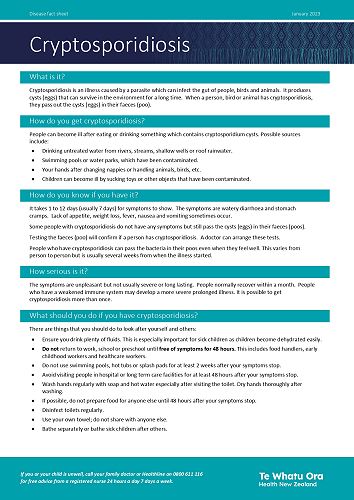

Cryptosporidiosis: Advice From Te Whatu Ora
With reported cases of Cryptospiridium in the wider Queenstown community, Te Whatu Ora has provided our Kura with the following information and guidelines.
What is it?
Cryptosporidiosis is an illness caused by a parasite which can infect the gut of people, birds and animals. It produces cysts (eggs) that can survive in the environment for a long time. When a person, bird or animal has cryptosporidiosis, they pass out the cysts (eggs) in their faeces (poo).
How do you get cryptosporidiosis?
People can become ill after eating or drinking something which contains cryptosporidium cysts. Possible sourcesinclude:
- Drinking untreated water from rivers, streams, shallow wells or roof rainwater.
- Swimming pools or water parks, which have been contaminated.
- Your hands after changing nappies or handling animals, birds, etc.
- Children can become ill by sucking toys or other objects that have been contaminated.
How do you know if you have it?
It takes 1 to 12 days (usually 7 days) for symptoms to show. The symptoms are watery diarrhoea and stomach cramps. Lack of appetite, weight loss, fever, nausea and vomiting sometimes occur.Some people with cryptosporidiosis do not have any symptoms but still pass the cysts (eggs) in their faeces (poos). Testing the faeces (poo) will confirm if a person has cryptosporidiosis. A doctor can arrange these tests.People who have cryptosporidiosis can pass the bacteria in their poos even when they feel well. This varies from person to person but is usually several weeks from when the illness started.
How serious is it?
The symptoms are unpleasant but not usually severe or long lasting. People normally recover within a month. People who have a weakened immune system may develop a more severe prolonged illness. It is possible to get cryptosporidiosis more than once.
What should you do if you have cryptosporidiosis?
There are things that you should do to look after yourself and others:
- Ensure you drink plenty of fluids. This is especially important for sick children as children become dehydrated easily.
- Do not return to work, school or preschool until free of symptoms for 48 hours. This includes food handlers, early
- childhood workers and healthcare workers.
- Do not use swimming pools, hot tubs or splash pads for at least 2 weeks after your symptoms stop.
- Avoid visiting people in hospital or long term care facilities for at least 48 hours after your symptoms stop.
- Wash hands regularly with soap and hot water especially after visiting the toilet. Dry hands thoroughly after washing.
- If possible, do not prepare food for anyone else until 48 hours after your symptoms stop.
- Disinfect toilets regularly.
- Use your own towel; do not share with anyone else.
- Bathe separately or bathe sick children after others.
If you or your child is unwell, call your family doctor or Healthline on 0800 611 116 for free advice from a registered nurse 24 hours a day 7 days a week.
Is treatment required?
People with cryptosporidiosis usually get better without treatment, however medication may be prescribed to relieve symptoms. Drink plenty of fluids. If the person sick is a child, seek health advice early for any of the following:
- The child appears drowsy or confused.
- The child is not drinking fluids or cannot hold fluids down.
- If there is blood in the child’s diarrhoea or vomit.
- If the child has severe abdominal (tummy) pain.
- If the child’s illness is getting worse or not settling.
If concerned, take the child back to the doctor or call Healthline on 0800 611 116 for free advice.
Top Tips for Avoiding Gastro Enteric Illness
Always wash and dry hands thoroughly, especially:
- After going to the toilet.
- Changing a child’s nappy.
- Before and after preparing any food.
- Touching animals or animal poo.
- Handling soil, compost or manure.
- Always thoroughly cook pork, chicken and mince beef products (until the juices run clear).
- Keep raw meat separate from ready to eat foods during storage and preparation.
- Wash chopping boards and any other utensils thoroughly after preparing food, especially raw meat. Wash fruit and vegetables, including bean sprouts before eating.
- Frozen imported berries should be boiled or heated to over 85°C for 1 minute before eating.
- High risk foods include:
- Raw (unpasteurised) milk and raw milk products.
- Undercooked pates and liver products.
- Shellfish collected from urban areas.
- Untreated water from rivers, streams, shallow wells or rainwater tanks may contain bacteria and parasites. If you need to drink untreated water e.g. when camping or during an emergency, boil it for at least one minute before use. If you cannot boil water, add 5 drops of basic unperfumed bleach to 1 litre of water (or half a teaspoon to 10 litres) and leave for at least 30 minutes before drinking.
- Avoid swimming in the sea or rivers for 48 hours after significant rainfall.
Gallery