About Te Oraka Shirley Intermediate School
Shirley Intermediate – A Community School
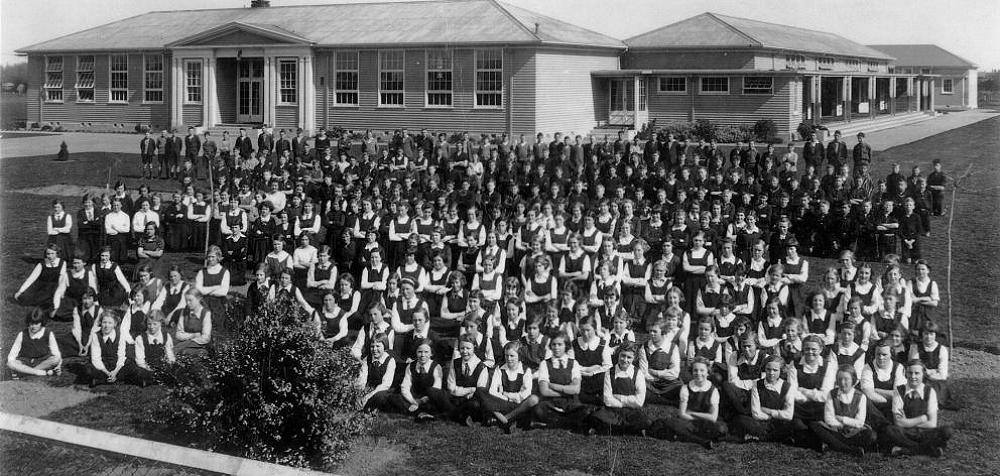
Founded in 1934, effectively detaching the “form one and two year” pupils from Shirley Primary School, Shirley Intermediate School is the oldest intermediate school in Christchurch. Some local families who have had three or four generations of children attend Shirley IntermediateSchool. Our school was on the edge of the city with farmland on the northern side of Shirley Road. In 1950 SIS pupils compiled an in-depth archive of the district. This substantial pen and ink time is on display at Avebury House - a local archival centre.
We are an embedded part of our community. The Christchurch earthquakes of 2010 and 2011 decimated parts of our traditional catchment. Richmond School and Hammersley ParkSchool subsequently closed. One secondary school - Marian College - was relocated away, and two more - Shirley Boys High School and Avonside Girls moved to their new combined site in 2019. Pareawa Banks Avenue School will be moving to the former SBHS site adjacent to our school mid 2022.
Further afield, Windsor and Burwood schools merged to become Waitakiri School. St Paul’s Catholic School no longer exists, having merged with the former Our Lady of Fatima School to become St Francis of Assisi School. Of our ten neighbouring schools only Shirley Primary and SIS remain unchanged. At SIS our roll has hovered around 150 during 2021, slightly up from 2020. Currently, our roll is sitting at 200.
Our long-awaited building programme is underway, and we have appointed almost a complete change of staff over the past two years. Four teachers are new to our school in 2022. The addition of a permanent Learning Support Coordinator to our staff from 2021 (thanks to our Kahui Ako allocating a permanent LSC to our school) has significantly increased our ability to gain support for our pupils who need support.
SIS is also well placed to reap the benefits of collaboration with local schools - the Ōtākaro Kahui Ako. All of these factors augur well for the future of SIS.
Our Community. The local community is varied in socio-economic terms with residents covering a wide range of vocations, education levels, and ethnicities. SIS- level 4 under the former “decile” system, draws pupils mainly from Shirley Primary and Pareawa Banks Avenue School.
In recent years about 25% of our children claim Māori heritage, and about 12% are of Pacific Island heritage – mainly Samoan. A significant number of students are recent immigrants to New Zealand – including some of European or African origin. Filipino children have a growing presence. We are not part of the international fee-paying students schemes for international students .
Special Character - Te Tahu Rua Reo - We have a bilingual unit - Te Tahu Rua Reo (TTRR) - in which the children have “Level Two”delivery of Maori language. This means the curriculum is delivered in Te Reo Maori for 51%-80% of the time. The TTRR unit was established fifteen years ago in response to requests from St Albans School to provide learning in Te Reo for the children from their bilingual class after Year Six 6. TTRR was able to meet the needs of the St Albans children at that time. In recent years the number of providers of learning in Te Reo has grown in Christchurch. There are now at least two other providers of level one Te Reo within 4km of our school.
Originally delivering at Level One (80 to 100% in Te Reo) the children in recent years have generally entered the class with a lower level of Reo fluency. Consequently there has been a reduction in the level of Te Reo Maori used in class to Level Two (51- 80%), and more recently to LevelThree (31 to 50%). The MOE funding of the class has been reduced to reflect this change.
In 2021 the number of enrolments in TTRR meant we needed to have two kaiako. We assigned teacher Ang Reeves - from “mainstream” - to work with Matua Thomas Parata in TTRR. They had some children who were not in TTRR but who were willing (with parent permission) to being the TTRR class, but without the requirement to be taught at level 2 in Te Reo. This class has operated extremely well in 2021 - from a perspective of class management and student achievement. Therefore we are emulating this in 2022 with the final enrolment numbers sitting currently at 42.
The Board of Trustees remains committed to providing specific Maori Language instruction at a suitable immersion level to meet the needs of our community.
We have a policy on “Recognition of Cultural Diversity”which includes a section on Maori and Te Tiriti o Waitangi. Every inquiry unit plan for classes includes a section for Maori dimensions, and kupu (words) Maori.
Pasifika Community – At the beginning of each school year (for the past sixteen years) the Pasifika families at SIS have been consulted about their desires for their/our children. This consultation has usually been very well attended and has involved a shared meal format with a focus on being introduced to other Pasifika people at SIS, meeting the teachers, and having the opportunity to contribute to Pasifika plans for the year. Requests from whanau often include such things as a homework centre and a Pasifika club. We have occasionally established a Pasifika cultural group, but establishing a homework club has not gathered tangible support.
The role modelling and leadership of the Pasifika students has often been positively disproportionate to their number. Our school is committed to ensuring that our Pasifika students and whanau feel valued and included at SIS. The progress of our Pasifika students has usually been lower than our New Zealand European pupils, but higher than Māori achievement. At times, the small number of Pasifika pupils within particular cohorts has made it statistically difficult to make meaningful comparisons with other groups of ākonga. Our Cultural Diversity policy includes a specific section on Pasifika.
Ethnic Diversity - Our children represent a number of different ethnic groups:● Māori● Pasifika● Filipino● Indian
We provide opportunities for recognising cultural diversity through a range of school initiatives. Our initial school-wide classroom inquiry units for the first term of each year are “Whanaungatanga” and “Journeys”. Each of these units provide opportunities for children and teachers to find out about familial and cultural stories, the groups we belong to, and the journeys of our families. We use these initial units of work to cement relationships and our independent and collective identities.