
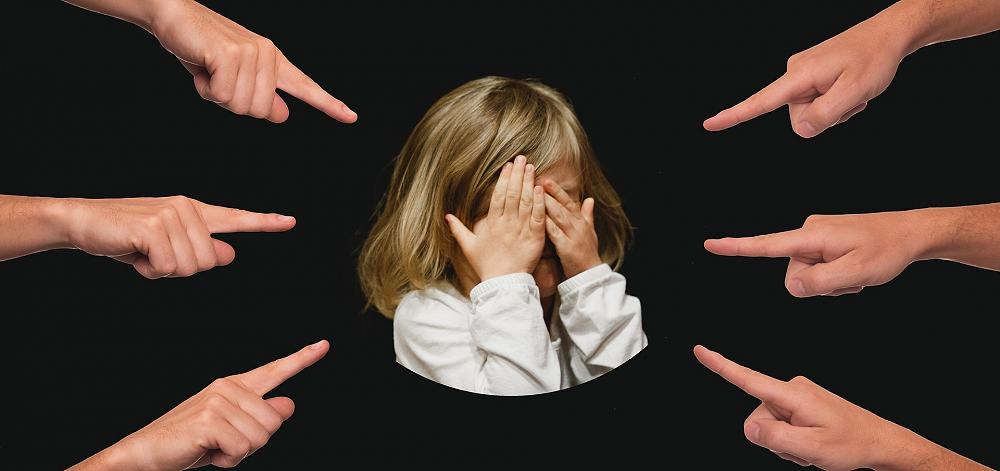
Bullying - Not here thanks!
At a family dinner over the weekend, I was saddened to hear my niece talking candidly about her experience of being regularly bullied at her school.
It was something I later reflected on - the feelings that it generated in me and the protective mode it sent me into - my immediate automatic response was emotive and vengeful - so not very much use in terms of problem-solving! I am glad I managed to keep my mouth shut (rare occurrence). I also reflected on the school's role. I know the principal and I know he would not be happy to hear this story and I know that the school will have procedures in place to deal with bullying. I wondered if he even knows?
I do not want to be that principal, please!
So I am repeating a 'bullying notice' that I roll out each year...
There is a lot to unpack when a child says they are being bullied. Is it bullying or is it an antisocial encounter? Is it repeated and targeted? Is there a power imbalance? Is my child triggering bullying by his/ her actions? Is my child equipped with / using good strategies to deal with antisocial encounters? Does anyone know about this, and if so, what is being done about it?
We are fortunate to have a very low level of bullying in school - but as with all schools, we need to be alert and proactively eliminating it altogether.
The key to eliminating bullying is to report! It is crucial that students can and do report incidences where they feel uncomfortable - and it is really important that adults listen carefully so that can help work through the issue to determine a sensible response.
Sometimes we need to explain that an incident is just that - an isolated anti-social incident that needs to be dealt with and moved on from. Other times we need to identify a pattern of repetition - or a power imbalance, and call it for what it is - bullying.
If your child reports concerns or if you suspect that there is an issue -please listen and then act. A low level conversation at school at the very earliest stage of concern may well nip any issue in the bud.
You may be interested to know that current research shows that:
No school is exempt from bullying.
Adults typically don't spot bullying, in fact they see less than 10% of the bullying that occurs.
Most students (80%) are not actually involved in bullying nor are they victims. They know bullying is wrong but, unless they are asked for help or are made to feel that they have a responsibility or duty to act, will silently collude with the abuse.
The term 'bullying' is used very loosely and needs to be clearly defined by schools for their students, parents and teachers.
The widely accepted definition of bullying is when a child or a group intentionally hurts another child physically and/or emotionally and repeatedly over a prolonged period of time. It goes beyond occasional joking or teasing.
Forms of bullying include physical aggression, verbal (name calling and taunting), emotional e.g. socially isolating a child, and cyberspace abuse or intimidation e.g. email, texting, e-messaging.
Contrary to common belief, children who bully are generally ok in the area of self esteem and may be popular with teachers and classmates. They also do well academically.
Both boys and girls can be bullies, but bullying by girls tends to be mainly teasing, gossip and social exclusion. With boys it is usually physical aggression.
Bullies tend to bully both boys and girls, while girls are more likely to victimise other girls and are more likely to bully in a group.
Teaching students to recognise and intervene in bullying has the greatest impact in curbing instances of bullying and harassment at school.
Please don't hesitate to contact a staff member if your child is reporting any form of bullying or suspected bullying. You have a role, as we do, in making sure that your child has a bully-free school experience- and I would be really upset to know that your child was sitting at a family dinner, as my niece was, recounting a 'being bullied' story.