Creative communication in a global pandemic
SPOTLIGHT ON THE PERFORMING ARTS: In the Arts curriculum, flexible student-centred learning embraces the four Cs of 21st Century Learning (collaboration, communication, creativity and critical thinking). This enables our students opportunities to explore, challenge and innovate so they may thrive now and move forward with confidence.
What could a 16-year-old kiwi girl and a London-based up and coming DJ and producer nine years older possibly have in common in the middle of a global pandemic?
The answer is creative art.
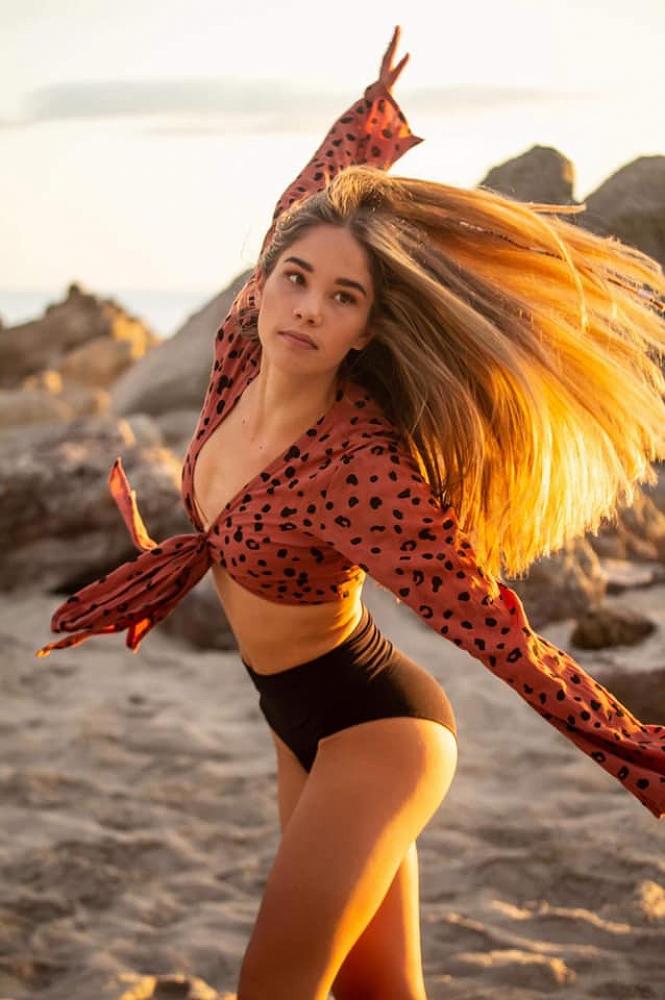
Alysha Gill spends a lot of time at the beach and often watches the waves as they make their way to shore.
“I find them calming and relaxing and have always been intrigued by the movement behind the waves, particularly the way they rise and break, how one wave is always followed by another, and how they approach parallel to the shore,” says Alysha, 16.
So when the Tauranga Girls’ College Year 12 dance student was searching for choreography ideas for her National Certificate of Educational Achievement (NCEA) and Scholarship Dance assessments, she drew on her passion for geography, love of the ocean and of waves.
The learning process over many months, both in and out of COVID-19 lockdown, eventually saw her awarded in January 2021 a New Zealand Scholarship for Dance, one of only 16 students in the country.
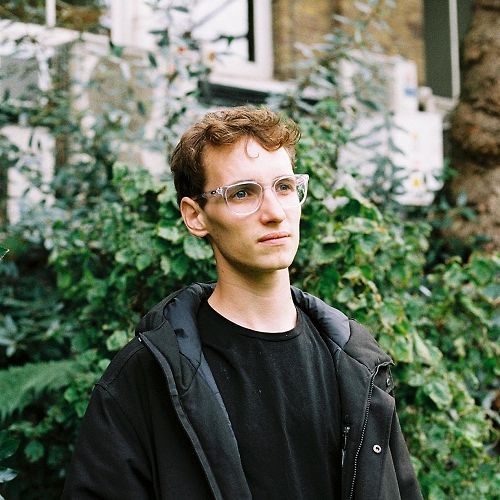
Alysha is full of praise for 25-year-old London-based DJ and producer Phrixus, otherwise known as Ben Broughton, who generously agreed to the use of his music for the dance she eventually came up with.
While the idea of creating a piece of choreography on the motion of a wave at first seems rather cliché, Alysha challenged herself to think in a more abstract way by using the scientific theories behind the phenomenon to influence her movement ideas and choreographic process.
She researched and conceptualised information about wave oscillations to support her choreographic decisions and produce purposeful movement.
The result? ‘Undulating Frequency’ a solo dance work based on the concept of wave oscillations.
A key decision was the music. It was important it reflected the rise and fall (undulations) and regular rhythm (frequency) of wave oscillations and included some unusual/surprising aspects to show the inconsistency of waves and how each wave is never the same.
Alysha chose the piece “Recluse” composed in a dance/electronic genre of music by Ben Broughton.
His works offer hyperactive explorations of abstract sound design, rap beats, club music and ambient.
“I liked the gentle and largely electronic instrumental style of the music combined with the reverb of water droplets which creates a naturalistic atmosphere,” says Alysha.
So during COVID-19 lockdown she contacted Ben via social media for permission to use the music and was stunned when she got an immediate response.
“Recluse was one of the pieces I made when I was first properly starting to produce music - originally an exercise in slow tempo experimentation. I very quickly found myself drawn into arranging the eerie, cold world residing in the essence of that piece. Sometimes a piece just 'carries' you - picks you up and almost dictates its own boundaries .... which was exactly what happened here” says Ben.
Alysha used this to comprehensively analyse and critically think in order to develop justifications for her decisions and integrate these into the work.
As a result, every one of Alysha’s choreographic decisions was carefully developed and intentional.
Scholarship candidates are expected to demonstrate high-level critical thinking, abstraction and generalisation, and to integrate, synthesise and apply knowledge, skills, understanding, and ideas to complex situations.
Approximately 3% of students studying each subject at Level 3 are awarded Scholarships. In the case of Dance, only 1.6% of the students gained Scholarship, Alysha was one of them.
She contacted Ben in the United Kingdom, where he was still in lockdown, to tell him of her success. He was overwhelmed.
“Congrats, that's such incredible news, so so happy for you, especially in these strangest of times. I visited NZ in a campervan when I was 7-8 and absolutely fell in love with the place. I hope to get back one day and might try get over to celebrate with you”
The New Zealand Scholarship provides recognition and monetary reward to top students studying NCEA Level 3. This is usually done in Year 13, the last year of schooling, but in Alysha’s case, she was selected to do it in Year 12.
Scholarship enables candidates to be assessed against challenging standards and are demanding for the most able candidates in each subject.
The Scholarship Dance submission is presented as a portfolio consisting of:
● Recordings of the candidate's own choreography and performance
● An 18 page written portfolio consisting of written reflections on the choreographic and performance processes
The three aspects that are assessed for Scholarship are the choreography, the reflection on the choreography, and the reflection on performance. These all have equal weighting. The performance excerpts are not assessed but do provide a context for the reflections on performance.
Alysha was awarded a ‘one-off’ award of $500 which she will defer towards tertiary study in 2022.
She intends studying a conjoint degree in Arts and Law at The University of Victoria in Wellington, New Zealand.
Gallery