Structured Literacy Corner
Why what you do at home matters
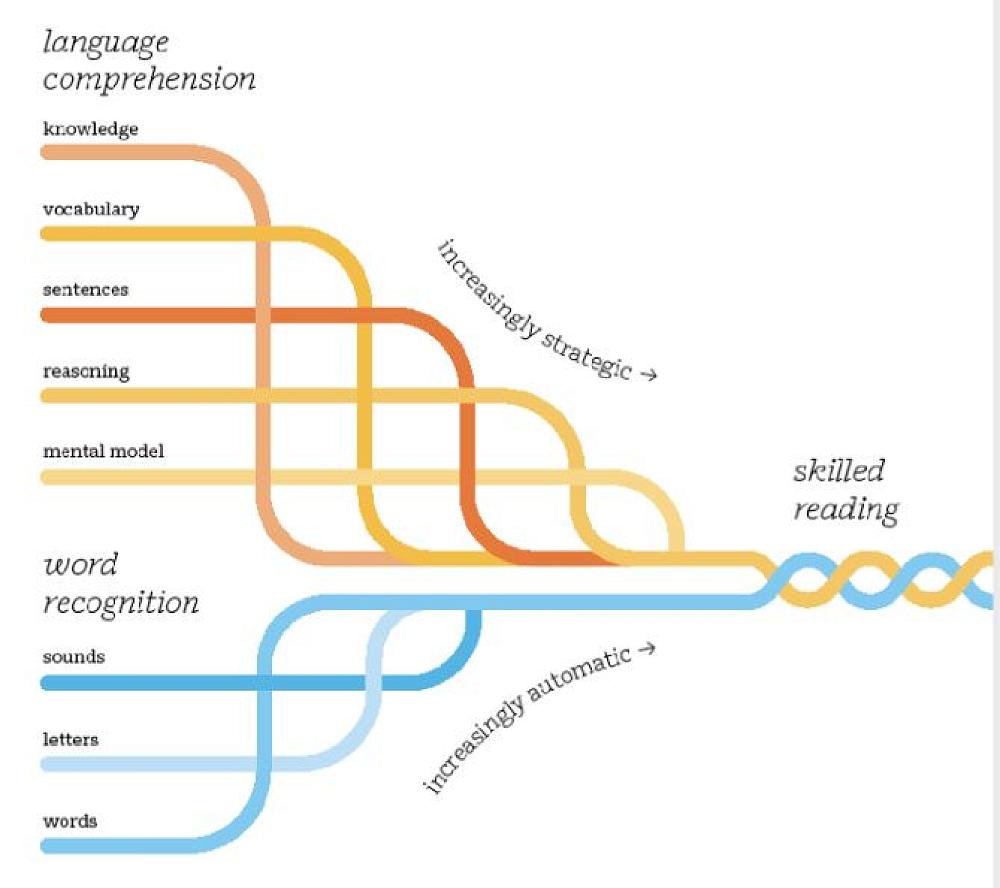
Learning to read is a comprehensive experience. Structured literacy approaches, such as Little Learners Love Literacy, focus on the three light blue strands of Scarborough’s Reading Rope: the learning of sounds, letters, and words. The additional components, shown in orange at the top, represent aspects of literacy taught alongside structured literacy. By asking open-ended questions and exploring rhyme, synonyms, and word patterns at home as part of daily reading for enjoyment, you help support your child's ability to read and understand the context of what they have read.
Below are five questions to help foster conversation, understanding, and reflection:
- What did you think about the main character's choices? Why do you think they made those decisions?
- This question encourages children to reflect on character motivations and to consider different perspectives.
- How did the story make you feel, and why do you think it made you feel that way?
- This helps children connect emotionally with the story and articulate their feelings.
- What do you think will happen next if the story continued?
- This encourages imagination and prediction skills, allowing children to extend the narrative beyond the book.
- Can you think of a time when you faced a situation similar to one in the story? How did you handle it?
- This prompts children to make personal connections to the story and reflect on their own experiences.
- If you could change one thing about the story, what would it be and why?
- This fosters creativity and critical thinking, as children consider how altering elements of the story might change its outcome or message.
What Is Scarborough’s Reading Rope?
In 2001, Dr. Hollis Scarborough created the Reading Rope using pipe cleaners to illustrate how the different “strands” of reading are interconnected yet independent of one another. For many students, learning to read is a challenge, and Scarborough's Rope captures the complexity of this process.
Scarborough's Reading Rope is composed of lower and upper strands. When all these components intertwine, they result in skilled, accurate, and fluent reading with strong comprehension.
The lower strands include:
- Phonological awareness
- Decoding
- Alphabetic principle
- Letter-sound correspondences
- Sight recognition
The upper strands include:
- Background knowledge
- Vocabulary
- Language structures
- Verbal reasoning
- Literacy knowledge