Fieldwork in Geography
Fieldwork is an essential part of Geography as it gives opportunities for learning which cannot be duplicated in the classroom. It greatly enhances students' understanding of geographical features and concepts and allows students to develop an understanding of real-world geography in their local environments.
Year 12 Geography
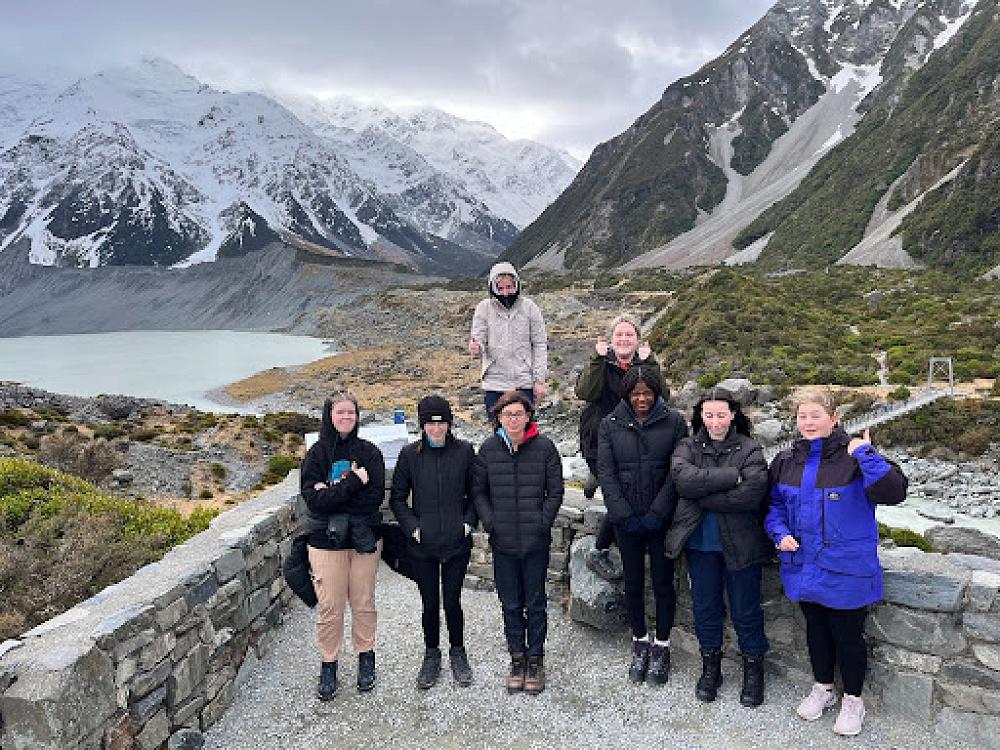
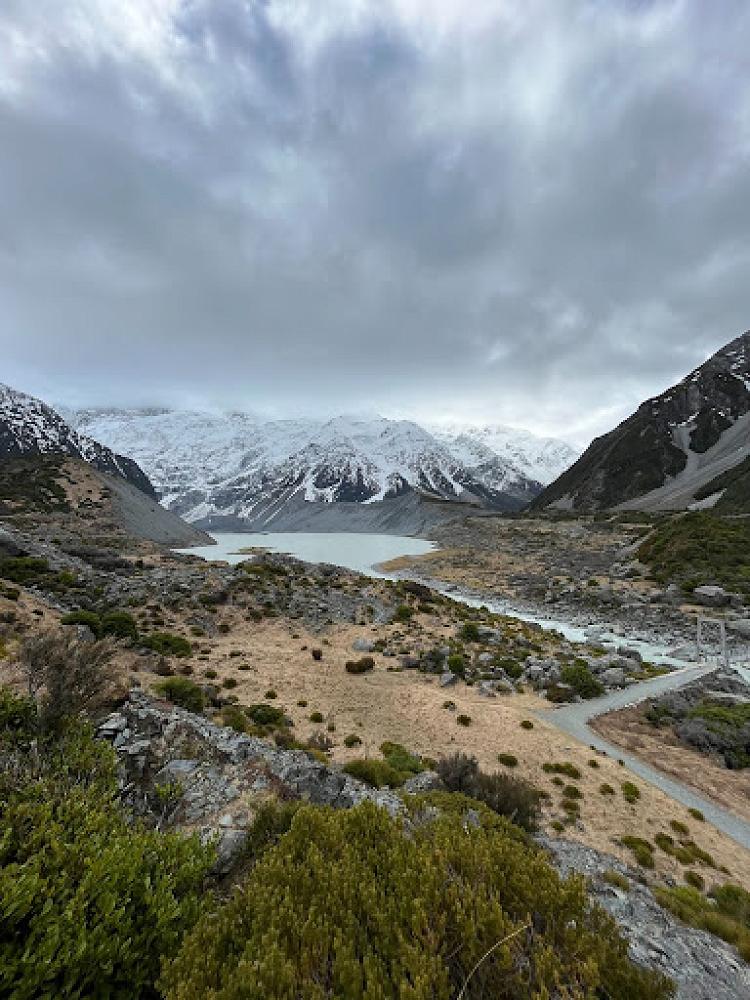
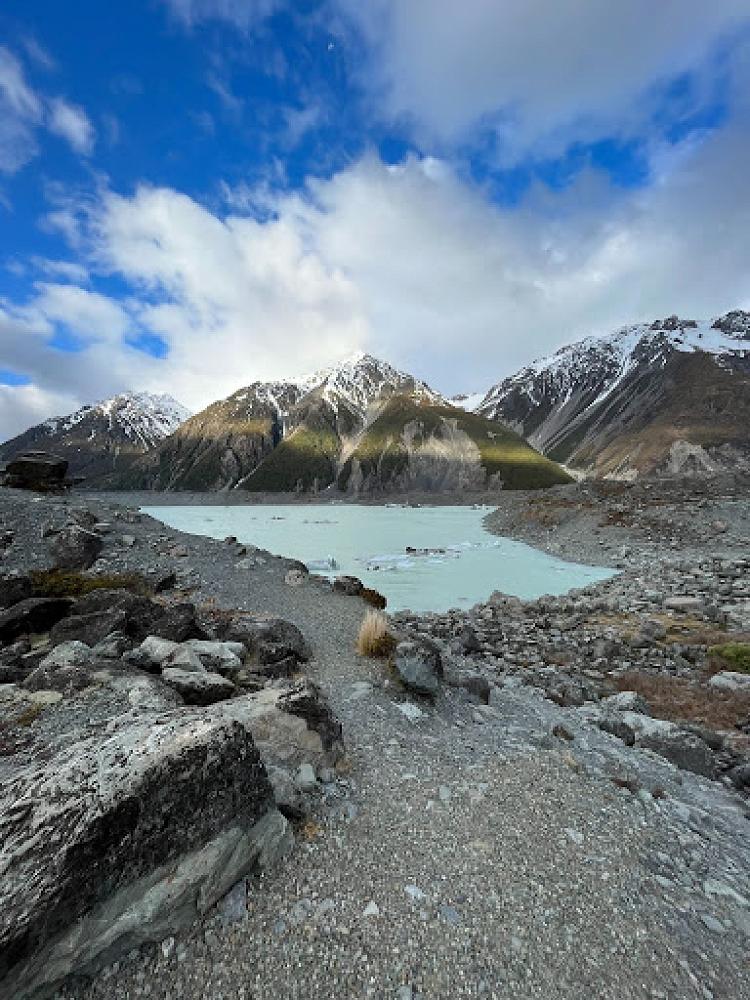
At 8am on Monday the 5th of September the Year 12 Geography class piled into a school van and set out for an overnight adventure to Aoraki Mt Cook. We arrived at Mt Cook around 1pm on Monday and headed straight to the DOC Centre where we got to have a look around and listened to a DOC speaker learning about glaciers, how they move and how they are formed, for our external. After this we headed out to the Hooker Valley track, layered up with warm clothes and walked to the first swing bridge to look at the Muller Glacier and its Terminal Lake. After a very windy walk along the Hooker Valley track we then went to the Tasman Lake walk. After this, we went back to Glentanner holiday park where we all settled in for a cold night.
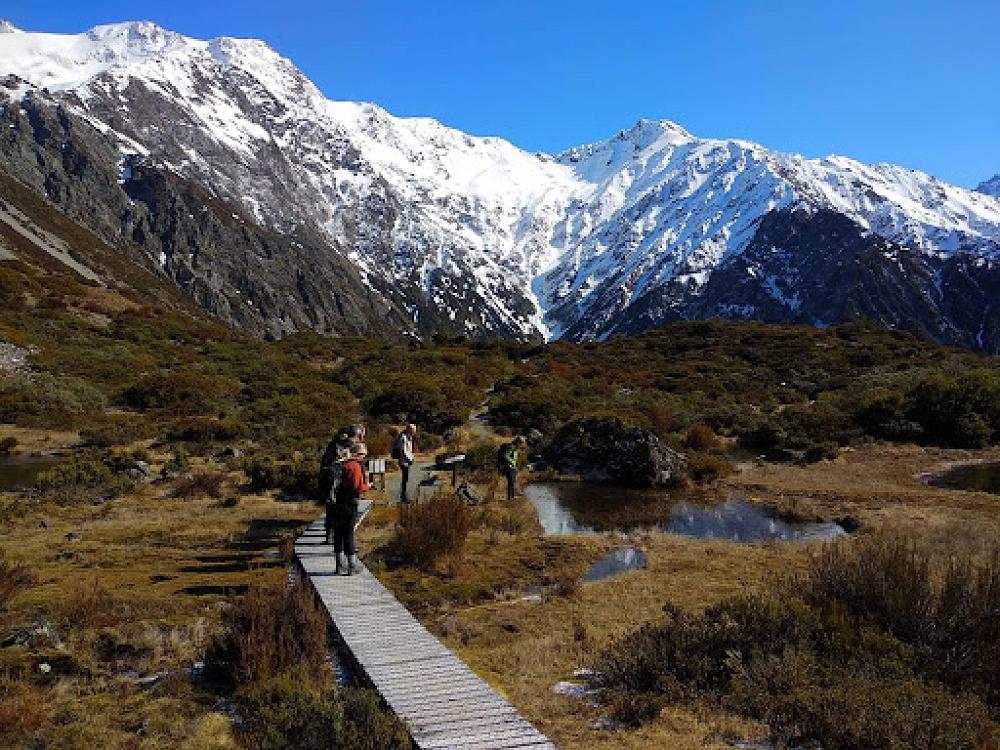
With an early morning start at 7:30am we dragged ourselves out of bed and into the -10 degree weather. We started our day with a long walk up the Red Tarns track. During this walk we were collecting data for our internal, which involves us studying the change in vegetation due to altitude. After watching Elizabeth dunk her head into a refreshing frozen puddle at the top and many complaints about sore legs later we then went and watched a movie about climate change at the DOC Centre.
With lots of information learned and exercise done we headed back to school for a well-deserved rest. The Year 12 Geography class would like to thank Ms Robinson, Mark and Mrs Lissington for making this trip possible.
Year 11 Geography
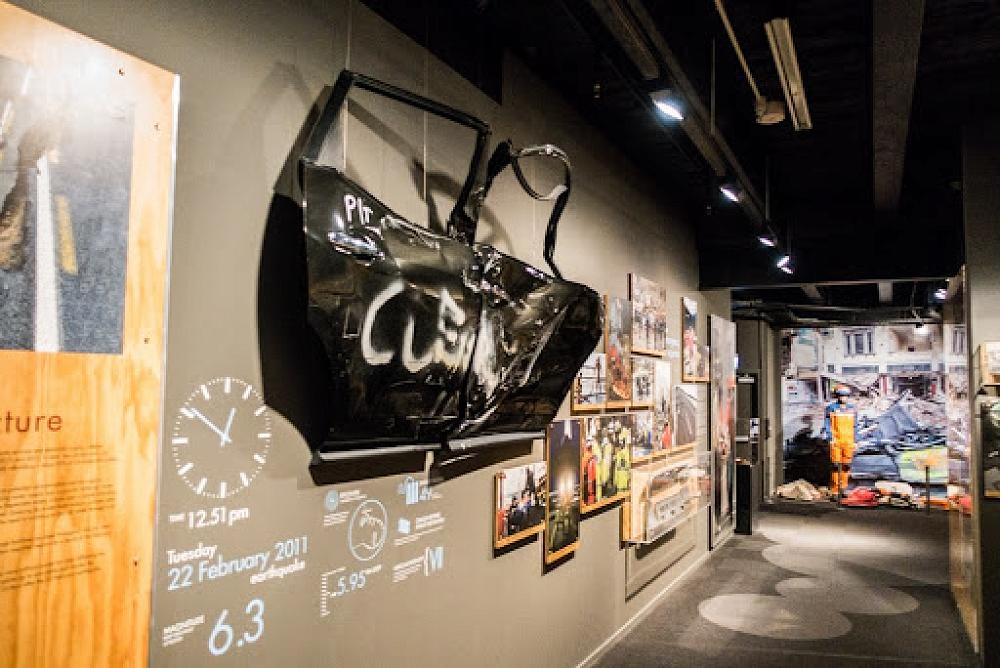
On Friday the 16th, the Year 11 Geography classes went on a trip to Christchurch to learn more about the Canterbury quakes of 2010 and 2011 which we are sitting an exam on in November.
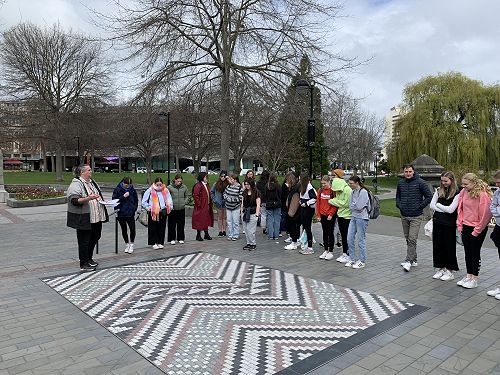
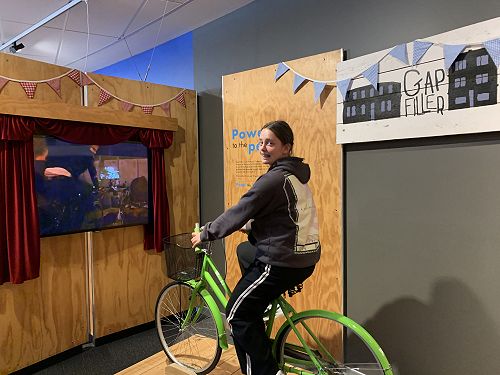
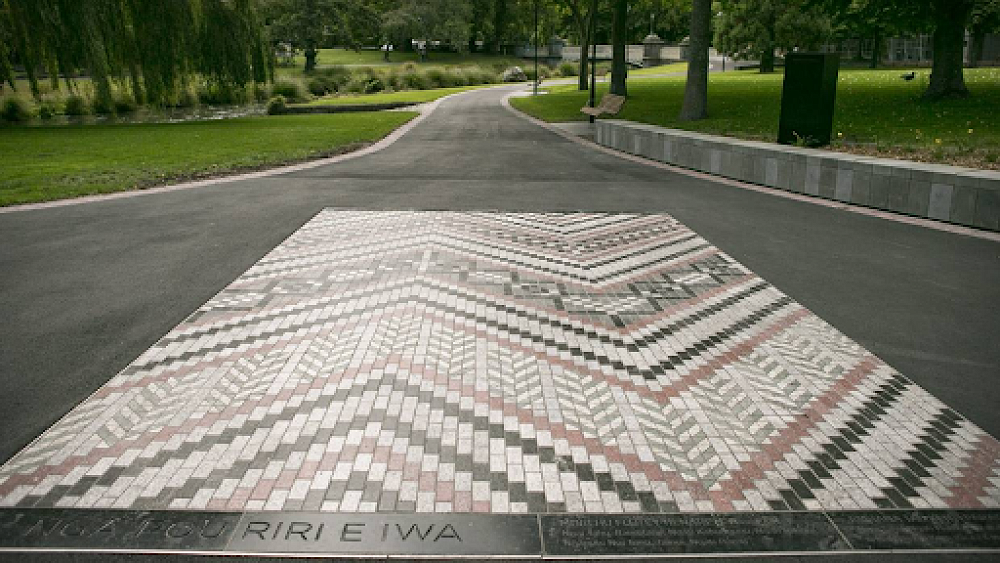
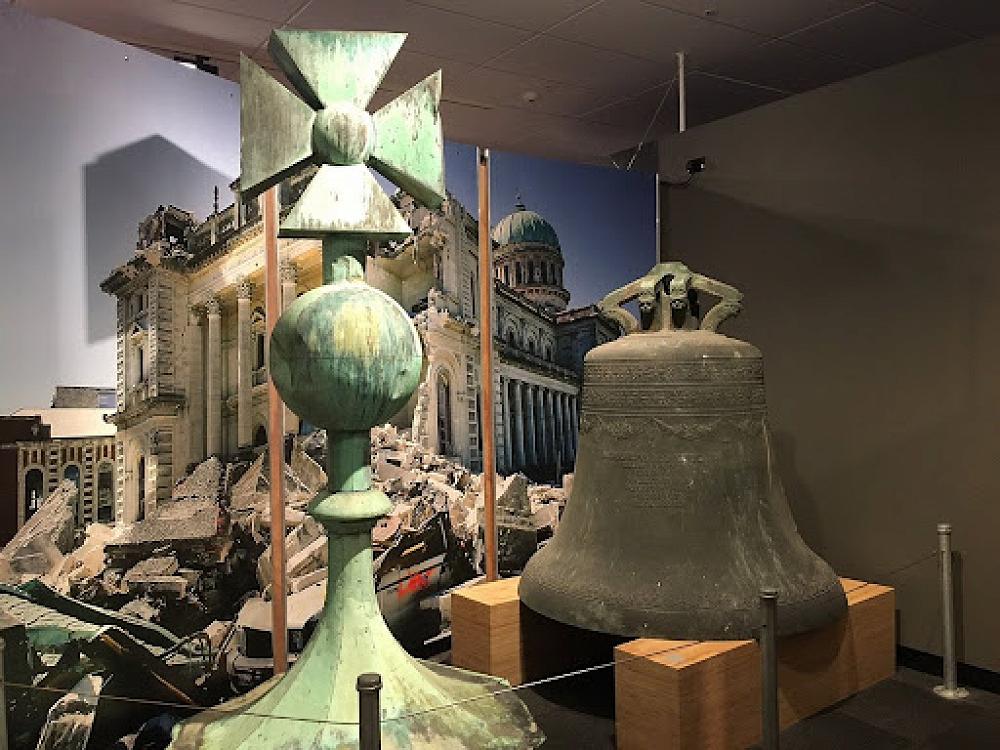
We left school at 7:30 for the bus ride, and arrived at about 10:30 for our first activity, exploring the Quake City museum. When we arrived, we were greeted by Anthony, the museum educator. He was one of many who were caught in both the 2010 and 2011 Canterbury quakes so was able to give us a good insight from a survivor’s point of view. He talked us through the before, during, and afters of the earthquakes and the science behind them. There were plenty of interactives to help us learn, one of which was a real-life seismometer which we could jump on and would measure the pressure of our jump. There was also a security video from a store that captured the moment the earthquake hit, and a film called 12:51 which had the stories of survivors and heroes of the quake, their experiences, and point of view. Anthony explained to us about the heroes who helped rebuild Christchurch like the student volunteer army, construction workers, emergency services, farmy army, rescue dogs and international emergency response professionals who came from around the world, specially trained in this field. After we had finished at Quake City, Anthony took us over to Victoria Square where he explained to us how Ngai Tahu was able to finally have a say in some of the new restructure of their city, through things such as the tukutuku tile patterns created by Māori artists.
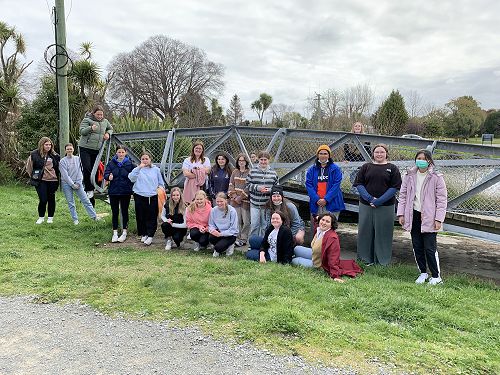
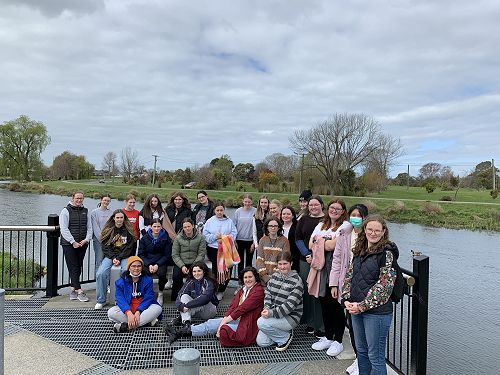
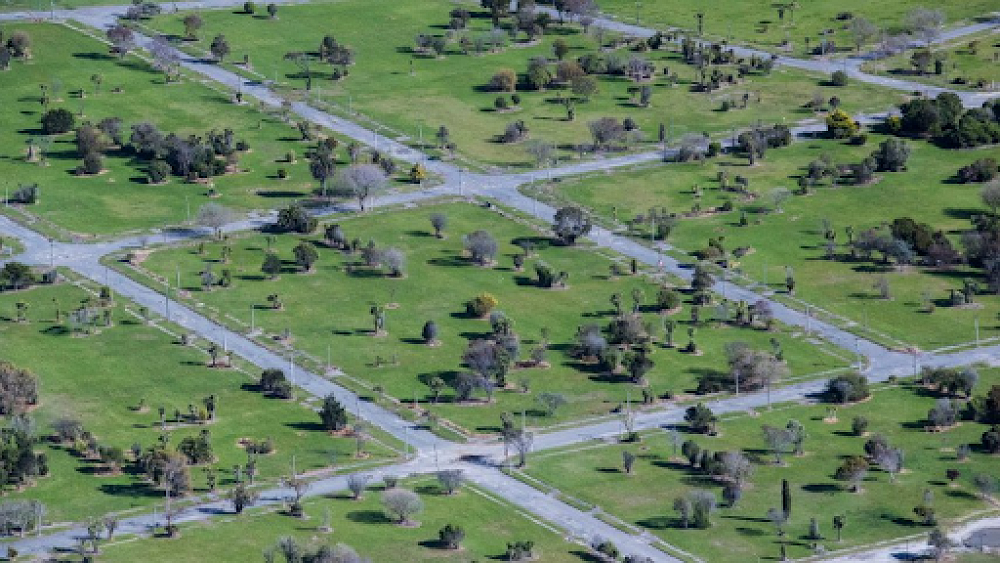
Time flew by and after that, it was time for lunch. We had an hour to get lunch and explore the newly rebuilt city centre before heading back to the bus to drive to the other main activity for the day, a walk around the Avonside red zone. After the quakes, the land on which some 10,000 people lived was deemed unsafe and purchased by the crown. Their houses were all bulldozed, and the neighbourhoods are now the city’s largest green spaces. We were able to pick out where sections used to be by the patterns of where the trees grow, and we could still see where driveways once were, though the edges had been grassed over. Some sections still had letterboxes, and we even saw one treehouse still in a tree. Our walk took us along the bank of the Avon river, and we reached what used to be the bridge. It was all twisted up and was no longer safe to use so was replaced, but a piece of it was left beside the new bridge as a reminder of what the area had been through.
After that, we made our way home again, with a tiki tour to Lyttelton and the New Brighton Pier. A special thanks go to Mr Driviere, who came as our city tour guide, Ms Robinson for organising the whole day and Miss Crosse who supported us during the day. We learned heaps and had a great day.
Gallery