
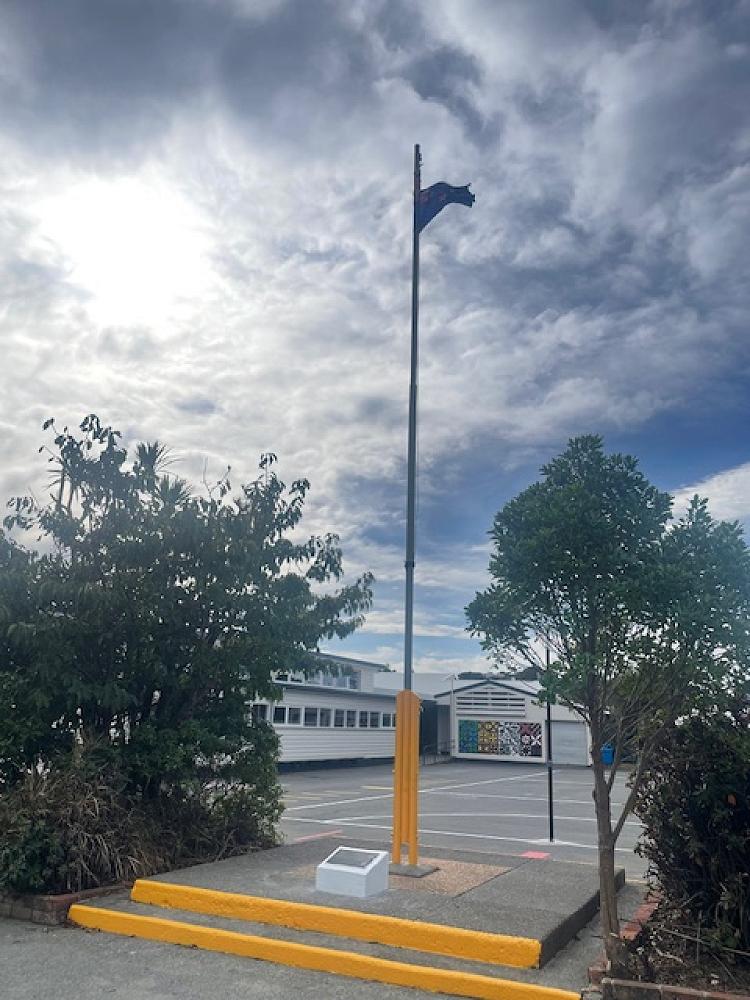
US MARINES PLAQUE
Tomorrow at 9:00am, we will host a small ceremony to unveil a plaque commemorating the historical significance of our school site, once serving as a US Marine base during World War II. This decision to honour our past was made in collaboration with Mana Whenua.
During World War II, the United States Marines established a significant presence in Titahi Bay, located near Wellington, New Zealand. This site served as a base for the U.S. Marines as part of their efforts to protect New Zealand and its surrounding waters from potential Japanese invasion.
The establishment of the U.S. Marines site in Titahi Bay was part of the broader military cooperation between the United States and New Zealand during World War II. Following the attack on Pearl Harbor in December 1941, New Zealand became increasingly important to the Allied war effort in the Pacific. The threat of Japanese invasion loomed large, particularly after the fall of Singapore in February 1942.
Titahi Bay provided an ideal location for the U.S. Marines to set up a base due to its proximity to Wellington, the capital of New Zealand, and its strategic position overlooking Cook Strait, the stretch of water between the North and South Islands. The Marines established barracks, training facilities, and infrastructure necessary for their operations in the region.
The presence of the U.S. Marines in Titahi Bay had a significant impact on the local community. It brought economic benefits to the area through increased employment opportunities and trade with American servicemen. However, it also brought social and cultural changes as the small coastal community was suddenly transformed by the influx of military personnel.
After the end of World War II, the U.S. Marines site in Titahi Bay was decommissioned, and the facilities were dismantled. Today, there are few physical remnants of the military presence in the area, but the historical significance of Titahi Bay as a wartime base remains part of its legacy.
Titahi Bay School was constructed many years later and opened in 1953 following the decommissioning of the U.S. Marines site and now occupies the primary area once used by the Marines.