
Looking Out and In — February 2022
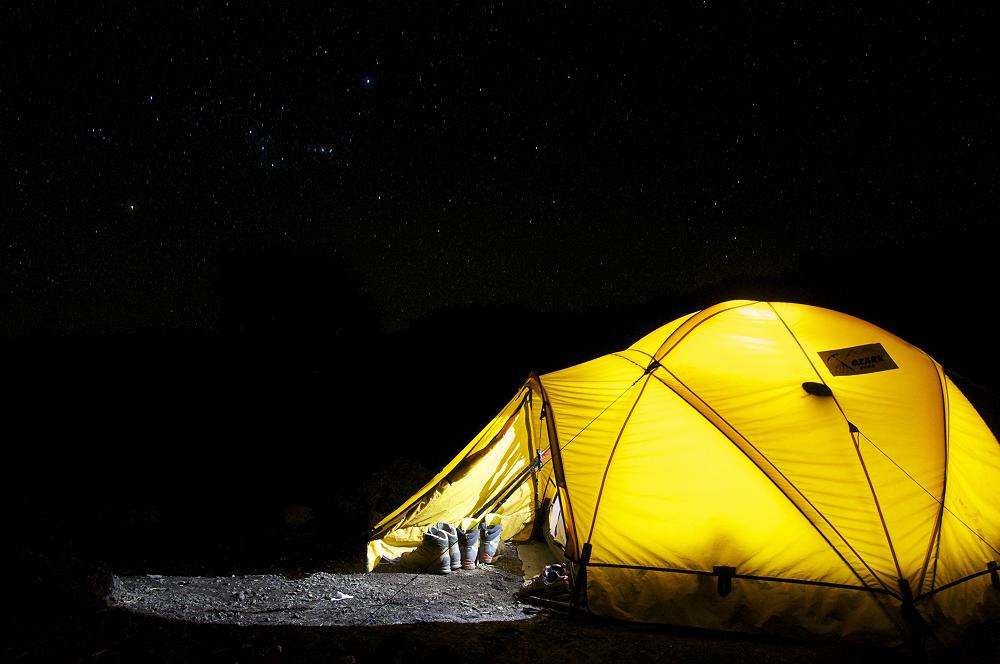
I can’t ignore sunrise when I sleep in a tent. Light splashes across the thin nylon walls and wakes me. Unzipping the doorway, I clamber out and light the stove for that first morning cup of tea. As the stove purrs I look across the sleepy campsite. Sunlight on glistening tent fabric creates a steam that rises like incense or like plumes of toitoi. It is a blurry, blue summer morning.
I barely sleep on my first night summer camping. I hear everything: the stream chuckling as it finds a fun route downhill; salty waves sucking up and down the sand; wind swashing through high boughs of pine, rimu or beech. Most surprising on a quiet night is the clicking of sandflies as they hurl their small earnest black-gauze selves against tent nylon. I see everything, too: at bedtime I zip into my tiny nylon dome, flecks of white zircon glitter remind me that I am small and that I lie beneath a vastly black sky.
I am closer to the big world when I sleep in a tent. The sun is hotter, the rain is colder, and the winds are breezier, the sounds are louder.
There’s little housework. No floor to vacuum, bed to make, door to lock. I can pack up and move to a new place with a better weather forecast at just an hour’s notice. A tent reminds me to carry only what I need. Notably, some people take trailer loads of additional dross that simulate all the comforts of home on their camping trips — and then can’t be bothered to move.
Tents are mentioned in 79 different verses in the Scriptures. Paul made tents as his primary income so he could be more engaged in spiritual journeys with others. I really love the metaphor of God travelling with the Israelites, living in a tent of congregation (tabernacle) as the portable dwelling place of Yahweh. There are verses that suggest tents allow responsiveness to the place you are in, enable easy moving of the house, provide surprisingly well for hospitality and possibly contribute to long life. Jeremiah says: “You shall not build a house, and you shall not sow seed and you shall not plant a vineyard or own one; but in tents you shall dwell all your days, that you may live many days in the land where you sojourn” (35:7).
I have been pondering ways I could simulate the thin nylon fabric of a tent in my spiritual journey. I wonder how to reduce the insulation, double glazing or sound baffles of my busy working and playing life to reduce barriers between God and me. I wonder what I could do differently so that I am in a “thinner” place which would allow a more permeable and close relationship. Could this be how suffering and loss work? When I recognise the vulnerable, lonely and humble place I have in the world, am I more likely to hear, see, sense God’s presence? When plans go awry and things go wrong, is it just my insulation and baffles being pulled away, allowing me to be more aware of God’s quiet presence?
I hope the stripping and loss of control in our global climate crisis and pandemic nudges us to notice God is among us. God is beside and even in the tent with us as we deal with all the joys and challenges of our days; whether it is the sun rising too early, the sandflies gathering in clouds or a strong wind pushing at our flimsy tent poles.
Tui Motu Magazine. Issue 267 February 2022: 32