
Power of Ritual
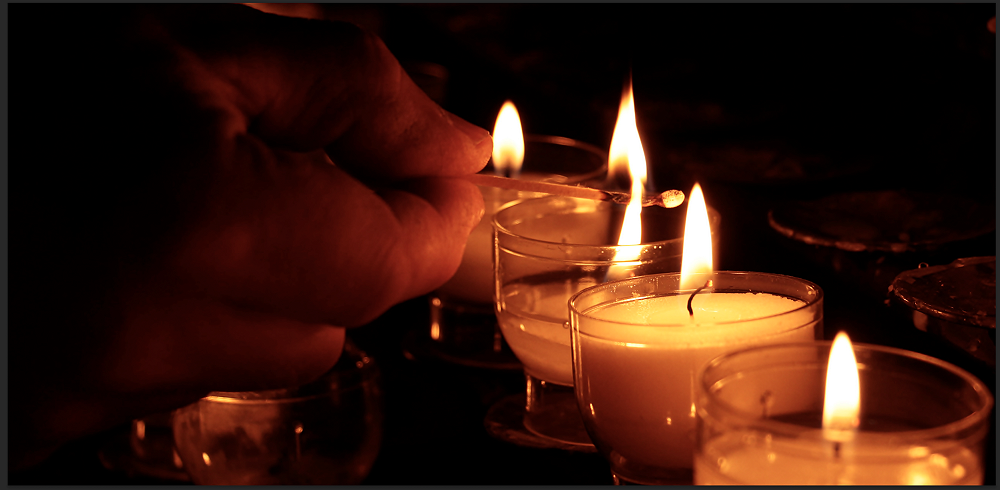
MY FLATMATE LOVES to light candles. When we’re having dinner, she turns off our main lights, gets out some matches and ignites candles poked in artful candle holders made from her dabblings in ceramics. Sometimes, she adds fairy lights and plays an instrumental soundtrack on her speaker.
While I am not particularly a candle fiend, I appreciate the ceremony of this. Changing the lights creates a ritual around dinner and sets a particular mood. When we did this the other day, it got me thinking about religious rituals.
I’ve been fortunate to be exposed to a wide range of churches in my life. I’ve attended Mass with my grandmother, Baptist churches of various sizes and persuasions, home fellowships and non-denominational groups, not to mention random visits to other kinds of churches, mosques, gurudwaras, and temples at various points of my life. This is largely a product of moving around lots through my life. At the moment, I can usually be found at a small church that fits under the Presbyterian umbrella. Different religions and denominations create and practise ritual in different ways.
There is something both comforting and profound in the rhythms of saying the same words each week, of lighting candles or ringing a bell. In rituals of sitting and standing, of ascribing meaning to wine and bread. The symbolism of the ceremony surpasses its physical reality — beyond their physical realities.
In church, participating in ritual, I’m reminded of holiness. But in many ways, Jesus’s actions in eschewing the traditional ways of practising Judaism and two millennia of subsequent Christian teaching teach the opposite: that God’s presence is not limited to a building or a practice. Other religions also teach that God’s presence or a sense of holiness can be found in the world around us. Sometimes, though, if we keep thinking God could be anywhere, we might forget to set aside the space to seek God somewhere. That’s where rituals come in.
A simple, repetitive act — whether reading through a liturgy with others in the morning, or lighting a candle before the start of a service, or even before dinner — can mark space or time in a meaningful way. We can miss the way rituals mark times and spaces as separate from the mundane in our modern living.
When I’m busy, the physical pause of a ritual encourages me to shift my focus beyond my personal bubble to a space of openness to God’s presence. I want to be better at using ritual to set aside moments for recognising holiness in myself, others and the world around me. In doing this, I hope to use my life in ways that serve God’s kindom.
And, as I reflect on ritual, I’m going to stop dipping my fingers in the candle wax. It’s fun but I don’t want it to trivialise my participation in the ritual.
Tui Motu Magazine. Issue 293 June 2024: 26