
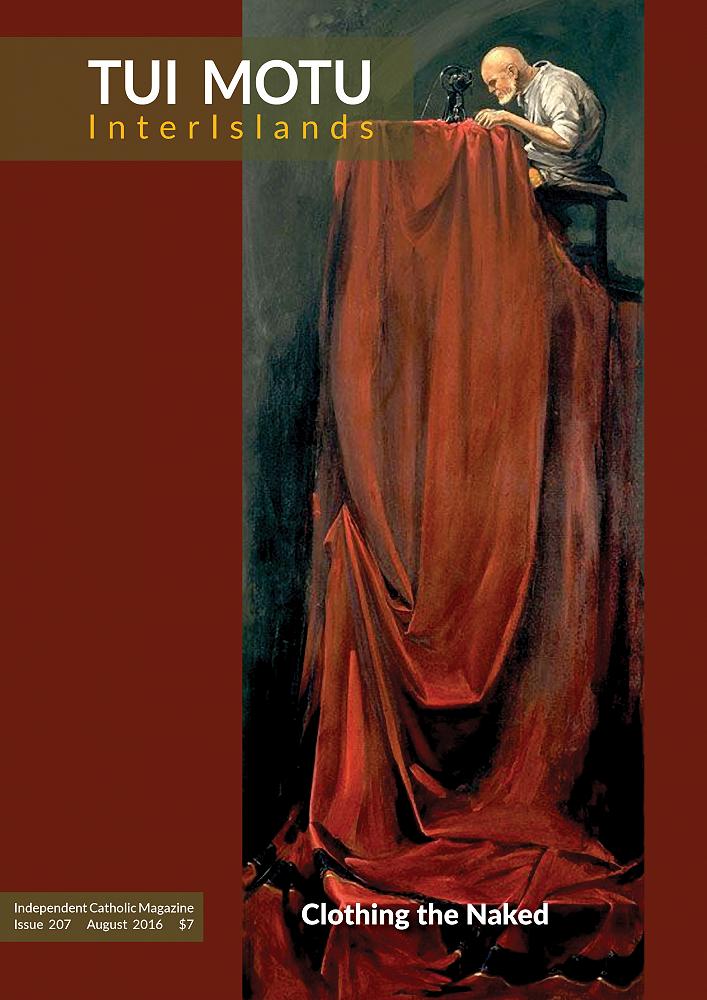
Dressing With Love
“Try it on!” My eight-year-old’s anticipation shimmied as I slipped into my new dress. With a mouthful of pins Mum scanned her work and I transformed into a princess.
Dressing was fairly simple when I was a child. We had everyday clothes, school uniforms and “best” clothes, which we changed out of as soon as we arrived home from Sunday Mass. Hand-me-down was standard family practice. But having Mum choose a particular colour and style because it suited me made that garment precious and me cherished. Thinking now of that lemon dress I can appreciate a childhood packed with thousands of little nuances of love promoting individuality, value and security.
We’re practised at interpreting the world around in reference to dress. We’re concerned when dishevelment exposes a friend’s illness, or find a child shivering in thin clothes. We’re ashamed to hear of Muslim women ridiculed for their dress and young people discriminated against for their style. We’ve learned of the appropriateness of clothes for an occasion and appreciate the effort made.
We’re the only species in creation to dress and this is primarily for comfort but also signifies our belonging in particular cultures and communities. Getting dressed is a ritual that acknowledges the season of the year, the time of day and the activity we’re to engage in. We dress differently for work, for sport, for school, for gardening, for tramping, for surfing, for relaxing. Dressing can celebrate and reverence our bodies, support our confidence and wrap us in gratitude for life. Not having clothes strips us of the outward signs and the inner security and confidence of belonging.
This 207th issue gives perspectives on the work of mercy of clothing the naked as a way of including all in community. Susan Smith and Gillian Southey describe how clothing can come at too high a cost. We can’t let fashion veil us to the trafficking and slavery in manufacturing factories in poor countries — off-shore and out-of-sight. We can’t let mountains of our cast-off clothes turn toxic in land-fills. And we can’t dictate in the name of religion what others should wear.
We also offer articles on a range of volunteer groups who recycle clothing in a number of ways. Vinnies and the Hospice shops sell clothing to finance their works. The Auckland City Mission provides street people with clothes. Other volunteers dress women for the workplace. And a clutch of knitters and sew-ers swaddle babies in wool, warmth and welcome. All express the giving and receiving of mercy in terms of being in relationship especially with those struggling, having a heart for social justice, sharing wisdom learned in dark times and loving our neighbour.
We are grateful for the insight, reflection, the questions and challenges our writers, artists and craftspeople provide in this issue.
And as is our custom — the last word is a blessing.
Published in Tui Motu InterIslands magazine. Issue 207, August 2016.