
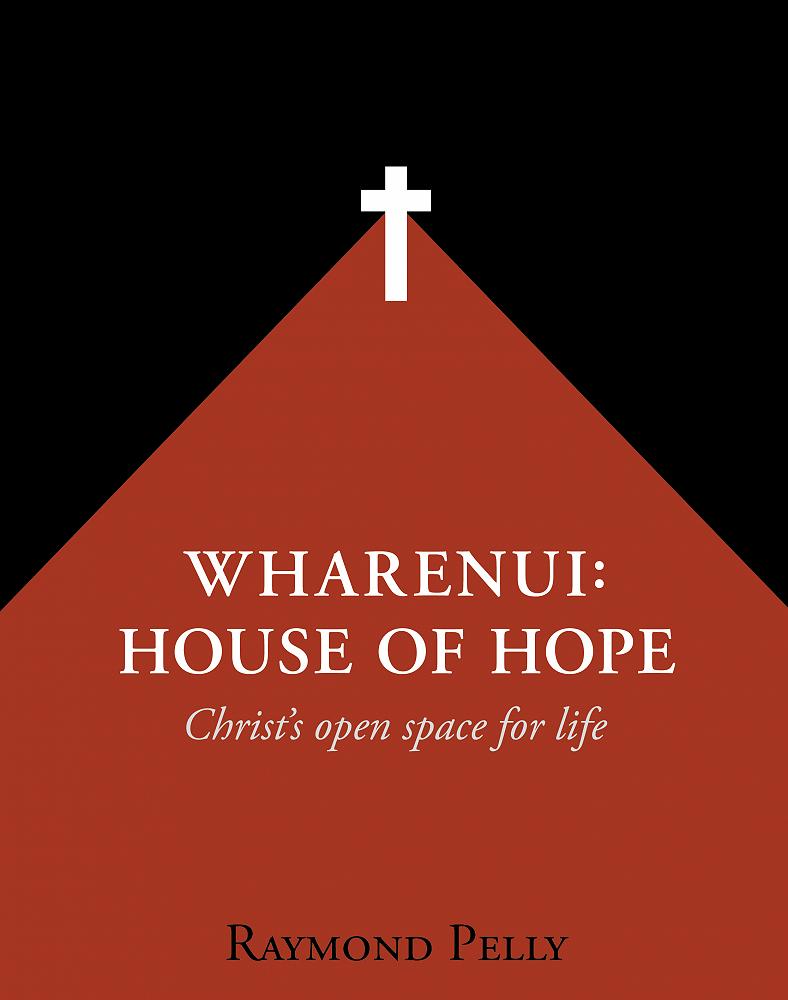
Wharenui: House of Hope
By Raymond Pelly. Published by Steel Roberts Aotearoa New Zealand, 2016. Reviewed by Katene Eruera
This is a readable well-designed book that brings into conversation ideas of Christian hope with ideas drawn from Māoritanga. It is a book devoted to exploring the Christian life in its Aotearoa New Zealand expression.
The author, Raymond Pelly, is an Anglican priest who moved to New Zealand from the United Kingdom in the 1980s. He has an MA in theology from Oxford University and a Doctorate in Ecumenical Theology from the University of Geneva. He has taught at Wescott House, Cambridge; St John’s College Auckland; and the University of Massachusetts (Boston Campus). He has, therefore, drawn on his academic background in a way that seeks to place theology in a local context and has the maturity of theological thought to produce a book of importance.
The contents of the book are basically theological. Successive chapters consider the Wharenui, the traditional Māori meeting house as a metaphor for framing Christian community. The conclusion focuses on the idea that authentic theology is prophetic; in the sense that God speaks through Christian communities to effect hope through personal and social transformation. Helpful and explanatory endnotes are provided.
There is a logical style to the author’s writing, grounded in his own academic background; drawing on sources as wide ranging as scripture, Māoritanga, Greek mythology, and theologians such as Kierkegaard and Brueggemann. The end result is a theological essay with positive assumptions about Māoritanga as a source for theological insight, using a method that speaks to the particular contexts and social locations Christian communities in different parts of Aotearoa New Zealand may find themselves in. This is perhaps important when compared to perspectives that may ignore or devalue the importance of sources other than the Bible for doing theology.
Coming at a time of theological diversity, ranging from orthodox to progressive theologies, Raymond Pelly’s book is a welcome addition to the conversation and for Christian communities in Aotearoa New Zealand.
I hope this book will be read by many people engaged in contextual theology. It is an example of how theology and Māoritanga can be brought into conversation. And it will be of importance to those interested in exploring this way of doing theology and the theological insights it can produce.
Published in Tui Motu magazine. Issue 212 February 2017:28.