
Bush Fires, Climate Change and Political Leadership
New Year’s Eve was different in Australia. Yes, there were the Sydney fireworks. Yes, there were the celebrations, but there was also something far bigger playing out around the nation.
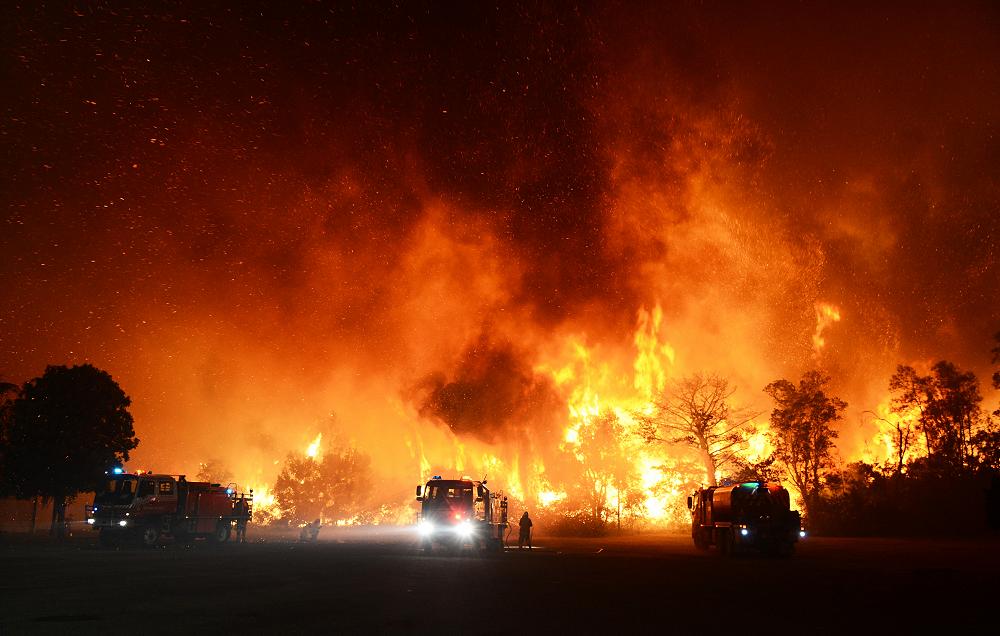
Australia was, and is, witnessing its worst bushfire season in living memory. On NYE many, including friends of mine, saw in the new year huddled together in evacuation centres on the country’s south coast. The sheer scale of the blazes shut down highways, cut off supplies and left thousands stranded. Unable to leave, they were also unable to escape the reality of blood-red skies filled with thick smoke.
They were the fortunate ones. These holidaymakers had lost their vacation, but not their homes. They had lost a few days at the beach, but not their lives.
Many across the country have not been so lucky. By mid-January more than 2,000 houses had been destroyed and at least 28 people had been killed in this bushfire season. Some 11 million hectares had been burned in four different states, and an estimated 1 billion animals are dead.
The destruction has left little in its wake other than smoke which has spread over New Zealand and as far as Chile and Argentina. It’s a national obituary written across the sky.
By the time you read this, all those figures will have risen. Largely to blame is the weather. It is the hottest, driest year on record exacerbated by a drought which had already robbed the land of any moisture.
Dry lightning strikes, the result of rainless thunderstorms, have provided the spark to this environmental powder keg. Small fires have exploded into out-of-control blazes. Some 72,000 firefighters, the largest contingent in the world, have done their best to keep the fires somewhat contained. They’ve braved intense conditions, ferocious heat and long, exhausting days and nights to do so. Alongside charities and entire communities, they have demonstrated an indomitable national spirit.
Of course, the bushfire crisis is as multifaceted as it is large. Australia is now engaged in fierce public discussion about what can be done to minimise damage, and to prevent and prepare for future fires. Importantly, Australians are also asking why the fires are so intense and why they are happening now — about the bigger picture of climate change.
As a result, Prime Minister Scott Morrison and his Coalition government in power since 2013, has found itself under intense pressure.
In what could prove one of the defining moments of his prime ministership, Morrison was discovered to be on holiday in Hawaii in December while his own country burned. It took sustained scrutiny to draw him back, a tardiness which incensed even his party’s supporters.
And he has been on the back foot since. Many are questioning his government’s slow response to the crisis. Tens of thousands have marched in Australia’s capital cities, demanding that the government tackle climate change rather than let the nation simply suffer its ill effects.
While not causing the bushfires, climate change does increase their ferocity and frequency. Climate change has proved the number one political thorn in the side of federal governments for years. The current government’s support of the large coal industry and history of climate denial are a terrible mistake given the current crisis.
There has been some backpedalling as a result, but few believe it will lead to any substantial change in policy. This is the latest sign of a total absence of leadership in Australian politics. Allusions to Nero fiddling while Rome burned are rife, and unfortunately, apt.
Tui Motu magazine. Issue 245 February 2020: 3