
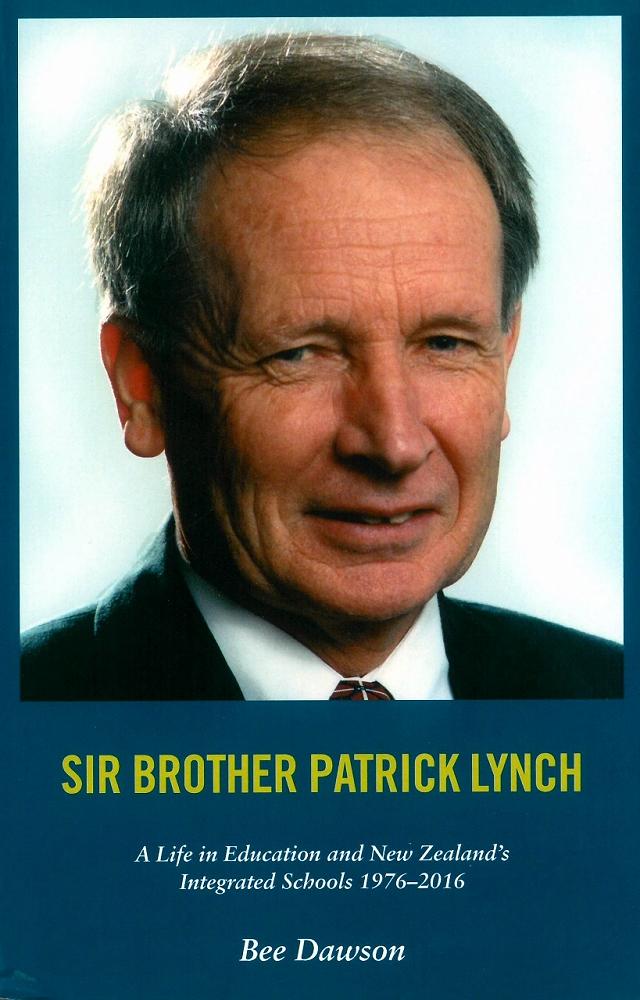
Sir Brother Patrick Lynch: A Life in Education and New Zealand’s Integrated Schools 1976-2016
By Bee Dawson. Published by Wairau Press, 2018. Reviewed by Eleanor Capper
The Private Schools Conditional Integration Act 1975 was a benchmark for Catholic education in New Zealand. The negotiations for its implementation were due, in no small part, to the efforts of Sir Brother Pat Lynch FSC. The two Forewords written by Labour’s Helen Clark and National’s Jim Bolger give testimony to this.
As well as tracing the history of integration, this book provides an insight into the life of a teaching brother, one of a legion of Religious priests, brothers and sisters who built, governed and taught in Catholic schools prior to the Integration Act. Despite the fact that Catholic schools were under-resourced, their strength was in the solid education they offered.
Over 40 years Pat dealt with 15 Ministers of Education — from Les Gandar in the 1970s to Hekia Parata during 2011-2017. His strength lay in his ability to dialogue with those in government no matter which party they represented. It was when he was principal of De La Salle College, Auckland that Pat first realised the wisdom of building sound relationships with politicians. He took pains to congratulate ministers on excellent interviews and give them feedback from other principals, because he thought that ministers needed encouragement in their arduous workload.
The book ranges from Pat’s early teaching career through his various leadership roles, from president of the Secondary Principals’ Association of New Zealand (SPANZ), to CEO of the New Zealand Catholic Education Office and to his being knighted for his service to education in 2014.
Those who have come into the Catholic Education system since the Integration Act will find this book an insightful story of what took place, the difficulties, the dialogue with the various political leaders and the outcomes. While some of the names mentioned in the book have been assigned to history, the importance of the negotiations which resulted in such a fair deal for Catholic schools cannot be underestimated. And by giving the history of these negotiations, this book will help to negate some of the misunderstanding about the origins of the Act and its effects.
Like Sir Pat, I taught in primary and secondary schools both before and after integration and I can recommend this as a book which, despite a few inaccuracies, is very readable. We owe a debt of gratitude to Pat and others who have worked tirelessly for the benefit of Catholic education in its struggle for equality.
Tui Motu Magazine. Issue 230 September 2018: 28.