
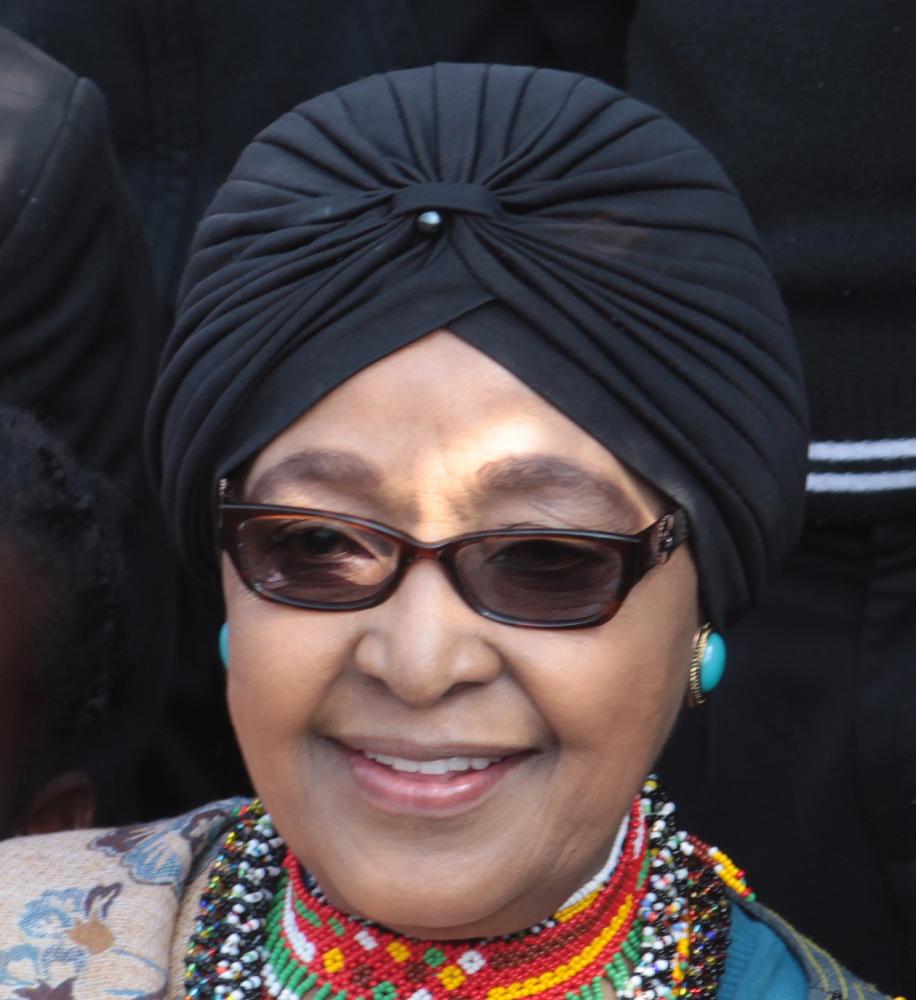
Diary Entries: Jim Consedine Meets with Winnie Mandela 26 and 30 August 1982
JIM CONSEDINE wrote: "With the death of Winnie Mandela overnight (2 April 2018), I was minded to go and search out my diary entries from a double visit I made to her in 1982 when she was banned at the time. The 1981 Springbok tour had happened the previous year and Nelson Mandela was into his third decade of imprisonment. She was 46 at the time and living in a one bedroom clay-brick hut in the black township outside the white town of Brandfort in the Orange Free State. I felt very privileged to meet with her and her daughter Zinzi. Things changed for her afterwards but this is a small slice of time before things piled in on her. May she rest in peace. And may South Africa develop more of the dreams she and we all held then of better justice for all."
Diary Entry: 26 August 1982
I arrived in a rental about 3pm in Brandfort, in the Orange Free State, having driven from Johannesburg where I had stayed with the Dominicans. I went in search of the local Anglican priest who was to be my contact for meeting Winnie Mandela. After finding no Anglican church and calling at two Dutch reformed Churches, I finally went to the library/tourist office, where the Africaans librarian introduced me to one Mary Bell. She told me that the priest (who took communion to Winnie) only came once a fortnight from Bloemfontein.
That wasn’t much help to me as it was Winnie I really wanted to meet. So, I approached Mary again as she was setting off to her tennis match and laid my cards on the table. She remarked how sad it was what they were doing to Mrs Mandela and suggested I might like to go and see Topsy in the bakery who might help. Mary Bell obviously didn’t know where Winnie lived. Topsy was very defensive and said I had to get the permission of the magistrate. I hummed and hawed but finally did go to his office. It was about 3pm. He said it was all right by him, but the police had to be told. My heart sank. They were the last people I wanted to see. However, I went next door to the police station and asked a huge Afrikaner cop where to find Winnie. He growled that it was nothing to do with him and that I had to go to the national Security Police, 55 km away in Bloemfontein to get their permission.
I scuttled out the door, with him watching took off in the direction of Blomfontein, parked up for 15 minutes, then drove back quietly past the police station and up to the township location nearly. There I was blocked by a barrier over the road and had to alight and go to the Bantu Affairs Office. Having deliberately hidden my passport, I bowled in, told the young official I was an Anglican priest Jim Smythe (correcting him to put the E on the end of Smythe) from Australia coming to bring greetings from the National Council of Churches of Australia to Mrs Mandela. No problems. I got the permit, he gave me directions to her home and I drove in.
I stopped a short distance from her home and a young man approached me to inquire of my business. Shortly Winnie emerged from inside and she gave me the warmest welcoming smile. She seemed so young (about 40 I thought) and so easy going. She was delighted when she heard I was from the anti-apartheid movement in New Zealand, and suggest we sit in my car. There were regular police patrols up and down the street. What a wonderful 90 minutes! She was so thrilled to hear of the AA movement in NZ, the ANC support group, the solidarity of so many. She spoke in full praise, enthusiastically, of the anti-apartheid movement worldwide, declaring the NZ people were indeed friends of the liberation struggle.
We laughed and joked and kissed and cried. It was really emotional. She is so beautiful — her spirit so strong. I will never forget that first meeting. The red dusty road. The two communal taps, one for her, one for the village. She was given her own special tap to prevent the abuse of her banning order at the communal tap! As the sun settled I took photos and slides and promised to return after my visit to Lesotho. It was such a beautiful meeting.
Diary Entry: 30 August 1982
Three days later, on my return from Maseru, I again went through the routine with the Bantu Affairs people. Then it was straight up to Comrade Winnie’s place. We met in her yard, she in a long, flowing gown with her hair under a close-knit hat African style. We went inside. Zinzi, her 19 year old daughter was there, studying at Swaziland University. She had a baby. I met MK, an artist, whose pencil drawing of a crucified Christ was done last Easter Monday after they refused to allow Winnie to go to church. This young man, 28, is neither a South African citizen nor a Transkei one — neither want him. But a very talented artist.
Winnie spoke again of her feeling for New Zealand. This time I got it all on tape: 23 minutes of passion and conviction. We talked of the ANC and PAC, economic boycotts, bannings, being a Christian in the struggle. It was Helen Joseph who later told me of Winnie becoming an active Christian, having been a lapsed Methodist. And how they used to go to Mass together at St Mary’s Anglican Cathedral in Jo’burg and kneel side-by-side. Yet neither could speak to the other as Winnie was banned and Helen was a "listed" person!
Then after the interview, we celebrated Mass in the gathering gloom — no electricity of course. It was beautiful, using a little wine and bread and her bible. We prayed for the liberation of South Africa. When she prayed her favourite psalm "the Lord is my shepherd, there is nothing I shall want" I was so moved. The psalm literally came alive. I have never heard it so alive and so vibrant. It was the voice of a true believer: she believed what she prayed. The voice of a saint I thought. I read from Luke 4, where Jesus quotes Isaiah "to bring good news to the poor". Then we prayed our prayers. She didn’t pray one — said she just lifted up her heart prayers. Then I home-spun a Eucharistic prayer and we shared a beautiful Our Father and sign of peace. She cried as we clung to each other: it was so beautiful. Finally, communion, prayer and it was dark. Then we just sat!
Later, I took a few more photos (and Zinzi’s passport to take to Jo’burg to her lawyer Esmail Ayob) and she and I drove off at dusk to the white township looking for the others from her place who had gone earlier. We kissed goodbye on the main street in front of passing whites, and the last I saw of her was as she trotted across the street to join Zinzi and MK in their beat-up VW. I headed to Kimberly.
These few hours are ones that will leave their mark on me forever — and I just hope they keep refuelling my commitment to their struggle in the years ahead.