
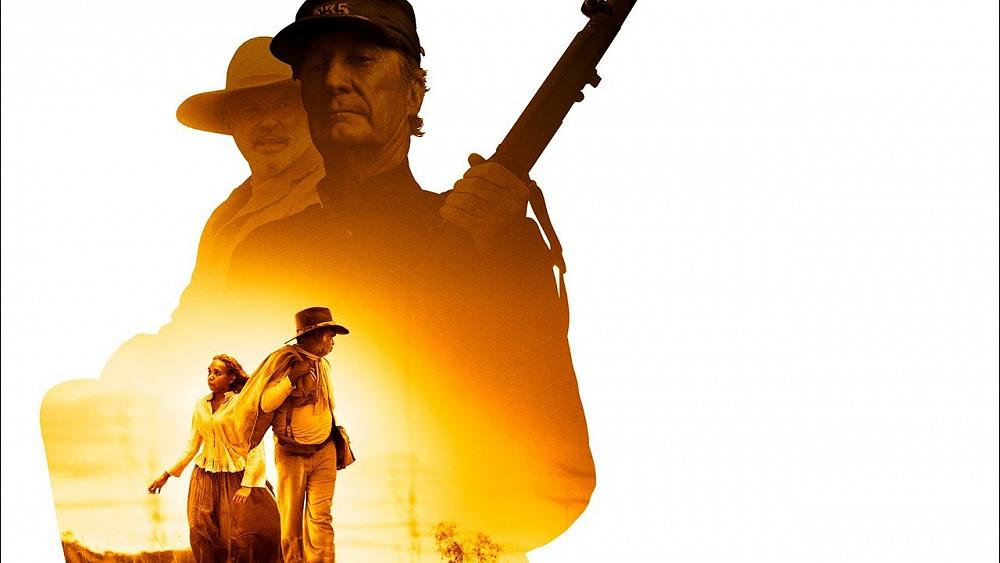
Sweet Country
Directed by Warwick Thornton. Reviewed by Paul Sorrell
It may be “sweet country for cattle”, as one of the characters puts it, but in this corner of outback Australia race relations could hardly be more sour. For this is a place where Aboriginal farm workers and their families are routinely beaten, raped, verbally abused, chained up like dogs and hunted down like wild animals. Drawing on the familiar conventions of the western genre, indigenous director Thornton skilfully draws us into a powerful story inspired by real events.
In the aftermath of the First World War — the film is set in 1929 – indigenous Australians were regarded by many white farmers as little more than slaves, to be rewarded or abused at their employer’s whim. Voting rights for Aboriginals were still many decades away. In this profoundly unequal society, human tragedy is always just a step away; it is just a question of what will provoke it.
The events chronicled by Sweet Country are set in train when Harry March, a cattle rancher and traumatised war veteran, visits neighbouring farmer Fred Smith (Sam Neill), requesting the loan of his “blackfella”, Sam (Hamilton Morris), to do some work on his station. An outspoken Christian and humanitarian who makes a point of treating his workers as equals, Smith agrees to this seemingly innocuous request to help a neighbour in need.
But it is not long before Sam and his wife Lizzie become victims of the damaged and brutal March and, following a long pursuit through the inhospitable desert lands of the Northern Territory, Sam ends up being tried for murder in a redneck town where he has no friends.
The complex tale that unfolds involves a cast of characters including a third farmer, Mick Kennedy, and the aboriginal boy Philomac (who may be his natural son), Philomac’s co-worker Archie and Sergeant Fletcher (Bryan Brown), the conscientious policeman who is charged with capturing Sam and bringing him to justice. Between them, they represent every point on the “racial attitudes” scale from subservience to rebellion, from equality and acceptance to the belief that a black man who kills a white man is fit only for the gallows, whatever the circumstances.
Against expectations, by the end of the film some characters are treading the path of redemption while others cannot move beyond culturally engrained judgement and violence. Sweet Country should be compulsory viewing for those who think that everything is sweet in the “lucky country” — and for the rest of us, too.
Tui Motu Magazine. Issue 227, June 2018: 29.