
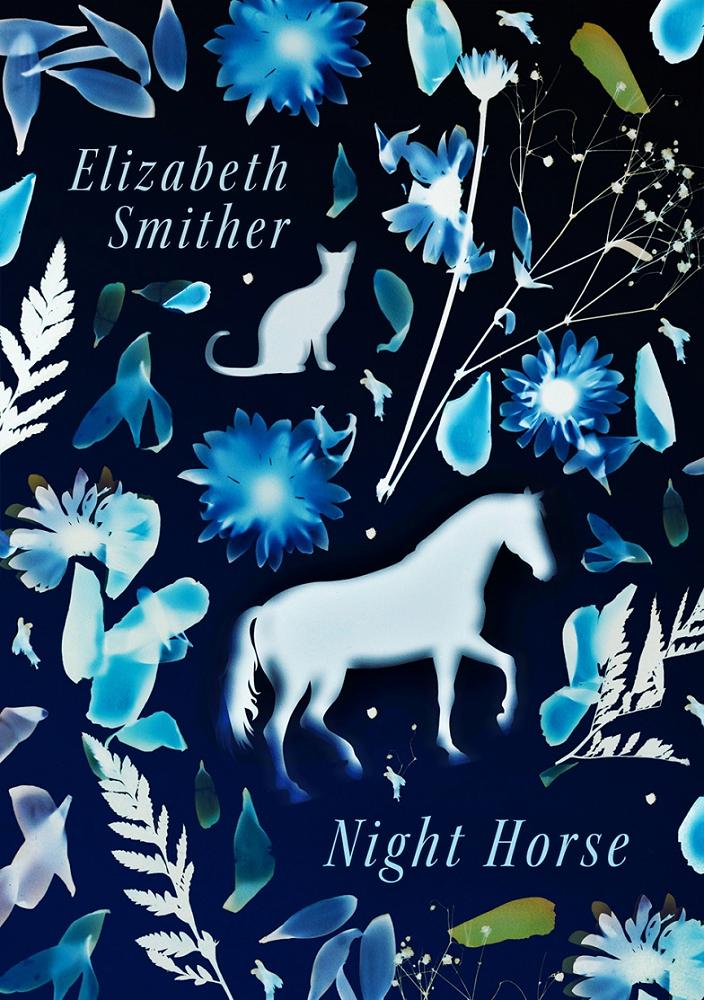
Night Horse
By Elizabeth Smither Published by Auckland University Press, 2017 Reviewed by David Schaumann
There are things in her book of poetry that Elizabeth Smither is not telling us. Somewhere in the white space at the end of lines, and most particularly, at the end of each poem in Night Horse, there is more to discover — but it is up to each of us alone to uncover this invisible ink, and doubtless, its story will be different for every reader.
The words on the pages draw us into Smither’s world, one that will be familiar to us all. Her subject matter is largely the everyday — people, families, animals, trips, food. She senses, examines and reflects on the characters and events that pass through her life, so often in a gentle, accessible style that is imbued with an understated affection for her subjects. From the charming little girl who “shapes the air as she passes through it” to the wistful mother in A Fall of Hair: “So your sleepy child could fill her hand / with an anchorage of shining silk.”
Often as a poem concludes, there is a gentle tugging at the consciousness — the understated and the implied — draws you back to read again, to see what more of Smither’s world can be seen and felt. The titular poem for example, paints an image of the Night Horse that is richly observant and evocative, then ends with “so otherworldly / It doesn’t see our headlights”, giving pause for thought, for gap filling and wonder.
This is striking, too, in Oysters which recounts errant dinner guests making off with a silver bucket of the delicacy, and ends with: “She smiled back with thin oyster lips. / The Rape of the oysters was talked about / all next week by the watercooler.”
Witty and wry in places, warm and subtle throughout, Night Horse will appeal to those who wish to be invited in to observe the workings of Smither’s familiar world, to contemplate all that is revealed and all that is hinted at. Ultimately this world though remains partially obscured in the white space where Smither’s words have ended.
Tui Motu Magazine. Issue 225, April 2018: 28.