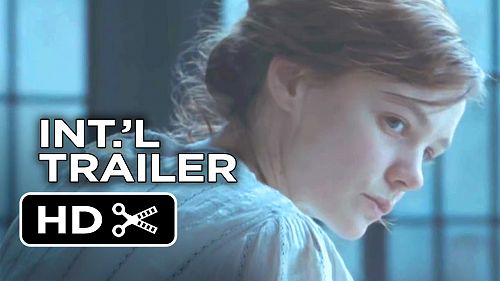
Suffragette
Directed by Sarah Gavron
The year is 1912, the place London under H. H. Asquith’s Liberal government. After 50 years of unsuccessful peaceful agitation, the movement for women’s suffrage embraces a campaign of civil disobedience under the leadership of Emmeline Pankhurst. Shop windows are broken, pillar boxes blown up, and activist cells set up in homes and workplaces.
One such place is the Glasshouse Laundry in Bethnal Green where Maud Watts (played by Carey Mulligan) works. Encouraged by a workmate, she gradually becomes radicalised and forms links with other suffragettes including pharmacist Edith Ellyn (Helena Bonham Carter). Early in the film, Maud testifies before a parliamentary select committee chaired by a sympathetic David Lloyd George, speaking candidly about the long hours, poor pay and dangerous conditions experienced by laundrywomen.
When her submission — and those of thousands like her — is rejected, the suffragettes turn increasingly to a campaign of disruption and violence against property. They are shunted in and out of prison, wearing their sentences as badges of honour. Many refuse food in prison and are subject to force feeding. For Maud, the cost of commitment is enormous — first she loses her job, then her home and family, and ends up living in a disused church.
By interweaving real events and people (although Mrs Pankhurst, played by a stately Meryl Streep, makes only a cameo appearance) with the story of fictitious East End battler Maud, director Sarah Gavron is able to make powerful connections between the notion of votes for women and their real-life concerns — such as better pay and control of their children’s fate.
Maud’s story is filled out by subsidiary characters such as feisty pharmacist Ellyn, the predatory laundry foreman, and police detective Inspector Steed (Brendan Gleeson), who is assigned to keep Maud and her colleagues under surveillance. These are by no means cardboard cut-outs. Steed has some sympathy for the women he spies on; as an Irishman, he too is an outsider.
The film ends by connecting the suffragette story with a true event for which the movement is perhaps best known — the death of Emily Davison under the hooves of the King’s horse at the Epsom Derby in 1913. Rather than carrying the action through into the First World War (when many suffragists supported the conflict), this incident (and the massive funeral that followed) provides a satisfying climax to an exceptional film, giving the movement the martyr that Asquith had been desperate to avoid.