
Speaking up
Ann Hassan reminds us that staying quiet at times like these risks us becoming complicit in the evil being perpetrated in our world.
IN TIMES LIKE these — wartimes — we’re reminded how important it is to use our voice responsibly. Most of us are not in the position of having an audience to address, so we sign petitions, attend protests or write to our MPs to have our voices heard. But we’re also reminded how vital it is for those in positions of power and influence to speak up and oppose wrong when it is being done.
Christian authorities readily speak up on “moral issues” — euthanasia, abortion, gay marriage, for instance — but are often quieter on global conflict, because doing so can be seen as taking political positions. True, speaking up can require walking a tightrope, but then silence is equally dangerous.
As Christians, we are commissioned to “Speak up and judge fairly; defend the rights of the poor and needy” (Proverbs 31:9). It was heartening to see Aotearoa’s Christian leaders unite in opposition to the Treaty Principles Bill. And in the last few weeks, we’ve also seen Catholics publicly oppose the genocide in Gaza.
Last month, the Council of Priests of the Dunedin Diocese made public their letter to Winston Peters, Minister of Foreign Affairs. The priests write that “we feel the call to do something as an act of solidarity with those who are suffering in Gaza at this time”, responding to the passivity of an international community which “does not appear to be doing anything to bring an end to the violence.” The priests urge our government “to speak up in defence of the people of Gaza”, continuing Aotearoa’s “great history of speaking up when there are injustices, assisting those who are suffering and advocating for peace.”
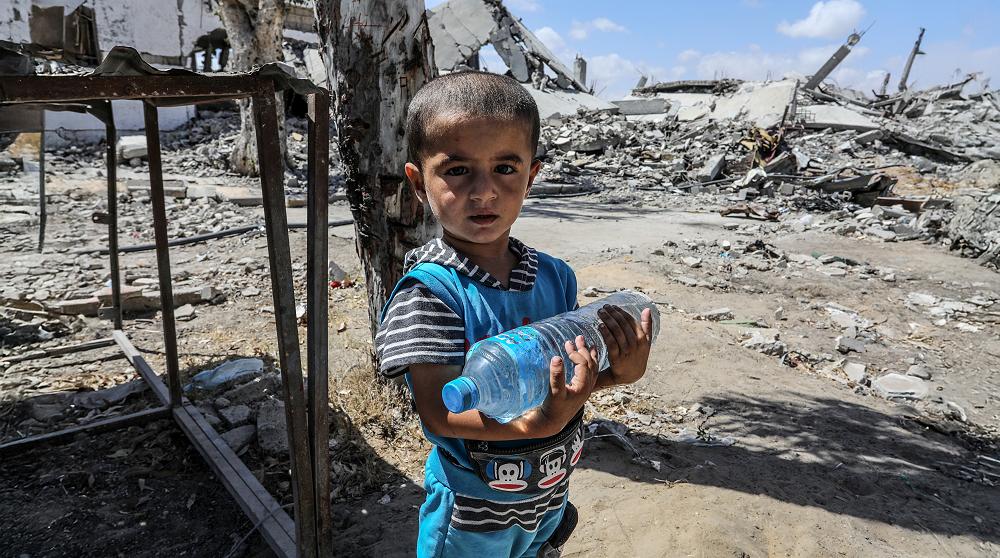
The Sisters of Saint Joseph have also spoken up. In June, the Josephite Justice Office published a statement denouncing “both the massacres and taking of hostages by HAMAS, and the criminal genocide being committed by the Israeli government”. The Josephites make clear that “[d]enunciation of the atrocities in Gaza is condemnation of the Israeli Government, not discrimination against the Jewish people” and that to “speak out against the violence of the Israeli Government is not antisemitism; it is a cry for justice.” In a lesson on how to walk the tightrope, the letter continues: “To support the people of Gaza as they face annihilation is not antisemitism; it is a claim for life. To demand that UN food trucks be allowed to enter the Territory is not antisemitism; it is a call for efforts to end starvation. To condemn the destruction of Gaza is not antisemitism; it is a denunciation of wanton injustice. To stand for a two-state solution is not antisemitism; it is a claim for the rights of a devastated people.” The letter closes with a challenge: “As Israel continues its war crimes and genocide of Palestinians, Josephites continue to ask, what can we do? What will we do? These are questions for all of us who care about justice.”
These letters from Dunedin’s priests and the Josephites join the efforts of many others. Justice for Palestine, Pax Christi and Alternative Jewish Voices have organised events across the country, and there are a number of other Palestine solidarity groups active in Aotearoa. The Palestine Solidarity Network Aotearoa (PSNA) is tireless and holds marches every weekend in our cities. Green Party co-leader Chlöe Swarbrick is gathering support for her Unlawful Occupation of Palestine Sanctions Bill. And there are individuals within our community who work tirelessly for the Palestinian cause, writing letters and raising awareness, including Lois Griffiths, Barbara Cameron and Barbara Menzies — all contributors to Tui Motu.
As we answer the challenge to speak up, we can be emboldened by the public statements of others. Responding to the call to “speak up and judge fairly”, we will face risks. We might judge imperfectly, or find ourselves at odds with others. But in silence we risk becoming complicit bystanders — morally implicated in the ongoing wrongdoing. Many in our communities are speaking up, lending their voices to the global call to end the death and destruction — devastation which, at present, appears to be flourishing and unrestrained.
Tui Motu Magazine. Issue 305 July 2025: 14