
Isolation for the Sake of Many
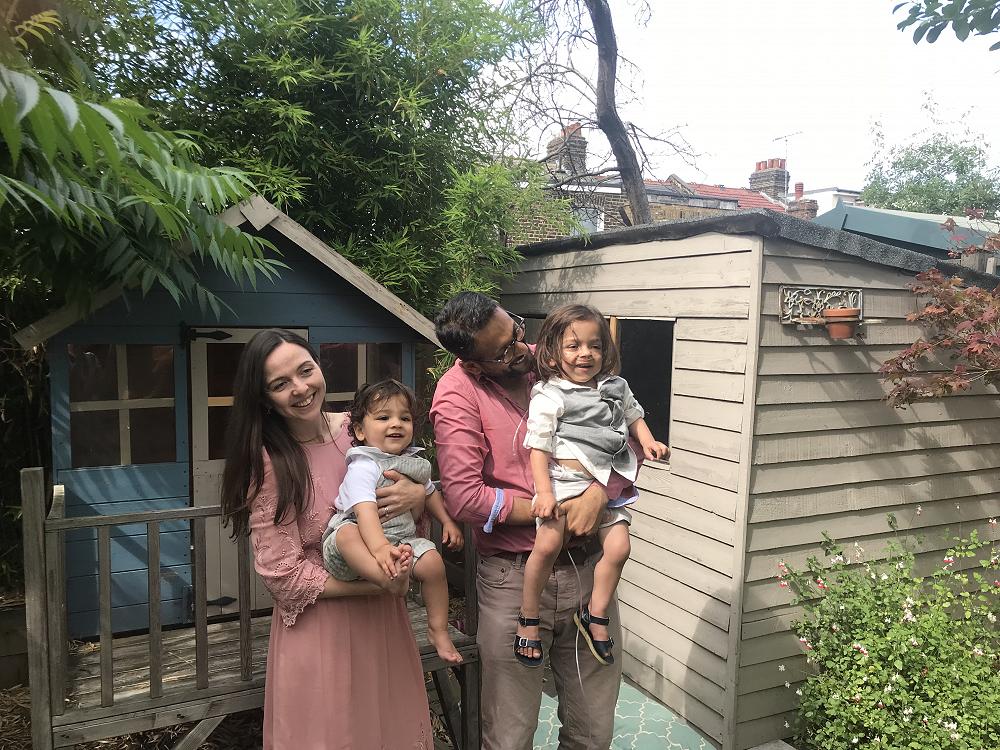
Catherine Soskice-Gandhi faces the COVID-19 pandemic with her vulnerable three-year-old son.
As the parent of a child with chronic respiratory disease, the past few weeks have been surreal as I have watched my personal paranoias transform into the subject of collective global panic. Since my son Francis was born prematurely, three years ago, his lung disease has required countless hospital admissions, many to paediatric intensive care. Even at home, he requires oxygen. Due to his health vulnerabilities, I have always been the parent hovering with the hand sanitiser, who texts before a play date to make sure that no one has a cold. Suddenly, the rest of the world shares my fear of invisible particles which could lead to a devastating respiratory crisis.
Francis was born at 27 weeks. Like most of the other micro preemies in the neonatal intensive care unit, his lungs were too underdeveloped to function, and he was put on a ventilator at birth. As the weeks went by, we watched with a mixture of joy and envy as other babies were successfully extubated — taken off their ventilators — and grew strong enough to go home, while Francis was stuck. When he finally came home, aged six months and with oxygen in tow, doctors made it clear to us that he would likely be admitted to hospital once the winter cold and flu season struck. We were prepared for this, but what no one anticipated was that the common cold virus would lead to total respiratory failure, and that this would happen repeatedly.
The reporting about coronavirus patients who become critically ill is horribly familiar to me. Dozens of times we have arrived at hospital with a child who was in respiratory distress — his breathing too fast, his heart-rate soaring from the effort of keeping his body oxygenated, and still his oxygen levels dropping. We would watch with rising panic as doctors tried one intervention after another: more oxygen, nebulisers, oral steroids, then high-flow oxygen, then intravenous steroids — all which failed to rouse the toddler who would become floppy and lethargic, his eyelids drooping in spite of the bright lights and strange faces around him. Francis was admitted to intensive care eight times.
The current national conversation about the shortage of ventilators is unprecedented, but Vikram and I have had a taste of the scarcity of critical care. Paediatric intensive care (known as PICU) is provided in just a handful of hospitals. Beds are very limited, and it is common for children to be transferred to hospitals far from home. Every time Francis deteriorated, the doctors at our hospital would have to start ringing around to find a unit that could take him. We were extremely lucky that a bed in London was always available, although I have met parents who weren’t so lucky. That uncertainty was stressful enough, so I can’t begin to imagine how patients and relatives in the current crisis feel, now that for some, the question is not where care will be provided, but whether it will be available at all.
A typical stay in intensive care would last about two weeks, with a further two weeks on the general ward whilst Francis recuperated and weaned off heavy doses of opiates. Patients on ventilators are heavily sedated with a combination of drugs most of us have heard of, like morphine and fentanyl, and their less well-known cousins, dexmedetomidine and vecuronium. We became fluent in the nurses’ argot — "I’m just off on my break. Francis is vecc’d (paralysed with the muscle relaxant vecuronium) and his dexmed is due a change at half five."
We would participate in Francis’s care where we could, helping to change nappies, wiping his eyes with sterile gauze and saline, combing his hair. I felt torn between wanting him to know my presence, to feel comfort from my touch, and at the same time wishing for the drugs to provide total oblivion against the pain and distress. This essential cognitive dissonance allowed me to read Francis book after book in the hope that the words could somehow benefit him, whilst at the same time convincing myself that when it came to procedures like piercing his side to insert a chest drain, he was a million miles away. I had to believe both.
The frequency of Francis’s admissions meant that we adjusted to the environment in a weird way, but there were still cruel shocks. On one admission, Francis’s blood oxygen levels dipped so low that his heart stopped beating. A huge crash team materialised within seconds, a kind nurse ushering us out of the room. We watched through the window as one of the doctors performed chest compressions. Later that day, Francis was baptised by the on-call Catholic chaplain. For several months, that October day retained its title as the worst day of our lives.
In March, it was toppled by a new worst day. Francis had been on a ventilator for over a week, and was very unstable. On Mother’s Day 2018 — I remember it well — he deteriorated so drastically, that we were told to prepare for the worst. I remember the moment that I truly realised what was happening, because the consultant offered to make me a cup of tea. No one does that. Not nurses, not junior doctors, and certainly not consultants. She then sat down next to us and told us very clearly and honestly that Francis did not have any hope of surviving through the night. "And if he does, somehow make it," she said, "his lungs will be so damaged from the high ventilation pressures that he won’t be able to recover." We cried, and she cried, and we thanked her for her honesty. I still thank her. It is miraculous that Francis survived, but she was right to prepare us.
Those most extreme times are perhaps what give the name "intensive care" to this field of medicine, but among the hundreds of hours we spent there, there was also levity. People cope in different ways, but for us, humour was the best medicine. I loved it when nurses would tell me that Francis was being "naughty", by having a poor blood test result or by wriggling free of his oxygen monitor. Even though these events had nothing to do with him, the act of ascribing him with agency was for me powerfully encouraging.
Among our reading material were Hilaire Belloc’s cautionary verses, which describe with wicked glee the sticky ends met by misbehaving children. I explained to the nurses that, although it might seem odd to read to Francis about children eaten by lions or squashed by falling masonry, we just wanted to share a laugh with him.
Francis has been in three different PICUs, and in each one his care was truly impeccable. But it was clear that this was a system already uncomfortably close to capacity — of beds and of workers. As intensive care units fill up over the coming weeks, I am all too aware that the things that made our experience bearable — one to one care from nurses, the ready availability of doctors, are going to be increasingly limited. The availability of protective equipment is also something we never gave a moment’s thought to — the only consideration I ever gave to it was environmental, looking on with guilt as the bins filled up with disposable gloves, masks and gowns. I know that NHS staff will move mountains to provide the best care that they can, but as they work relentlessly with fewer days, suffer anxiety about equipment shortages, and in many cases become ill themselves, I like everyone am concerned that an already overburdened system will be close to collapse.
Francis is in much better health these days. He is still on oxygen, and is still admitted to hospital with every cold he gets — we have already spent two weeks in hospital so far this year — but he no longer plummets to the point of requiring intensive care.
The coronavirus, for all its cruelty, does not seem to have the same devastating impact on children as it can on adults. On some level, this is reassuring to know. But my fear is that the coronavirus wouldn’t see Francis as a toddler. It would see him as an elderly life-long smoker with emphysema, because that is about how good his lungs are. Obviously, this is an unscientific description, and I’m sure it would earn me a friendly eye-roll from his doctors. But I have seen faces cringe when they see Francis’s chest CT scans for the first time. "Chaotic" and "abnormal" are the words used to describe his lung tissue.
So although the coronavirus may be kinder to children, like many other vulnerable families we are totally isolating to protect him from Covid-19, and apart from anything else, to prevent ourselves from becoming a further burden on a health system stretched to its absolute limit.
Tui Motu Magazine. Issue 249 June 2020: 10-11
This article first appeared in The Times of London 21 April 2020.