My Beloved Mother is Back
Many families have loved ones who have old-age-related mental illness. John Dunn tells of his mother’s illness and the painful, surprising and loving journey they are sharing.
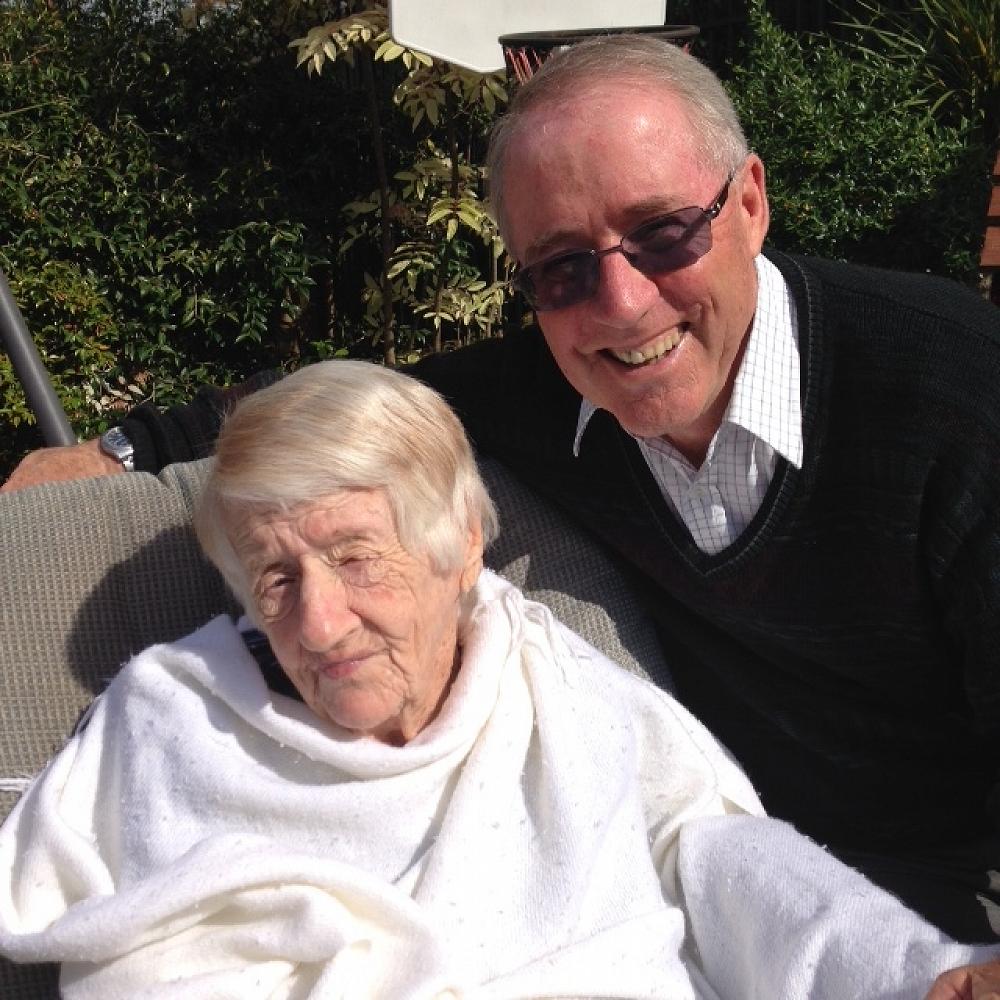
The tiny little figure curled up in the lazyboy chair opened her eyes and exclaimed: “It’s my John, it’s my John!” With a big smile, she held out her arms for a hug and a kiss and we held each other for a moment. Her name is Mary Dunn, and she is my Mother. She is nearly 94 and has suffered from a form of dementia for three years. For two of these years she has lived in the dementia hospital, which she occasionally calls home. She always recognises me and welcomes me with the same beautiful greeting. It is the highlight of my day.
And then, in an instant, she is gone back into her own world. The next two hours are filled with pushing her in her lazyboy armchair (fitted with little wheels) around the dementia hospital, feeding her with endless cups of tea, chocolate (her favourite is Cadbury’s Top Deck) and biscuits — or at mealtimes, her meal. We go out into the garden and check up on the rabbit in his hutch, examine the flowers, and if the day is good, travel up the footpath to the end of the street examining the gardens. This is her world, which we share together every day.
Capriciousness of dementia
Her language comes and goes, especially if her attention span diminishes to one or two sentences. Sometimes it is unintelligible: (“ooga, booga, wooga...”). Sometimes it is beautiful, “Thank God for violets, their smell is just exquisite”. Sometimes it is abusive, especially if I do not do immediately what she wants. “You f*****g religious hypocrite, I love you forever, but not today. Today I hate you.”
And then, in the middle of this delirious stream of consciousness, comes connection with reality. “Have you finished your antibiotics and your prednisone?” When I respond: “Yes,” she replies: “Good, I always worry when you have to go to those lengths to get rid of the ‘flu. I have been worrying about you every night.” And, for a little while, I have my beloved Mother back and we can talk.
Fog of dementia
Every so often — unfortunately, increasingly less often these days — she “surfaces” for a while, and is lucid to the point that we can have a reasonable conversation about her, about me, about her friends, and about her future. At those times she describes her illness as a “fog” that comes down on her, something she has no control over. Sometimes, she says, she is aware of what is going on around her, and other times not. Sometimes she has no awareness that I come to spend time with her every day. Further, I can say something to her one day and seem to get no response, but several days later, she will bring up the topic and speak about it.
Community of support
Those with loved ones who have an old-age-inspired form of mental illness, be it Alzheimers, or, as in my Mother’s case, some form of delirium, will recognise this story and the journey it entails. We all follow this journey, each with its unique twists and turns, with our loved ones. We form a community of love in the hospital, where a deep understanding among families, be it of joy or pain in what we are going through, binds us together.
In a similar way, I have great admiration for the nursing staff who work with such patience and love with our family members. Because I am there every day, I get the chance to see more deeply into the workings of the hospital. I like to think that we too form a community around the patients. The staff get paid so little yet give so much. Many family members would be thrilled to see the level of care and affection which their loved ones receive.
My turn to love
On a personal note, how do I deal with all this? I do not hide it, but proudly and publicly make my Mother a part of my current life story. It is a story of faith, hope, and love. In this sense, I think of it as “my turn”. Unconditional love was shown me by my beautiful Mother over all the years of my life. Now it is my turn. I am privileged to be able to spend time with her every day and maintain our connection and, in part, her connection with the world. There is no denying that it is a hard journey, which cuts to the depths of one’s being. Travelling together with many people makes it not only bearable but inspiring. The pain of watching her struggles and being in that sense party to her pain is something I accept and make part of who I am. The sense of being in such a community of care, both in the hospital and in my parish, also keeps me going, and, hopefully, balanced.
Mary's still giving
At another level, her illness raises important questions at a time when the nation debates the merits or otherwise of assisted suicide and euthanasia. To me, my Mother seems to exist on two levels: on one level there seems to be no centre, and everything has neither rhyme nor reason. On another, deeper level, her identity and sense of being a loving person in contact with the world around her, seems to remain emphatically intact. Today she was admiring the apricot colour of a friend’s blouse, discussing the merits of colours, and conversing with her about her grandchildren. The true Mary Dunn, it seems to me, still has more to give.
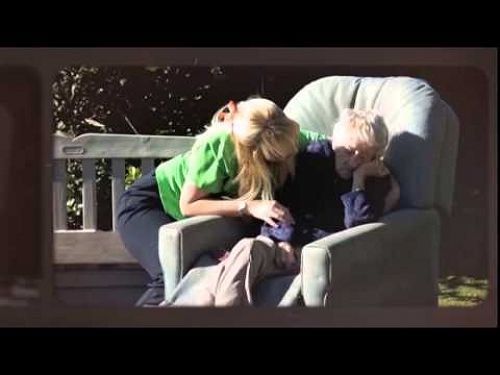
To illustrate what I mean, let me tell a story about her. The activity officer of the hospital was a beautiful and loving young English woman named Kate. Kate fell in love with my Mother and delighted to spend as much time as she could with her, loving her as a daughter and attending to what she said and to her needs. To me, she was an angel of God’s providence!
One day in January 2014, my Mother surfaced for almost a whole day, and became completely lucid. Kate wrote the story of that day for the company which runs the hospital, and finished up winning an international prize. Recently I met two Irish nurses who told me that Kate’s Story was part of the required reading for all medical students at their university in Dublin. You can read it for yourself at http://www.nathaniel.org.nz/euthanasia/16-bioethical-issues/bioethics-at-the-end-of-life/345-kate-s-story-the-person-inside-the-person-with-dementia-synopsis-only.
I am so proud that Mary Dunn in her dementia has “gone global” and is making a contribution to reflection on how both specialists and ordinary people respect, love, treat and care for those who suffer from this terrible affliction. I continue to be proud to be her son, to love her and to share in her life.
John Dunn is parish priest of St Ignatius parish, St Heliers, Auckland. He taught theology for many years both in Mosgiel and Auckland.
Published in Tui Motu Magazine, November 2015.