Be the Change
Mary Thorne discusses why now is the time to include women in the Church as fully participating members.
I heard a parable this morning as I picked up the toys after last night’s family dinner. Hugely popular heavy metal band from Waipū, Alien Weaponry, and internationally award-winning conductor, Holly Mathieson, were speaking on the radio about their upcoming collaborative concerts, called “Stronger Together”, featuring the band and the New Zealand Symphony Orchestra. Alien Weaponry are acclaimed at home and overseas for their music which incorporates taonga puoro and lyrics in te reo. Holly Mathieson explained that both orchestral and heavy metal musicians push themselves to the extremes of their genres, and that Alien Weaponry and the NZSO came to their collaboration with a real openness. She said that the collaboration had prompted important questions such as, “Who are we speaking to?” and “What are we saying?” In these days of environmental crisis, #MeToo and Black Lives Matter, is it time for a reset?
We all live with the challenge of reconciling clashing areas of our lives and we don’t talk to one another much about our experience of agonising over dilemmas of truth and justice. It’s unsettling and painful and, to be frank, people are not very interested in grappling in a deep and challenging way with aspects of life that we may be getting a bit wrong. Eyes glaze over and there’s an uncomfortable shuffle when such topics arise. We are thoroughly invested in the status quo. I remember being schooled on the impropriety of religion, politics or bodily function in polite conversation and the opportunities for impolite conversations were few and late at night!
Church for Our Place and Time
As an older Catholic woman, I feel that I am wrestling with a huge, ill-defined conundrum. The Catholic Church, spiritual home of generations of my people, needs to be freed from the European history and culture in which it is imprisoned and be re-founded as a church for our place and our time. Church life, derived from the Gospels, must be relevant to the human life in the neighbourhoods that surround it. Many, many people feel similarly but for individuals in parish communities it is lonely to feel the longing for change.
Many years ago, at a Holy Thursday evening Mass, Joe Grayland preached a homily reflecting on sacraments in which he mentioned the “breaking of the waters” that is an integral part of the birth process. Women present were moved beyond words that amniotic fluid, the milieu in which all mammalian life is nurtured and protected and which bears us to new, independent life, was acknowledged as another aspect of life-giving water, adding to our understanding of the sacrament of Baptism. The insight has stayed with me. It is just as fruitful to ponder as the Exodus account of freedom and new life achieved through Moses parting the Red Sea. It feels wondrous and joyful to have the freedom and the opportunity to bring one’s own lived experience to liturgy and it is essential for the life of Church that this can happen.
The Christian sacraments are rites that are integrally related to embodied life. They are about the God-filled realities of being born, being nourished, sustained and healed. They resonate powerfully with human beings — perhaps eliciting particular feelings for female human beings with the physiological capacity to birth and nurture life, and to whom the possibility of officiating at the celebration of a sacrament is denied. Clericalism is an aspect of the chasm that exists between the sacramental life within Church communities and ordinary lived experience. Paternalistic, rigid organisation and structure deter creative involvement.
To Be Healed of Clericalism
The whole People of God must take responsibility for healing the brokenness of clericalism. For women, clericalism is yet another layer of blockage to full, equal participation in the Church. Not only does our lay vocation preclude us, but, presently, our sex means there can never be anyone who is like ourselves and who can fulfil the role of priest, bishop or pope within the institutional Church.
For decades women have called for change. We cannot remain trapped in feelings of exclusion and desolation. There has been a shift. “I am the change” reads a Greenpeace bumper sticker. “Be the Change” exhorts an Auckland-based group of women who are committed to journeying towards a new inclusive model of Catholic Church. They look to the Gospels and see a human man from Nazareth, a person of faith and integrity, a carpenter within his community. His relationship with God is so intimate and the Spirit of God so powerfully present in him that he is a decisive manifestation of God with us. Jesus embarks on a mission to teach the community of faith in his occupied country that God knows their pain, they are beloved and free. There is a new way of being. He sets out and begins by being baptised into the prophetic protest movement of John.
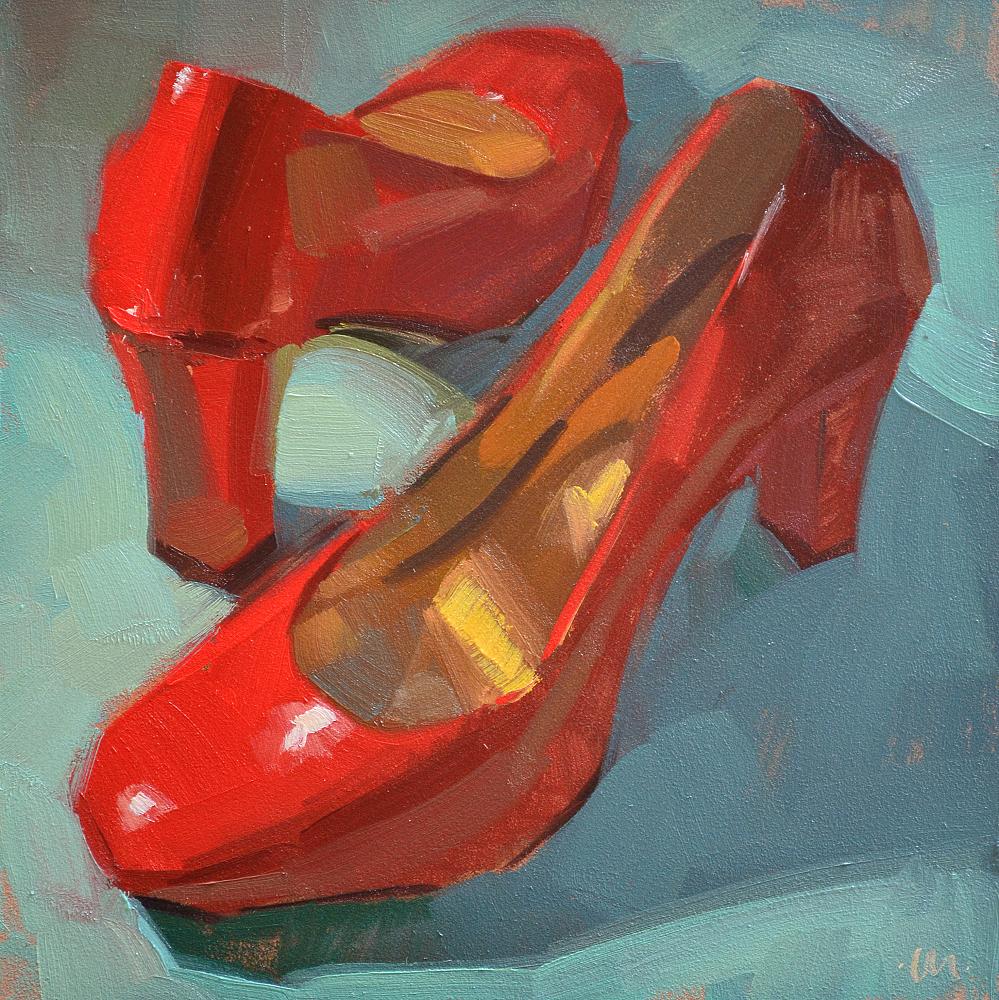
Women and men of Be the Change Catholic Church, Aotearoa claim their freedom and mission to challenge all that is unjust and oppressive. We take responsibility for creating a safe, supportive, nourishing, hope-filled space that meets our need and welcomes newcomers. In new ways we communicate our message of radical inclusion. An example of this is the “Pink Shoes into the Vatican” project.
Support the Shoes Pathway
We are planning an ambitious public art work which, to succeed, will require the support of many of our sisters throughout the country. It is envisaged that on NZ Women’s Suffrage Day, 19 September, women’s worn-out shoes will create a path along a significant route that ends at St Patrick’s Cathedral in Auckland. Other events may take place elsewhere.
Worn shoes symbolise hard wear over long journeys — we have given much love, energy and time over many lifetimes and still we find the door closed to us. We own our journey and claim our freedom to live as the Gospels show us.
Revise the Baptism Ritual
To bring naked gospel truth to the centre of our faith communities would allow us to develop prayer and ritual out of our own culture and our own whole lives.
Many young parents today are incorporating Māori tradition into rituals following the birth of a baby, in which the placenta is reverently returned to Papatūānuku. This part of a woman’s body which has done its work, this tiny new human person birthed into God’s great gift of life, the all-encompassing and sustaining Earth; could these not be woven into a Baptism liturgy, connecting the ritual to vital concerns of our times?
As Alien Weaponry and the NZSO demonstrate, genuine respect for difference and openness to engage will take us far along the road to renewal. The deep awareness that we are loved and free drenches our lives with awareness of beauty and abundance and goodness and holiness — despite our difficulty and struggle. This is a helpful way to counter the abuse of clericalism. We MUST SPEAK, as Jesus did, with power and love.
Tui Motu Magazine. Issue 260 June 2021: 4-5