Gazing with Love
Paul Sorrell shares how his love of wildlife photography has become a personal and shared contemplative practice.
Earlier this year I was surprised and delighted to get an email from Lucy, a 10-year-old bird lover from Auckland. Lucy and her mum were planning to travel to Otago on a wildlife-watching tour and they were keen to visit my local nature reserve, Orokonui Ecosanctuary, near Dunedin.
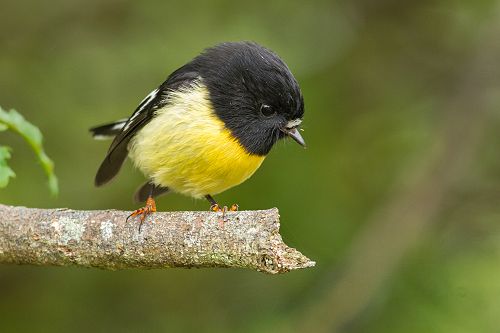
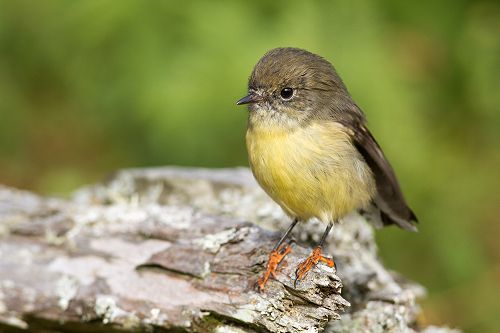
Lucy had read my new book about bird photography and was eager to improve her technique in the field. The three of us spent a wonderful morning at Orokonui, and I will not soon forget the joy on the faces of mother and daughter as they snapped away at a friendly ngirungiru (tomtit) sitting a couple of metres away.
Spiritual Practices
As a convert of around 25 years’ standing, one of the things that attracted me to the Catholic faith was the many spiritual traditions available for people to draw on – from the Desert Fathers and Mothers, the Celtic saints of the British Isles and Julian of Norwich to Thomas Merton and Richard Rohr.
Today, my personal prayer life is informed by reading Scripture each morning through the lens of the Lectio Divina, closing the day through the reflection offered by the Examen, and a fortnightly Ignatian prayer/study group to which I feel privileged to belong.
Supplementing these more traditional practices, my love of the natural world has stimulated attitudes and practices that fall under the broad rubric of “creation spirituality”. In my case, with a distinctive twist.
Wildlife Photography
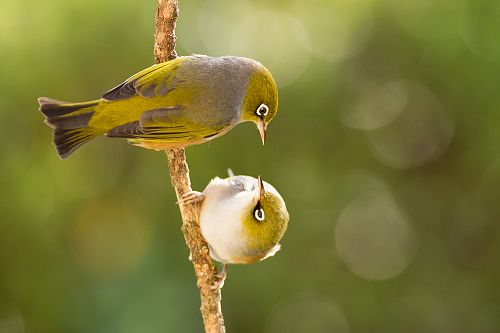
For the last 15 or so years, I’ve been involved in wildlife photography, refining not only my technique, but my perception and appreciation of the natural world – one of many portals to the divine.
For me, spirituality is all about making connections — to others, God, ourselves and the world around us — a deepening of the bonds that cement each living (and even inanimate) thing to every other one.
As Pope Francis has reminded us, we share a common home with all life on this planet and we have a responsibility to preserve and care for it.
For me, photography has opened a new and creative window on this challenge. The camera offers a new way of seeing, literally framing nature through the lens, opening a space through which our experience of the world around us is extended and enriched.
Sharing with Others
This year, I published a book, Getting Closer: Rediscovering Nature through Bird Photography (Exisle Publishing), in which I summarise all I’ve learned on the subject in the hope of encouraging others to take up their cameras and make their own discoveries about the wild wealth that lies around us.
I underline the importance of really getting to know a particular spot, visiting it again and again in all weathers, different times of the day and through all the seasons of the year.
Invitation to Contemplation
This practice breeds a deep attentiveness, an intimacy, an immersiveness, that is essential to the development of a personal spirituality. If this sounds akin to meditation, then that’s precisely what it is.
When it happens, getting in “the zone” – achieving a state of attunement and at-one-ment with my avian subjects – can inspire feelings of privilege and gratitude, and occasionally even a sense of awe.
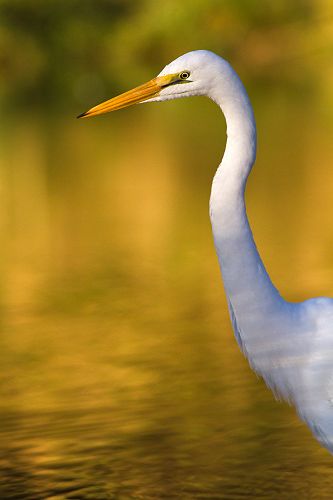
I shall never forget the day a kōtuku (white heron) dropped out of the sky and touched down a few feet in front of me as I lay beside a local lagoon. With precise and elegant movements, this rare visitor calmly explored the shallows as if I wasn’t there.
The experience was enriched by my knowledge of this bird, which has a special place in Māori nature lore, and every winter disperses widely across New Zealand from a single breeding site on the West Coast of the South Island. I felt a quiet joy, a sense of being graced by this wholly unexpected visitation, a feeling of communion that must have lasted only a few minutes, but will stay with me always.
Learning to Love
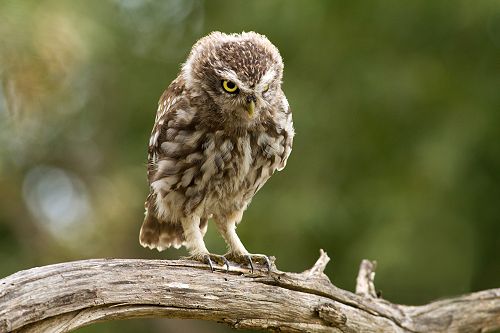
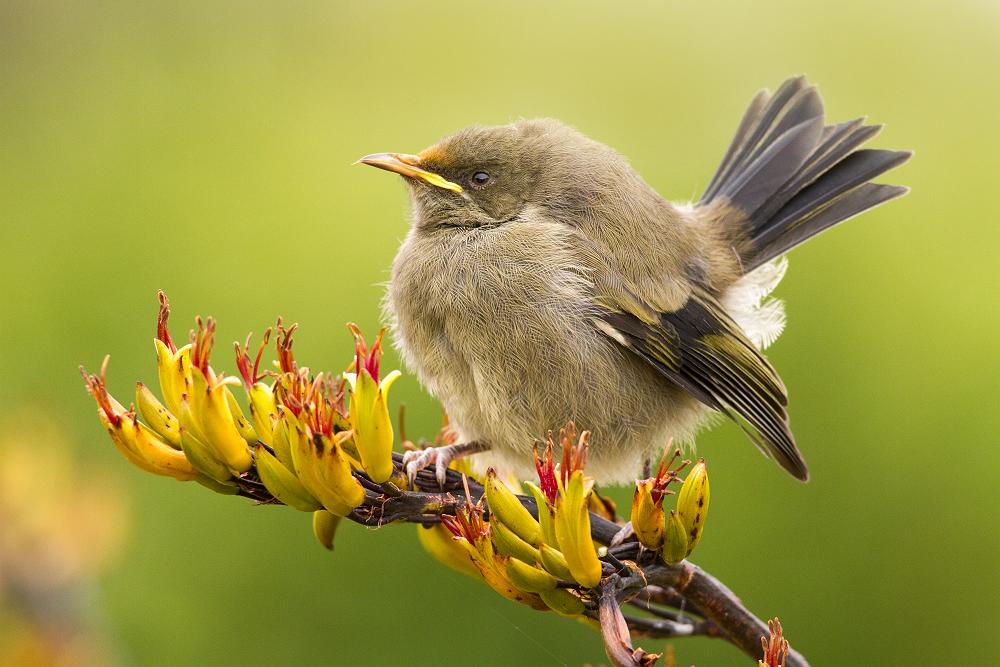
I’ve come to see that the birds that live around us are inhabiting a parallel universe, doing all the things we do – seeking out mates, building homes, gathering food, nurturing and protecting their young.
My long-standing engagement with nature, and identification with the creatures I observe and photograph, has led to the realisation that we humans are part of an intricate, interconnected web that we harm at our own peril, and indeed to the detriment of all life on the planet.
We will only protect what we have learned to love. This is a lesson that we are slowly and painfully learning – let’s hope it’s not too late …
Sometimes, of course, when the birds are not co-operating, a photo expedition becomes a walk in the park or the bush, of beside a lagoon or lake – outings which have their own quiet rewards.
My engagement with nature, as with life taken as a whole, is a work in progress, a deeply rewarding exploration of a world that I am discovering to be an integral part of who I am and who I am becoming.
And, since writing the book, and engaging in talks, articles and workshops, I’ve become aware that my “spiritual” practice is also a social one. Sharing my vision with others — sharing the connectedness, the joy — has become integrated in my approach. I look forward to helping other Lucys realise their own visions of the wild.
Tui Motu Magazine. Issue 263 September 2021: 8-9
Gallery