Being of Service
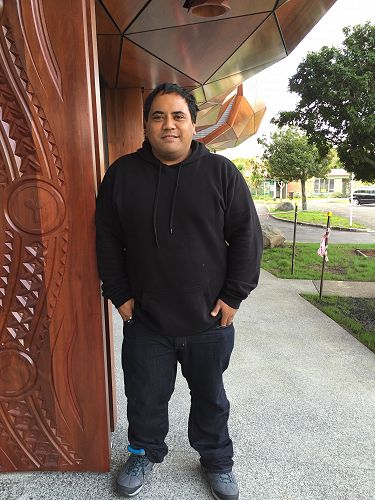
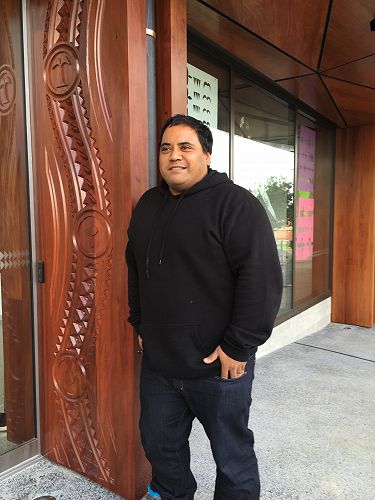
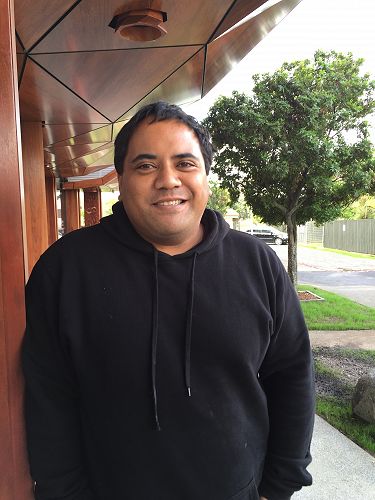
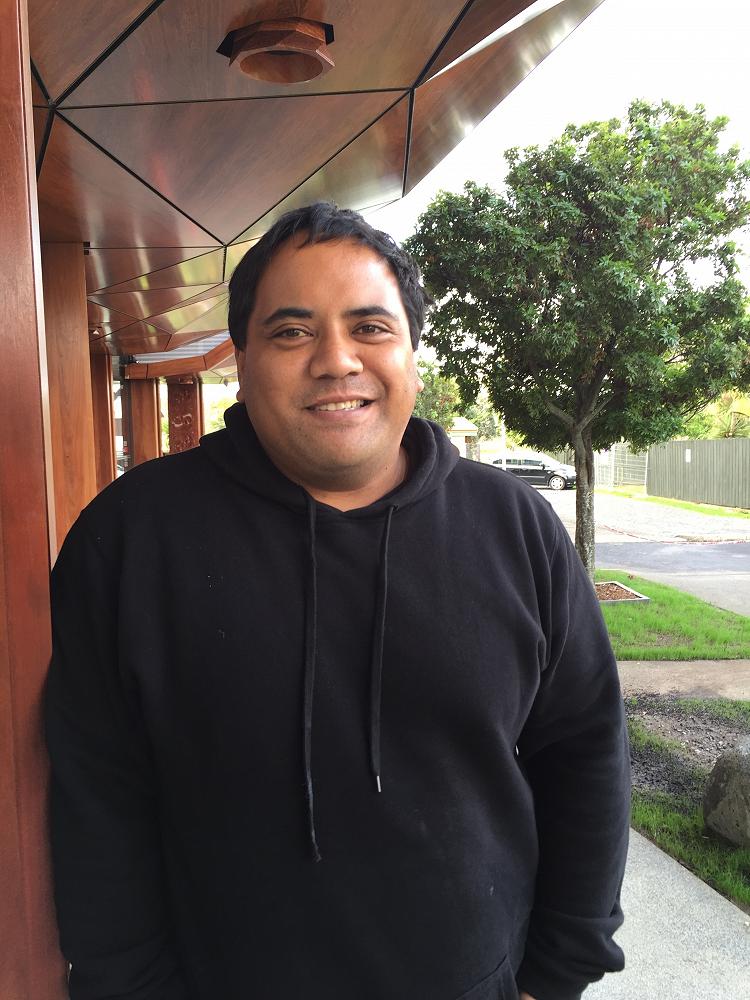
Petelo Esekielu is the coordinator of Te Oro, the community centre for young people in Glen Innes, Auckland. Ann Gilroy talks with him about his commitment to community and the importance of Te Oro for local young people.
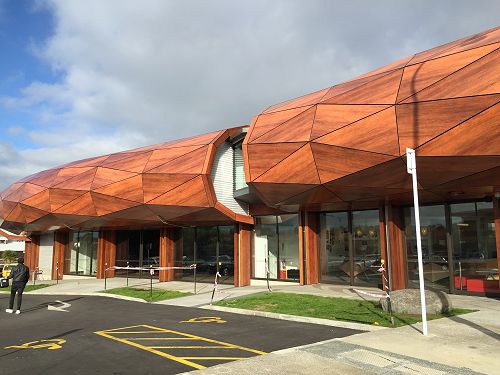
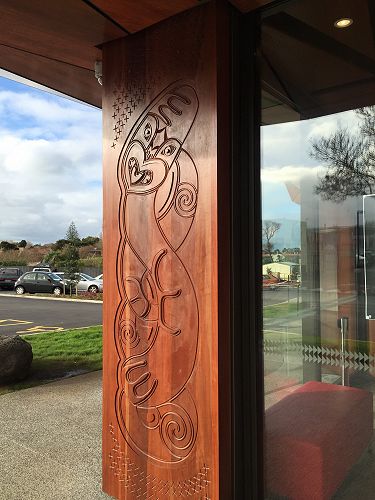
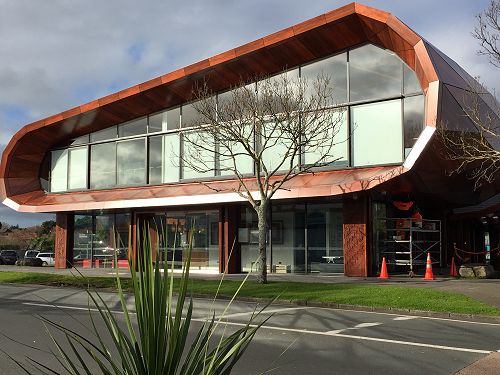
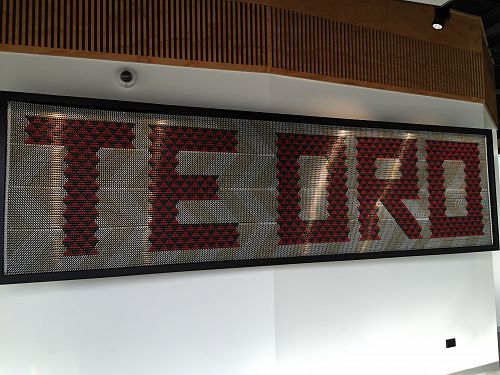
A tui among pigeons — Te Oro, curved and sculptured in wood and glass, is a resplendent, humming, state-of-the-art community centre sitting among the utilitarian buildings of the Glen Innes township. It’s been the dream of the local community for 20-30 years. Petelo Esekielu, the facility co-ordinator, reflected: “I was in form 3 when I heard the idea. Now I’m 32 and we’ve finally got it.” He runs operations day- to-day, ensuring the centre is inviting for the young people of Glen Innes. “This centre is the first time Auckland Council has ventured to offer all the arts — we’ve got theatre, visual arts, a dance studio, music studios — so all creative art forms can be taught here.” It takes talent, vision, passion and commitment to design, build and develop a successful community centre and Petelo has been with the project from design to opening.
Family influences
“I was born and raised in Glen Innes, a local boy. St Pius X was my primary school and Sacred Heart College up the road. What brought me here (to Te Oro) were the unintentional things like the 1997 Design Street. I remember my two sisters talking about it as something that would help the community, that wasn’t related to sports. Then in 2005 my sister wrote a research paper and was involved in a household survey. I was one of the surveyors. I was about 24 and thought I was just helping my sister out. That’s how I got directly involved.
Aligning skills
“I’m an architecture graduate and I have a design degree as well. In 2012 I was selected as one of the lead artists on the design team for the Te Oro project. I was lead artist with another artist, a De La Salle boy, and we came up with the design of the building.”
“My present role of coordinator is not as creative as design. I got the coordinator’s role a month before the building opened and trying to finish the building job on time was greater than the stress of the day-to-day. It was a baptism of fire.
Mentoring to aspire
“Te Oro’s about like-minded people getting together. We’re trying to foster the culture of mentorship, helping one another out and showing examples of excellence the kids can aim towards. We have top musicians coming in and doing jams. When the kids hear them they want to aspire to that and they make connections in the industry — entrepreneurship as well.
“Most children who use this place are of Pacific or Maori backgrounds. We saw the kids start as hesitant. Now we see them coming and using the building and seeing it as their own. They play off the talent — some of the kids you wouldn’t pick as musicians, you find them playing the instruments and singing too.
“Some kids will try only things they know. We’re doing a hip-hop class and the tutor is an old Sacred Heart boy and as well, we have Justin Haiu, a contemporary dancer. So we’ve told the kids that it’s ‘hip-hop contemporary’. We’re giving them the licence to try hip-hop but we’re subtly pushing their boundaries. (It’s funny, whenever I mention Sacred Heart and De La Salle someone will find a connection back to those schools. Our network is quite extensive.)
Doing it differently
“The original intention was that Te Oro was for young people from 12-24 years but we’ve found we’re getting children from eight years old coming to use the building and doing the art classes. We get the whole range really ,with young kids coming to the dance classes and just hanging out, to a class on 'beats and pieces' where they have to make their own sound. Most of the people in that class were over 24. We’re getting more than our range. The original intention was this little wedge in the community but we’re ending up getting half the pie.
“I’m not surprised because we know from studies that our community is predominantly Pacific Island and what you find is that you can’t exclude the younger kids from the older kids. I remember growing up and having to look after my younger cousins or my older cousins looking after me. If we were to go by the letter of the Charter, then we would have to exclude some of the kids. What we’re found is the family approach is better so we welcome families in — we have something for everyone.
“During the day we work with groups and at 4.00pm we have the big rush of kids coming in. Most of the courses are free or low cost and to do that we have targets we need to hit. When the kids are not in workshops the spaces are for hire so whatever revenue we can get we push onto programming, which means the kids get free programmes — or close to free.
Post-migration generation
“I’m first generation New Zealand Samoan. We have some Chinese through my father — so we’re Samoan Chinese. A lot of Samoans are that mix. We moved to GI in the early 80s when Dad was working in the railways and we grew up in GI. The Holy Faith Sisters had an influence on my family. They helped my parents buy their first house. My parents were struggling in the early 80s and the Sisters helped save the money. They said: ‘We’ll save your money — just give it to us and we’ll save it for you.’ They helped my parents save for a bond for the house. My parents are always grateful to the Sisters for that.
“I heard that I had to learn English when I came to school but I’m not too sure because all of our families are much the same — our first language is Samoan. I kind of lost it in College but have regained it again. We’re trying to teach my nieces and nephews the language now. My niece at McAuley College is learning Samoan and not just conversation Samoan, so I think that language is safe if they’re learning it through College.
“I’ve been to Samoa a few times. It’s weird — before we came to New Zealand we’d been there generations and I’d visited it in my head. The first time I went there I was 12 and it was good to see all the places that Dad had talked about. It’s a different place. Auckland and GI are more my home but some things about Samoa I have connection with.
Choosing to serve
“My days are often from 8am to 7or 8pm. The belief in what we’re doing keeps me going. The young people give me energy as well — seeing them try something different, seeing them connect with positive people in their lives. There is a Samoan saying: 'The greatest thing in life is to be of service' and this is my philosophy and that of a lot of Samoans. I didn’t learn the saying until about three years ago but it is actually something my parents, the Sisters and teachers instilled in us.
A strong Samoan philosophy is working together, not leaving people behind. I could easily take a 9-5 job in the city but I’m actually enjoying my work with young people and working in the community."
Published in Tui Motu magazine, October 2015.
Te Oro website www.teoro.org
Gallery