
Christmas Greetings Dear Tui Motu Community
I have to admit to quite a struggle to bring this tiny piece of writing to birth. Like every other aspect of life, our beliefs and attitudes need a spring clean and refresh every now and again.
Advent can mean a serious shake-up of the dear, familiar comfortableness that a lifetime of religious faith can engender. It’s a comfortableness that can easily become a sort of blindness that dims my grasp of the significance of Christmas. Among all the beautiful cards bearing greetings of love, peace, joy and merriment I begin to think that we’ve got it terribly wrong. We’re not listening to the story. We must retrieve the real meaning of this birth.
In his book The Word that Redescribes the World, eminent biblical scholar and theologian Walter Brueggemann reminds us that we tend to drift always in the direction of making the text of the Bible congenial and respectable. We have become self-sufficient and affluent and disinclined to hear the disruptive challenge to our own points of view.
An Uncomfortable Story
Luke’s nativity story tells us that the birth of this child is the fulfilment of the ancient promise to God’s people that justice would eventually be established in the land and people would be able to live in peace and security. Jesus’ first adult words in Luke (4:16-30) announce his role as the one who brings the fulfilment of God’s promise. It is good news for the poor. It is an assurance of an end to suffering, a promise full of hope. The promise is made to excluded, needy, broken people who long for relief and hope and it is these people who hear the message most clearly.
There is not much that is comfortable about Luke’s account of Jesus’ birth. It is utterly shocking and scandalous that the Most High God, Source of all that exists, takes flesh and comes to us in the midst of our muddle and dysfunction. It’s as though Luke says to us: “Look! This is the mother, this is the town, and these are the folk involved! What do you make of this?”
The mother is Mary, an ordinary Jewish girl without status, on the very cusp of womanhood, pregnant under scandalous circumstances which, under Mosaic Law, make her an endangered woman with an endangered child. Yet Mary believes God’s promise and it is on the lips of this young woman that we hear the hymn of praise that tells of God’s plan to topple arrogant oppressors and lift up the powerless.
Mary and her fiancé Joseph, who also believed and trusted in God’s promise, came from obscure and distant Nazareth. No one important had ever come from Nazareth! Circumstances beyond their control found them far from home and without a place to stay when the time came for the baby to be born. In Bethlehem this child was a problematic stranger for whom accommodation had to be made.
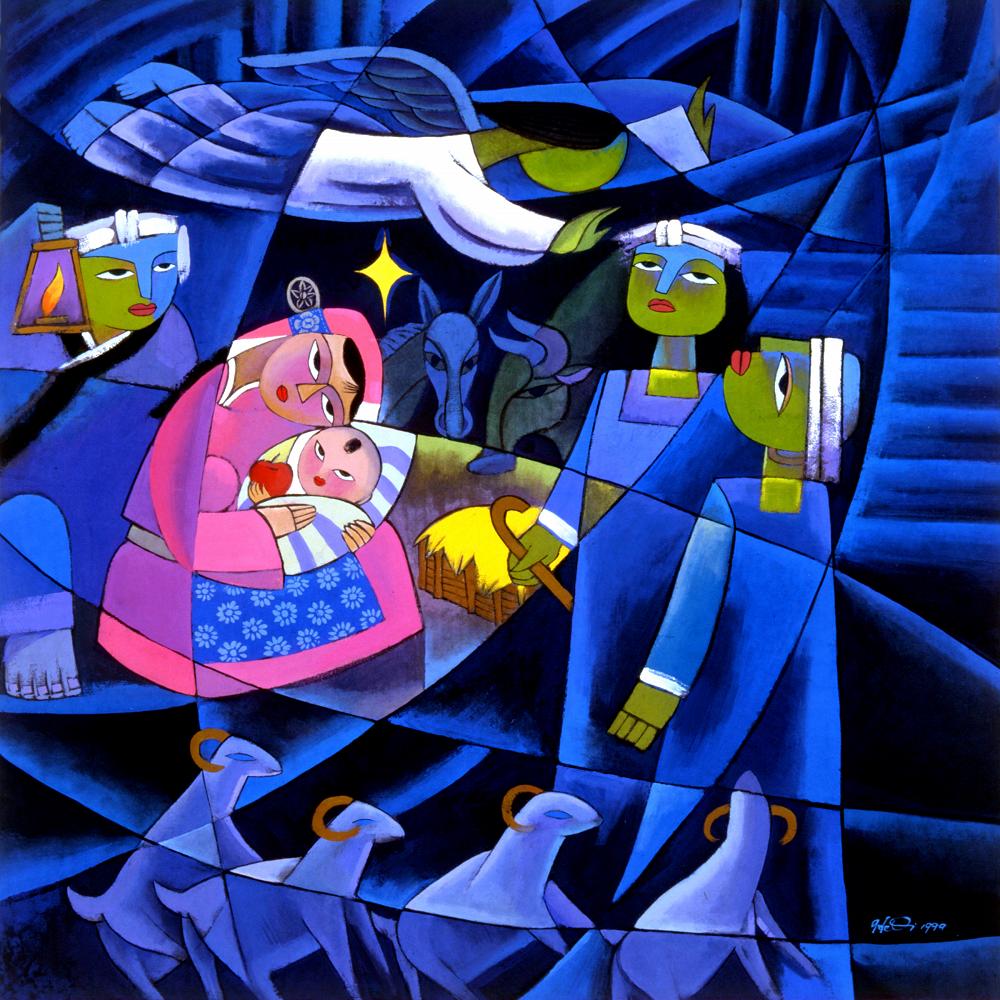
The ones who receive the message that this longed-for, earth-shattering event has taken place are themselves socially undesirable. Shepherds’ work makes them ritually unclean in Judaism and therefore irreligious outcasts. It is part of the upside-downness of the story that it is the shepherds who respond with awe to a divine revelation, leave their precious flocks and hurry to see. They are the ones who excitedly proclaimed the news to all whom they met.
Facing the Misfit
So how does this extraordinary action of God within human experience relate to the preparation being undertaken to observe our family and cultural Christmas traditions established over many generations? These traditions involve family gathering, Church attendance, special food, decorations, exchange of gifts and all the usual components of a celebratory occasion. These are not bad things. As mother, I try to balance rampant consumerism with appropriate expression of the joy of God with us. At Christmas Mass we pray for those for whom Christmas is painful and difficult.
But something is awry!
Luke’s account of the birth of Jesus, the anointed one of God, is about and for the benefit of those who are economically, physically and socially disadvantaged. It tells of the interwoven-ness of God and humanity and the intimate closeness of our compassionate God to those who long for help and relief. The angelic messengers from God spoke of joy and peace. It is an announcement that gives HOPE.
Acting God Is Among Us
I can’t help thinking about this year’s UNICEF report that in Aotearoa New Zealand we have the highest youth suicide rate in the developed world. The image of empty shoes arranged outside our Parliament to represent lives lost is vivid in my memory. These, our beautiful children, have lost hope that acceptance and fairness could prevail. Their families suffer debilitating grief. Somehow the real Christmas story belongs here.
It would be terribly wrong of me to minimise the increasingly complex situations that have given rise to this heart-breaking statistic. If we could speak more plainly about the real, deep significance of the Christmas story and extricate it from the sentimentality and commercialism that obscure it, then perhaps the tale of the advertising brochures and the destructive component of cyber communications could be hushed. The telling of the Nativity is not a matter of words but a matter of acting in the belief that God is among us especially in our pain and struggle. Perhaps hope could be rekindled and tiny glimmers of joy glimpsed.
Acting Today
The shepherds from the fields outside Bethlehem were told that “this day” One who saves is born. The word “today” is an important theme in Luke’s Gospel and is not intended to be understood as a reference to the historical “then” of Jesus’ time. Rather the reference is to the present “today”. Quietly and gently, experienced in ways that are nearly always unexpected, God is with us every moment of every day and knowing the closeness of God brings us moments of joy even when things are really tough.
Practising Wonder and Joy
So what is the outcome of my spring clean? That attempt I make to reassess and reform my Christmas thinking reveals that comfortableness doesn’t leave much room for joy. In fact, the comfortable are strangely oblivious to the essence of the message.
We must allow wonder and joy to touch us anew at Christmas time. Wonder and joy embolden us to act differently. The pattern that shapes all our interactions, every day of the year, has to be that shown by the adult Jesus on the road and at table, in compassionate encounters with those who most need a sense of belonging. All time, every place and each person has dignity enhanced by the God-with-us reality that Christmas brings to the forefront of our minds each year.
We use the word awesome so glibly, but may we experience awe this Christmas, the awe of the disreputable shepherds and the ones to whom they told their astounding news. Most especially may the news of Christmas be heard in our communities by those bowed down by life’s hardship and may they know that they are the beloved ones to whom it is directed. May they be strong in hope. May there be joy in our world and may people acting kindly towards one another achieve peace.
Tui Motu magazine. Issue 222 December 2017: 4-5.