
The Last Wave
Directed by Peter Weir. Reviewed by Paul Sorrell
Like the scribe in the Gospel story, the New Zealand International Film Festival continues to bring out of its store things both old and new. Although the bulk of this year’s festival was available for online viewing only, a remastered version of Peter Weir’s The Last Wave (1977) was one of a handful of films shown in the grand setting of Dunedin’s Regent Theatre.
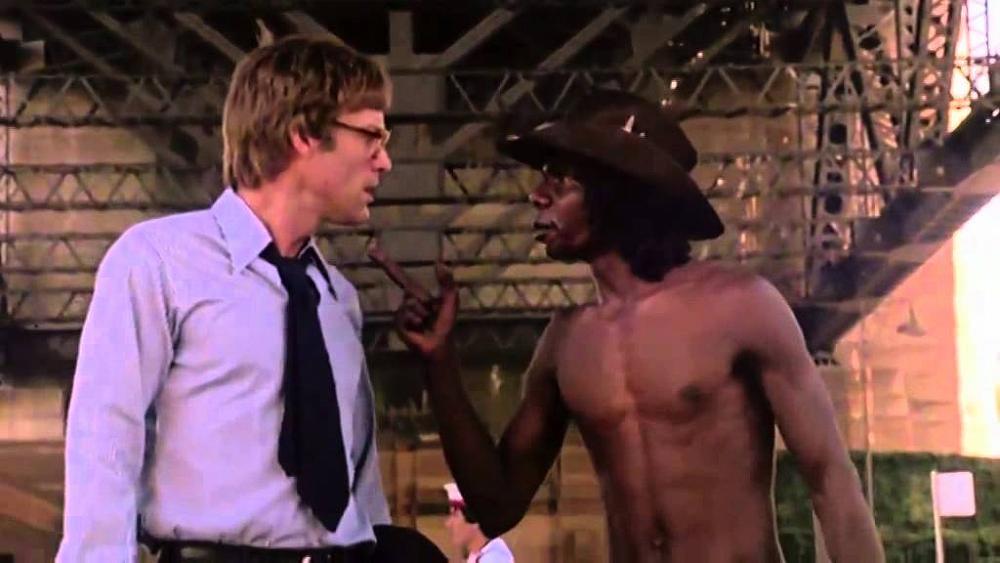
Set in Sydney, Weir’s brooding classic explores the dangerous forces that are unleashed when two very different cultures meet in the person of an outsider. Played by Richard Chamberlain (whom I remember as the heart-throb physician in the 1960s TV soap Dr Kildare), David Burton is a corporate tax lawyer who takes on the defence of a group of aboriginal men charged with killing one of their own. His involvement with Chris Lee (played by David Gulpilil) and the mysterious elder, Charlie, reveals his identity as a spiritual conduit, a messenger from a Dreamtime world entangled with stories of ancient South American travellers, leading him into an unseen reality filled with power and danger.
Throughout the film, Weir emphasises the great gulf between Burton’s privileged middle-class lifestyle and the local aboriginal community who are constantly dismissed as “non-tribal” and thus cut off from their cultural roots. Although living in the same city, they inhabit different worlds. As Burton’s wife (Olivia Hamnett) says, “My family has been in Australia for four generations and I’ve never met an Aboriginal”.
The supernatural story unfolds to the accompaniment of powerful visual effects and the unsettling bass notes of the didgeridoo. A wider backdrop is provided by scenes of torrential rain and hailstorms — even downpours of oil — sweeping across the continent, encouraging a mounting sense that the earth is about to be engulfed in a tide of apocalyptic proportions. This open-ended symbolism, along with the themes of cultural and spiritual misalignment, invite new interpretations from a 2020 audience preoccupied with threats of political instability and global climate change.
Despite the odd clunky note, and the feeling that the plot is a little over-cooked (the South American plotline recalls the extraterrestrial fantasies of Erich von Däniken, whose books were enormously popular in the 1970s), the film retains much of its power to move. While Weir’s Picnic at Hanging Rock (1975), which also deals with the eruption of uncontrollable spiritual forces, is probably the better film, The Last Wave is worth a second look.
Tui Motu Magazine. Issue 262 September 2020: 28