
Requiem for the Fallen
Vincent O'Sullivan, the composer of the libretto of Requiem for the Fallen to commemorate the centennial of the beginning of WWI 2014, writes about the profound feelings which only music and poetry can evoke when reflecting on the complex and ordinary relationships, both individual and collective, that underlie this unique event in New Zealand history.
When we were invited to write a Requiem commemorating the New Zealanders who died in World War I, Ross Harris and I jumped at the chance, before quite realising where we were going to jump. A Requiem after all is one of the time-honoured forms in Western music, as well as a solemn ecclesiastical occasion. A quick glance at Google brings up not just the great composers we expect — the Verdi, Mozart, Berlioz and Britten — but hundreds of others who have used the form in various historical settings. But we both were deeply interested in “the war to end all wars” — surely the most absurdly optimistic phrase of the century — while in Ross’s Second Symphony a number of years ago we already had worked together on the events surrounding a young soldier from Invercargill, who was executed on the Western Front for desertion when he walked from the trenches back to a village and the woman with whom he had fallen in love.
What also attracted us to the proposal of “Requiem for the Fallen” — the name was early decided on — was that neither of us saw anything in the least “glorious” about war, and yet we had a profound respect, a reverence even, for the young men who died in it. As an English poet killed in France once wrote in a letter, “war is indescribably disgusting.” He also spoke of “the individual horror, the fine personalities smashed suddenly into red beastliness.” Rupert Brooke’s silly words about spilling “the sweet red wine of youth,” or the vapid recruitment phrases of dying “for King and Country” repelled us. The Duke of Wellington’s despicable term, “cannon fodder”, seemed to us far closer to the truth of how so many died. As a programme note would say: “No commemoration is just that does not bear as well the dreadful physical reality that deprives men finally of all that Home entails.”
Home then — that was to be central in how we approached the work, and what we wanted to emphasise for its audience. For those who read experience in traditional requiem terms, this could mean the return to what Wordsworth called “God, who is our home.” For those whose emphasis is more focused on time and place, the end emotional point is not so different — what mattered most through life mattered most at its end as well, the love for individuals, the love for and of a community.
So as musician and writer, we were attempting to do two things. One was to treat the grand traditional form of the Requiem, with its dramatic arc from the approach to the altar, through to the final committal and the congregation’s drawing together, fairly much as always it had been treated. Each section had, you could say, its own musical expectations, an inherited approach that the Latin words impose. But the other was to make this communal event attend to the individual dying soldier — how the value and centre of an ordinary life is precisely there, in its splendid ordinariness. So a piece that paid tribute to what was everyday for fellow New Zealanders, that too is what we were after.
The Mass began with Horomona Horo, a marvellous exponent of taonga puoro, with both his chanting and playing against a solo cello. Then the Libera nos brought its traditional Latin plea to be set free from evil. This set the piece as a Requiem for one man, as much as it was for each of those who died with him, and who had shared his hopes:
“From the fear that we have of fear,
Libera nos, Domine,
From the hate we return for hate,
Libera nos.
From the menace that scars, from the wound that grieves,
From the racket of battle
as hope deceives,
From the stalking of death
and unmarked graves,
Libera nos, Domine.”
And so it went on through the rest of the Mass, alternating the traditional Latin lines, the voice of the bewildered, fearful man obsessed with what he has left behind and what it is he hopes to see again. For that is the deepest story of war. Men do not die in battalions or in crowds, but one by one by one, until the total is beyond counting. The Agnus Dei, for example, dramatically serves both strands of this approach, with the time-laden prayers of the Mass finding their resonance and counterpart in the thoughts of one man in extremis.
“Agnus Dei, qui tollis peccata mundi,
Lamb of God, who takes to himself the weight of the world,
Stand beside us, beside us now, in encroaching dark.
Lamb of God, who has gone before us to the slaughter,
Be with us in the pressing of death’s flock.”
The writing needed to be simple and direct as songs must be, for one hears them only once. And unlike a poem, which is already completed and must stand by itself, a song is merely an outline, a possibility, until music expands and defines it. Ross’s way of taking the words and drawing them towards something so much larger and more resonant allowed him to write both plangently and gently, yet also to take the vastly dramatic possibilities of the Dies Irae, with its emphasis on fear and destruction, to turbulent and chromatically passionate levels.
Our main point of departure from the usual Requiem pattern was towards the end, when in the Memento Mori an old digger sings an unaccompanied lament for the mate he remembers who died beside him, but a lament too for the extended tragedy which survival can also mean. His words are for the survivors as well as the victims, and the line between may indeed be a thin one. It is he who delivers the In paradisum, a direct summing up of what the entire work has been driven by — where, living or dead, we want to be. Again, the hope is that “ordinary” becomes in itself a word of blessing.
“Where are they, the streets of the new Jerusalem?
Where do they lead,
the paths of glory,
Where does the spirit walk in the risen dust?
I have told you that.
I have told you that.
I have even joked about it in my lemon-squeezer hat!
In the streets of home,
that is where — at home.
How the bliss we crave at last is what we have known.
Veni, creator spiritus,
Creator, come.
Comrades,
Our abiding word for Home.”
Nothing by way of commemoration alters by a jot the reality of another’s death. Everything, for us, comes down to as much respect, as much resolve, as we can bring to the final phrases of any Requiem, and especially for one for our own, and for those who survive.
“Requiem in aeternam.
Dona nobis pacem.”
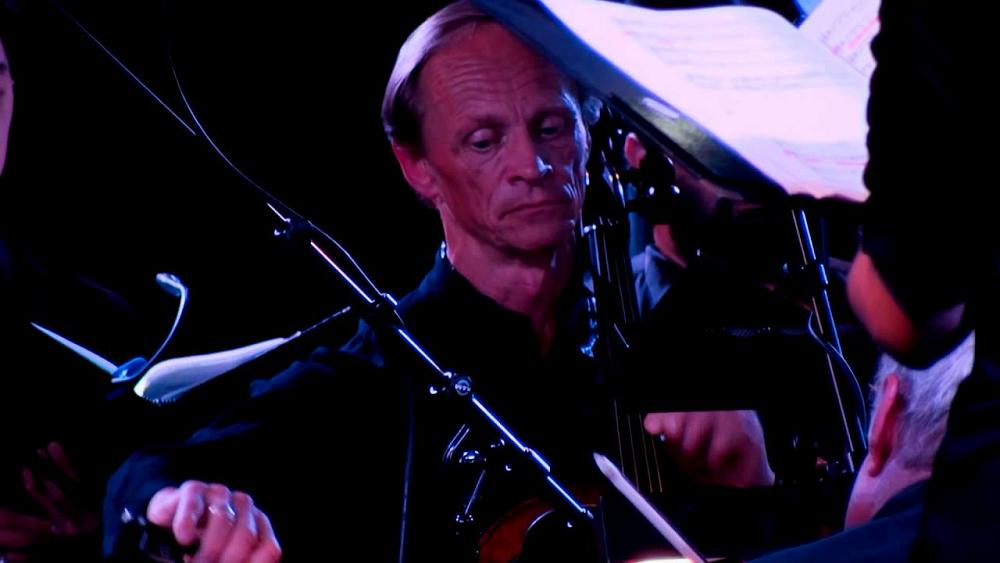
Footnote: Requiem for the Fallen with music by Ross Harris and text by Vincent O’Sullivan, was given its first performance at St Paul’s Cathedral, Wellington, during the New Zealand Arts Festival 2014. It was performed by the New Zealand String Quartet, Voices New Zealand Chamber Choir, Horomona Horo and Richard Greager. John Button, music reviewer for the Dominion Post, declared it “a major work”, and critic Lindis Tyler thought it “one of the major events in any genre in this year’s festival … It captured the essence of one of the most profound experiences in the history of this country.”
Tui Motu Magazine. Issue 181 April 2014: 8-9