
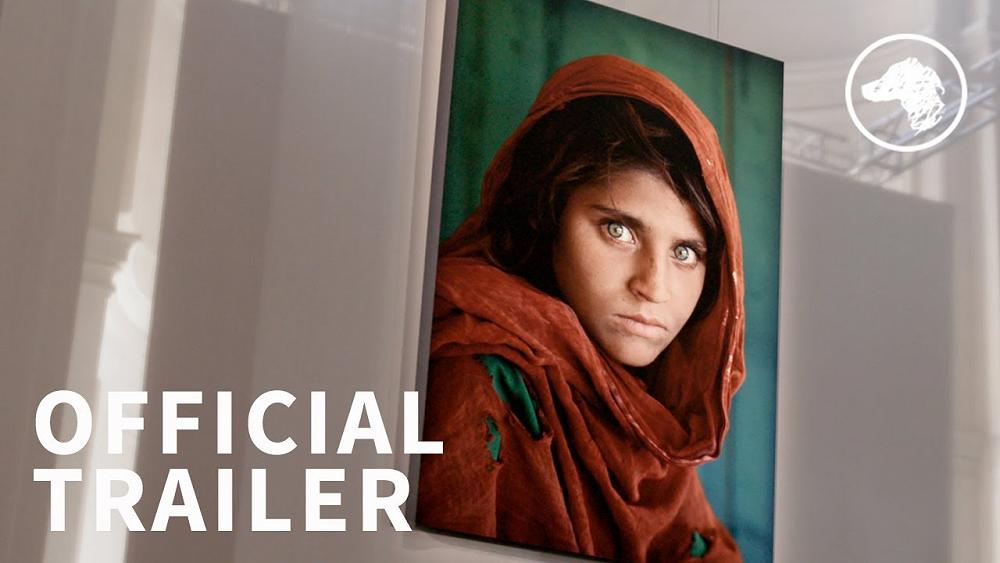
McCurry: The Pursuit of Colour
Directed by Denis Delestrac. Reviewed by Paul Sorrell
I’ve been fortunate to see and review two outstanding documentaries about photographers over the last couple of months. Following The Velvet Queen (TM June 2022), this study of American documentary photographer Steve McCurry was screened in the 2022 Resene Architecture and Design Film Festival and is available on at least one online streaming service.
Famous for his iconic image of an Afghan refugee girl with piercing green eyes, as a young man McCurry determined to shape a career around his creative instincts and liking for solitary adventure. From his base in New York City, he began travelling the globe as a freelance photographer, gradually picking up commissions from the likes of National Geographic magazine and Magnum Photos. The film tracks him as he returns to the scene of his earlier work (Afghanistan) or similar places (Syrian refugee camps) where he “reshoots” his most famous images decades on.
Inspired by New Zealander Brian Brake’s 1960 photoshoot of the Indian monsoon published in National Geographic, McCurry travelled through Indian and Pakistan, then into Afghanistan, where he was embedded with the mujahideen. His images of wounded soldiers and civilians in Afghan hospitals collectively form a powerful anti-war statement. A procession of shattered figures meet the viewer’s gaze, imploring our concern.
Always on the move, McCurry’s coverage of conflicts in the Middle East include apocalyptic images of burned-out tanks and strewn corpses against a backdrop of flaming oil wells. Not all he sees is horror: camels silhouetted against plumes of desert fire appear engaged in a macabre but hauntingly beautiful dance.
Seemingly a confirmed bachelor, McCurry married an indigenous Hopi woman in later life. The respect for the land and its creatures he shares with her marked a new phase of his career as he turned his lens to animal subjects. 9/11 triggered his latest foray into war photography, with much of his footage shot from his New York apartment.
Despite his new interest in wildlife, the images McCurry will be remembered for are his soulful portraits and vibrant crowd scenes, full of action and saturated colour, inspired by his early encounter with Brake’s work. McCurry avoids the mistakes of many Western photographers visiting “exotic” settings, where it is all too easy to patronise one’s subjects by failing to enter their world. Rather, he shows respect for those whose images he captures, inviting us to share his compassion for the impoverished and war-weary of this world who might otherwise elude our privileged gaze.
Tui Motu Magazine. Issue 273 August 2022: 28