
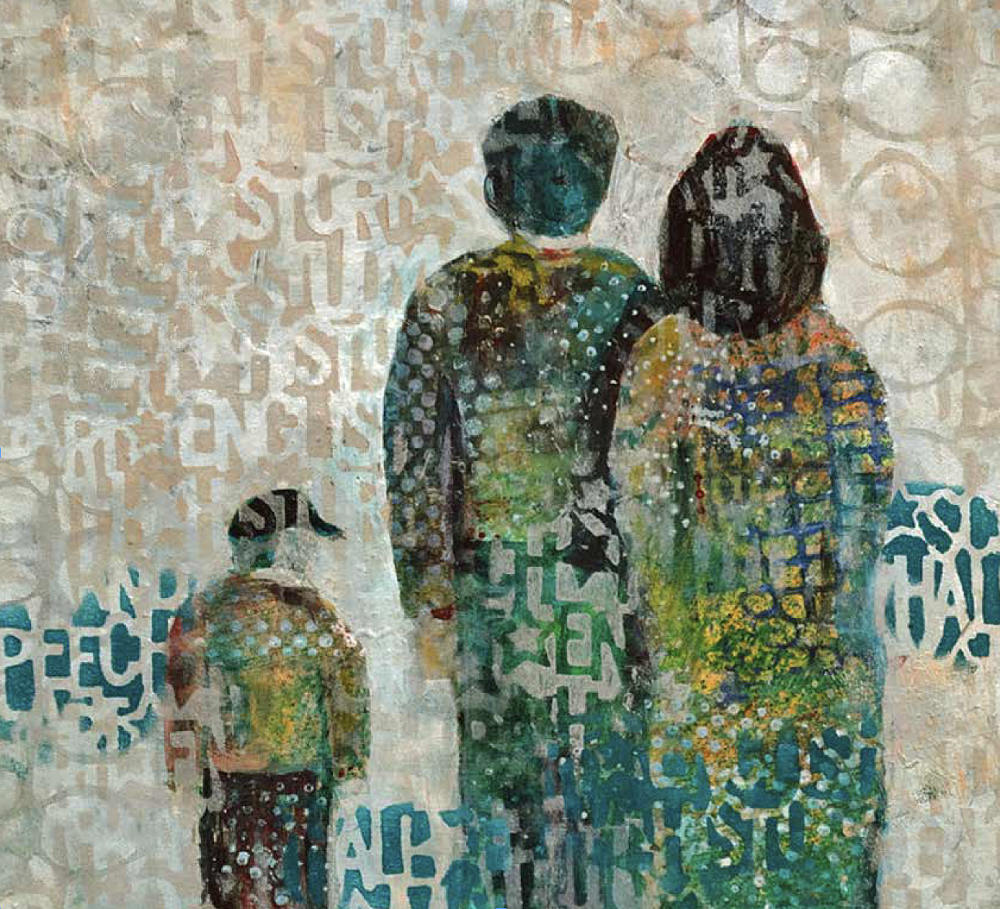
Broken but Surviving
Makareta Tawaroa discusses why Māori should be part of decision-making in all matters affecting whānau and hapu.
Whenever I travel on State Highway 3 and pass the Lake Alice Hospital turnoff, about 30 minutes from Whanganui, I remember my beloved late cousin Mere. A kind and generous person, Mere was a young adult who suffered from depression and in the late 1970s she was a patient at Lake Alice. She was under the “care” of psychiatrist Dr Selwyn Leeks, described by a survivor of the institution, as a “psychopath on the loose for 35 years”. Mere was kind and generous. She shared with me the pain she had suffered through electroconvulsive therapy (ECT), and its serious side-effects throughout her life.
Mere is one of the many young people who suffered humiliation instead of care. The Royal Commission’s final report (July 2024) reveals the scale of abuse and the powerlessness of whānau to protect their children. Dr Leeks, lead psychiatrist at the Child and Adolescent Unit at Lake Alice Hospital in the 1970s, conducted ECT on young people and administered paralysing drugs as punishments rather than for therapeutic purposes. There were also allegations that he sexually abused patients.
In New Zealand about 200 to 300 adult patients were treated with a form of ECT every year. Approximately 25 per cent of them said their memory was affected, which is why it was reserved for severe cases. But at Lake Alice, ECT was used on children. Many treatments were reportedly carried out without proper consent from patients or their guardians. Former patients reported severe psychological trauma, including post-traumatic stress disorder, anxiety and depression.
Clinical psychologist Dr Barry Parsonson testified before the Royal Commission that ECT was used like aversion therapy. “ECT appeared to be frequently used as punishment for things such as fighting, smoking or expressing homosexuality. Inflicting pain was used to stop people doing things that were probably perfectly normal. The treatment was not therapeutic. It bordered upon maltreatment if not torture," he said. "The consequences, I think, have been trauma and a distrust of authority."
However, Dr Leeks never admitted that his patients were undiagnosed and the “treatment” did not work. In archival footage of a Sunday programme he said: "What was treatment then may not be seen as treatment now.”
Donald’s Story
The Commission heard from Donald Ku who now lives in the Te Awhina Unit at Whanganui Hospital. Donald was born in 1963 in the central North Island town of Raetihi. His iwi on his mother’s side is Ngāti Maniapoto. On his father’s side he is Tūwharetoa. He was sent to Lake Alice labelled as having “marked retardation”. He said: “I hated seeing that in my [medical] notes” when he was a patient at Te Awhina Psychiatric Ward, Whangaui Hospital. “I don’t think I was retarded at all; I was just a young boy struggling with being brought up in a hard environment.”
Ku was one of five siblings. His early years were happy. “I have good memories of those early years with my grandmother,” he told the Royal Commission. “She started teaching me a lot about living off the land and looking after our home.” But life changed when his mother asked the authorities for help. She was told that the state could do a better job and at seven Donald was in foster care. He said the family was split up by Social Welfare and he saw only one brother after that. “This was the start of my life within the system and the start of my suffering in so many different institutions.” He was sent to Lake Alice where he was sexually abused and administered ECT as punishment. “Where I really belonged was with my mum and dad — with my whānau. When I was removed from that environment, they took me away from my Māori culture. I wish they had given me to my grandmother. I think my life would have been different if they had.”
Donald’s story is one of many at the time. Survivors described their “treatment”: electro-convulsive therapy given as punishment; sexual abuse, and being locked up in isolation. One woman alleged that Dr Leeks raped her.
Abuse of Power and Authority
Many experts describe the young people at Lake Alice Hospital as having behavioural issues rather than psychiatric disorders. After analysing a number of case files Dr Parsonson said: “At the very least, the actions of Dr Leeks and the unit staff was an abuse of power and medical authority, an unjustified assault on the human dignity and the rights of the young persons in an inhumane regime of maltreatment that induced fear, emotional and physical harm.”
I knew the late John Watson, clinical psychologist in the early 1970s, who started ringing alarm bells about the maltreatment at Lake Alice and institutional failures across agencies including police and Social Welfare to protect children. Then in the mid-1970s a young Niuean boy hid a coded message in Niuean in his drawing: “Mum, the people have given me electric shock, as well as the paraldehyde injection and it’s painful. I am crying. I am in pain.” But it wasn’t until 1978 that Lake Alice was closed — five years after the first alarm sounded.
Stolen Generations
Māori advocates want greater redress for the collective loss to hapu from the “stolen generations” between the 1950s and the 1990s. The majority of “stolen” children were Māori — 80 per cent of the estimated 200,000. Today we see it for what it is: large-scale abuse, underpinned by the systemic racism that persists into today.
Boys’ home and Lake Alice survivor Fred Rawiri told the Commission: “I can’t help but think that the rest of my childhood would have turned out differently if I had been allowed to go and live with my family.”
Barrister Kingi Snelgar, who works with generations of former wards of the state said: “The story of abuse in care is directly linked to our colonial history. We know that Māori are more likely to be uplifted and are treated differently in care. The impact of the care system on the people that I represent is a huge loss of identity, a huge loss of belonging. The cost on both the individual and the collective cannot be measured in numbers. It’s the loss of culture, the loss of kaumātua and kuia that can run our marae, the loss of generations from their whakapapa.”
The harm that people like Dr Leeks caused, and the failure of institutions to oversee the care given to vulnerable people, will be felt for generations to come. When I remember Mere and all those who suffered at his hands, I think Dr Leeks should be charged posthumously with medical misadventure.
Chairperson of the Medical Council of New Zealand Dr Rachelle Love accepted the Royal Commission’s final report and apologised on behalf of the Council: “We are deeply and unreservedly sorry for this failure and the intergenerational consequences our actions have caused. Not only did we fail to hold Dr Leeks to account, we also prioritised the doctor’s perspective over that of the patient and neglected to maintain proper records of information.”
Tui Motu Magazine. Issue 296 September 2024: 8-9