
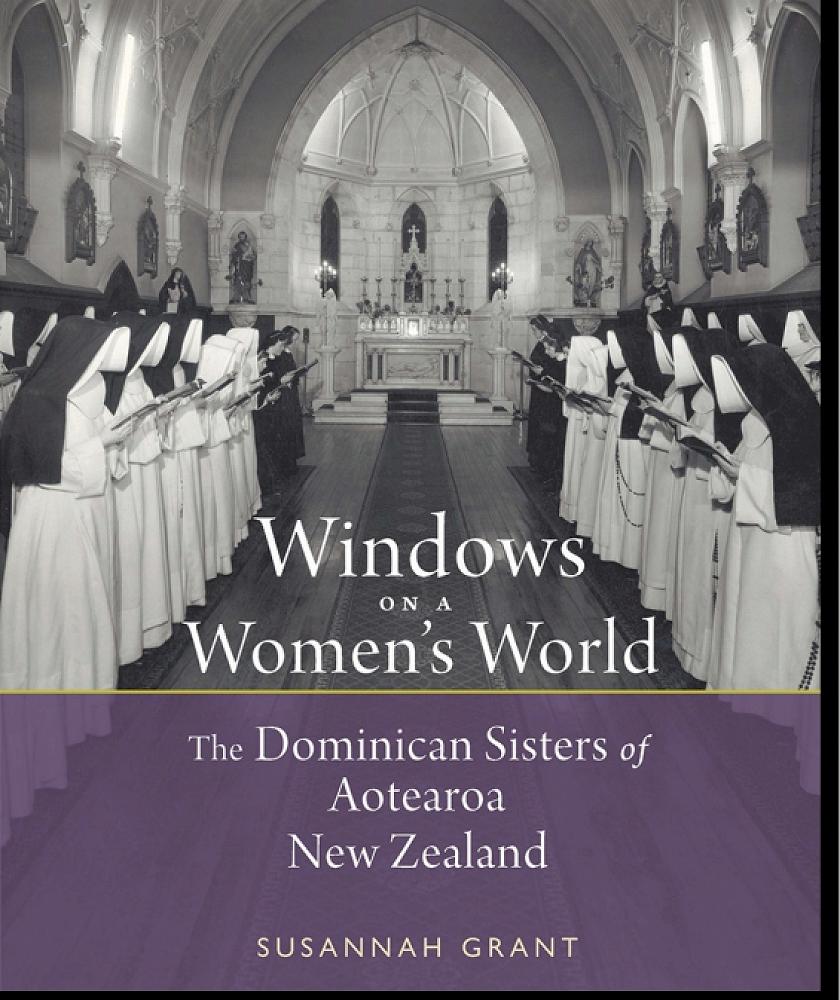
Windows on a Women's World: The Dominican Sisters of Aotearoa New Zealand
By Susannah Grant Published by Otago University Press, 2017 Reviewed by Jenny Collins
In a series of linked stories, photos and artworks this beautifully produced book opens a number of “windows” into the religious and teaching lives of the Dominican Sisters of Aotearoa New Zealand. Author Susannah Grant presents a sympathetic account of congregational life from the early years until the present time. The narrative is not primarily an account of struggles endured and difficulties overcome (although it includes plenty of both); nor is it a history of the congregation as such. Rather, stories are framed around a typically Dominican theme, the search for truth, and the legacy of the Dominican Congregation in changing times.
A historical overview sketches early struggles: shortages of teaching sisters, isolation from their Irish home and culture and worries about lack of money. From beginnings teaching the children of the Irish working-class poor and daughters of aspiring middle-class settlers in Dunedin the Congregation expanded, establishing primary and secondary schools in Invercargill, Oamaru and Auckland and a school for the deaf in Feilding. Chapters detail the process of becoming a Dominican Sister, life under the strict rules of enclosure and changes in religious life in the years up to Vatican Council II. The narrative does not flinch as it explores personal and congregational struggles in the tumultuous years that followed. It acknowledges the challenges of religious life today — the diminishing numbers of sisters living diverse ministries in small groups and independently, and the possibility that the Congregation may come to an end.
This story is written for the Dominican Sisters, for their former pupils and for those who recognise the significance of their role in education and elsewhere. It is an important book for Catholics who may have forgotten our own history and the way we have benefited from the relatively free education provided by women such as the Dominican Sisters, an education that helped pupils improve their life chances and become participating citizens in New Zealand society.
The book does not quite live up to its claim to include wider social and political perspectives and the focus on exploring the Sisters’ legacy has resulted in some repetition across chapters. Judicious use of historical scholarship — for example, on the work of teaching sisters in Ireland and New Zealand — would have added depth to the historical context. But this is a relatively small fault in an otherwise excellent contribution to the history of a unique group of Sisters.
Tui Motu Magazine Issue 218 August 2017: 28.