
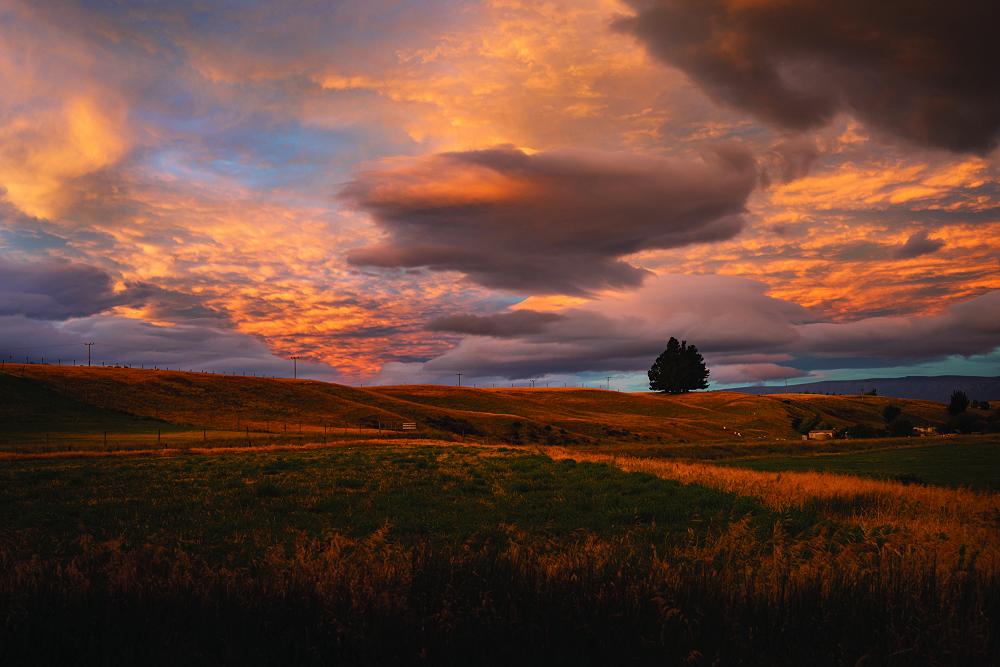
A Wide Sky for Writing Dreams
Driving into Ōtūrēhua on a Saturday afternoon last month I slowly exhaled. I had a whole week to focus on myself. The more than 40 year-old housetruck was immediately apparent in the small camping ground of the higgledy-piggledy Crows Nest accommodation. It served as my home for the next seven days and nights. And it was where I wrote at a tiny wooden table crammed between an old dresser and the gas stove, gazing through the window at the still snow-capped peaks of the Hawkdun Range. This is the area painted repeatedly by Grahame Sydney. And the ranges which depict a canine shadow in Jane Campion’s film The Power of the Dog.
So far, the Rough Ridge Writers’ Retreat programme has supported 28 existing and aspiring writers of memoirs, poetry, non-fiction, crime fiction and even an international thriller! It was originally organised by Mike Riddell, Ōtūrēhua resident and frequent contributor to Tui Motu, who died in March. His presence was keenly missed at the 2022 Writers’ Retreat, as it is elsewhere, but his legacy lives on in the willingness of this extraordinary community in the Maniototo to press ahead with providing an oasis of creativity in the midst of busy lives and tumultuous world events.
Mike Riddell described the Maniototo as a place where the sky is big enough to contain and cherish all dreams. Ōtūrēhua, or Rough Ridge as it was once known, lies in the Ida Valley on the western flank of the Maniototo. For those who are unaware of one of the best-kept-secret places in Aotearoa, the Maniototo is a high-altitude plain in Central Otago surrounded by mountain ranges and divided by rivers and creeks. Ōtūrēhua, population 36, has been a Māori food-gathering and quarrying area, a gold rush site, sheep and cattle farming hub and a home to various creative people. They include: Rosemary Riddell, writer, speaker, actor, film director and previously district court judge; Jillian Sullivan, novelist, poet and essayist; Brian Turner, former NZ poet laureate; Bridget Auchmuty, poet and writer; and Paula Wagemaker, editor, author and publisher.
These talented and generous people created a week-long programme of workshops, panel discussions and speakers, largely focused on the theme of the environment. We heard from renowned author Philip Temple about his lifelong quest to understand, write about and save the kea, our increasingly endangered alpine parrot, natural history specialist Neville Peat on tuning into our native environment and Dunedin-based poet Diane Brown on the four ways of meaning: solar (surface), lunar (underlying), how it sounds and how it looks on the page.
For me, a budding crime writer, this may have seemed remote from an urban world of grim murderous deeds and the pursuit of a perpetrator by the intrepid protagonist. Not so.
An afternoon spent outside alone, asked to look, listen, smell, taste and feel the environment and then to utilise those experiences to layer landscape and weather into writing was a transformative experience. As was another afternoon spent discussing the voice used in our writing and the difference between the “I” and the “eye”.
So much of our lives is spent with our heads down, scurrying from task to task. Now and then we stop to rest or to holiday in a pre-planned treat. The weeks, months and years flow and occasionally we ask ourselves: “Is this it?”
My week in Ōtūrēhua was a rare opportunity to think, look about me, to imagine and then to begin writing. As my second book continues to take shape I am grateful for the time allowed and time taken. And Mike Riddell’s words resonate in me: “A writer is someone who writes.”
This experience is a reminder to take time for our passions. For if not now, then when?
Tui Motu Magazine. Issue 267 November 2022: 3