
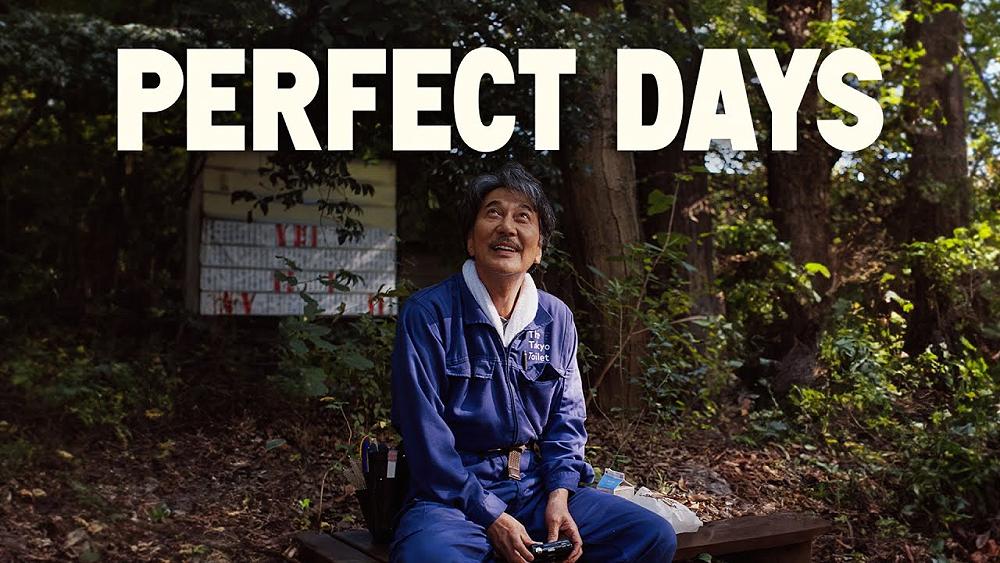
Perfect Days
Directed by Wim Wenders (2023). Reviewed by Paul Sorrell
Hirayama is the character who we need now more than ever — an island of simplicity and calm in our ever more tumultous world. On the outside, he is a nobody — a cleaner of public toilets in downtown Tokyo who follows the same routine each day and returns every night to a solitary home.
But there is much more to Hirayama (played by Kōji Yakusho) than meets the eye. His daily routines — folding away his futon bed, lunch in the park, visiting his neighbourhood bathhouse and local bar — give his life a predictable base, allowing him to meet the small changes and challenges in his life with aplomb. He goes about his work methodically and conscientiously, eschewing shortcuts. His goofy assistant is quite the opposite — impulsive, unfocused, toilet brush in one hand, mobile in the other. Takashi could learn from the simple mantra that Hirayama shares with his niece as they enjoy a bike ride following her unexpected arrival — “Now is now, next time is next time.”
Hirayama’s disciplined habits and fondness for analogue technology provide the literal sound track to the film. Each day on his way to work he pops a cassette into the car stereo, mainly Western popular music of the 1960s and 70s. Perhaps inevitably, Lou Reed’s “Perfect Day” and Nina Simone’s “Feeling Good” figure among his choices. Like his musical tastes, his reading is eclectic, but he gravitates towards quality. He is a regular visitor to a second-hand bookshop where he picks up paperback editions of the likes of William Faulkner and Patricia Highsmith in Japanese translation. Each evening concludes with Hirayama consuming a chapter by the light of his bedside lamp.
While all this manages to be deeply engaging, where Wenders triumphs is by showing us how Hirayama’s seemingly ordinary days are punctuated by an inexplicable joy. Deeply attracted to growing things, especially trees, Hirayama draws inner strength from nurturing his collection of houseplants and by contemplating the play of light and shadow through the trees around his various work sites. Graceful images inspired by these daytime visions populate his dreams at night.
Always present in the moment, Hirayama nevertheless draws on deep reserves of character and resolve as he navigates life. His contentment, simplicity and dignity radiate from every frame of this wonderful film, emulating the power and beauty of faith. Perfect Days is a film for all of us who aspire to live a centred and spiritual life.
Tui Motu Magazine. Issue 290 March 2024: 28