
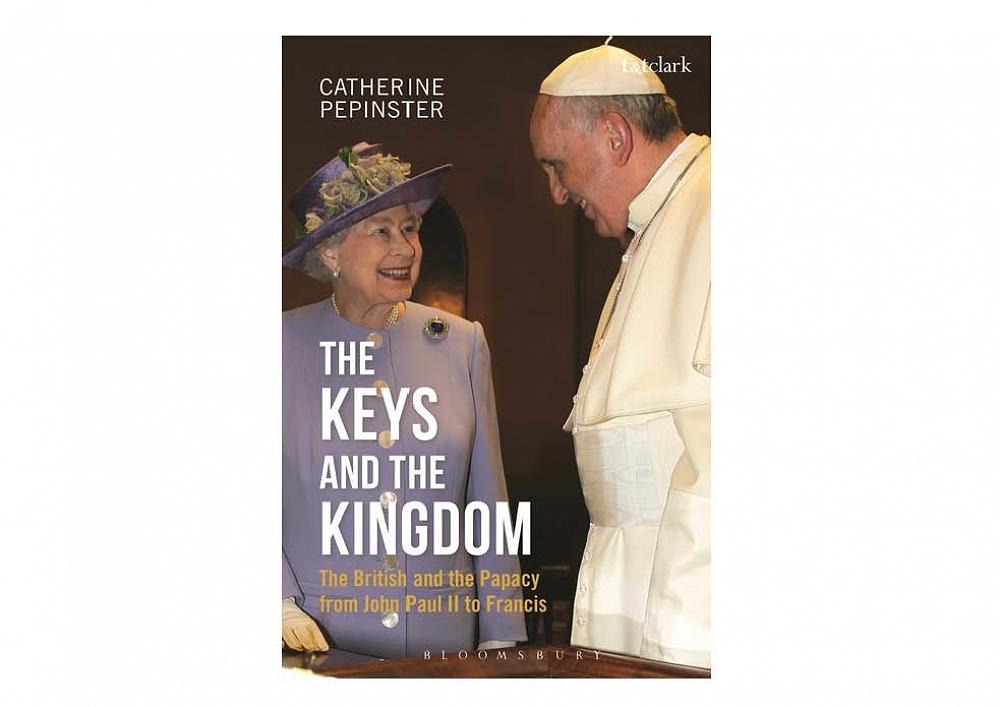
The Keys and the Kingdom: The British and the Papacy from John Paul II to Francis
by Catherine Pepinster. Published by T&T Clark. Reviewed by Tony Eyre
Nearly 500 years have passed since England’s brutal schism with Rome, triggered by Henry VIII’s spat with Pope Clement VII’s refusal to allow the annulment of the king’s marriage to Catherine of Aragon. This break with Roman Catholicism still reverberates today in what author, Catherine Pepinster, describes as “one of the deepest wounds the papacy ever suffered in Europe”.
However, the focus of this book is the modern era where the author meticulously chronicles the changing relationship between the British and the papacy during the 30-year period of the John Paul II, Benedict XVI and Francis pontificates.
Catherine Pepinster is eminently qualified to write such an account. She was editor of the Catholic weekly The Tablet for 13 years and is an experienced journalist, broadcaster and researcher specialising in religious affairs.
For followers of the Vaticanologists, the late Peter Hebblethwaite and the more contemporary John Allen, this book will prove to be a compelling read as it takes you on an insider’s guided tour of the intricacies of high-level Vatican diplomacy behind the closed doors of British political and ecclesiastical power.
The preparations and negotiations behind the papal visits to Britain of John Paul II in 1982 and Benedict XVI in 2010 are extensively covered in The Keys and the Kingdom.
No pope had set foot on English soil for over 400 years since the country’s rejection of Catholicism. John Paul’s first visit was to be an historic moment not without controversy. Recent tensions between the Catholic Church and Thatcher’s British government over violence in Northern Ireland and the Maze Prison hunger strikes were all elements in the delicate diplomatic negotiations over the visit.
But those complications took a back seat when the British went to war with Argentina over the disputed Falkland Islands — putting John Paul’s visit in serious doubt. The author skilfully takes you behind the scenes to the players involved in the rescue mission to ensure the historic 1982 visit took place.
Similar examples of treading the delicate diplomatic path are scattered throughout the book: like the deep historical significance of Benedict XVI’s 2010 address in Westminster Hall where Thomas More had been tried for treason in 1535.
Catherine Pepinster rounds off with her insight into what makes for the “x” factor in the making of the pope as a modern leader. Here she draws on the charisms of the three popes in her 30-year spotlight and examines how the papacy and the Catholic Church has played its part at both governmental and national levels of society. A relevant and well-researched read which has certainly renewed my interest in the papacy on the world stage.
Tui Motu Magazine. Issue 224, March 2018: 28.