
What Happened after that Note on the Church Door
As we enter the 500th year of the Protestant Reformation TIM COOPER provides a broad summary of the issues, characters and political situations involved at the start.
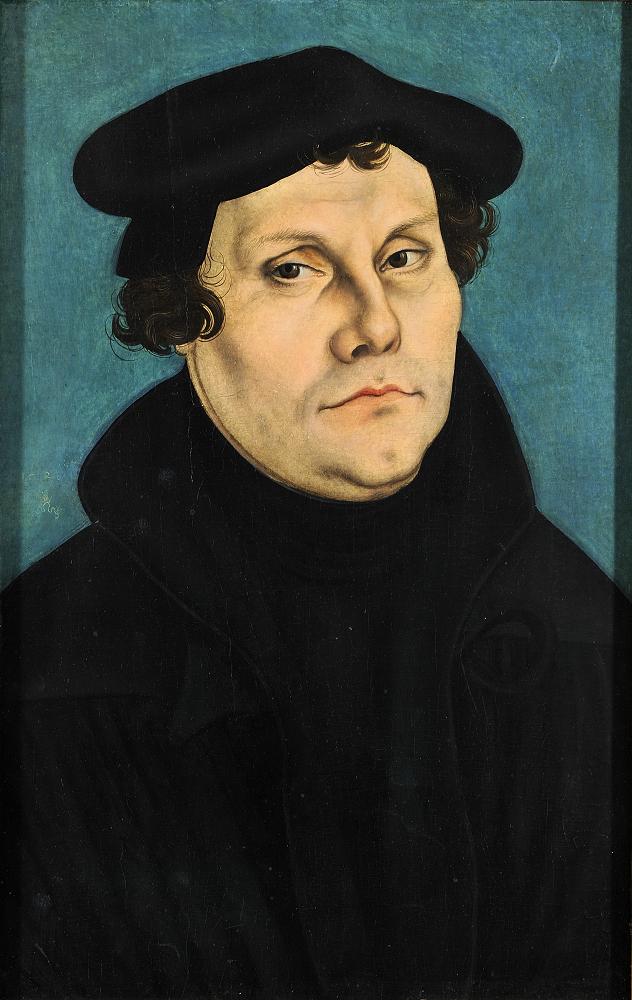
October 31 this year will mark 500 years since Martin Luther picked up his hammer and nailed his 95 Theses to the church door in his German parish of Wittenberg. Thus began the Protestant Reformation, not that Luther had any idea he was doing that at the time. This was merely a public — and detailed — objection to the practice of indulgences that had by then become a crass exchange of money in return for the forgiveness of sin and time remitted in Purgatory. So what turned this into something so much bigger than Luther ever imagined?
Impact of Technology
Printing was a relatively new invention. Someone took Luther’s 95 Theses and printed them in vast quantities. As events escalated Luther enjoyed his notoriety. Within just a few years copies of his books numbered in the millions. The point is that once his ideas were released into the environment no one could call them back, not even him. Before long he was chastened as he watched people take up his own ideas in ways he never expected or intended.
Impact of Personality
Luther was hardly one to back down when challenged. And he was challenged. Perhaps there was another universe in which the Church responded with understanding, acknowledgement and compromise but that is not what happened in this one. In 1519 in the city of Leipzig Luther came face to face with Johann Eck, the premier theologian of the Holy Roman Empire. Eck dramatically raised the stakes by moving to the issue of authority. If authority did not lie with the Pope or with a church council, where did it lie?
Impact of the Bible
When Eck backed him into a corner, Luther asserted that authority in matters of faith lay in the Bible alone. On 17 April 1521 he appeared before the Emperor where he insisted on this. “Unless I am convinced by the testimony of the Holy Scriptures or by evident reason — for I can believe neither pope nor councils alone, as it is clear that they have erred repeatedly and contradicted themselves — I consider myself convicted by the testimony of Holy Scripture, which is my basis; my conscience is captive to the Word of God.” In this way Luther located authority in the Bible mediated by the individual conscience. It was a portentous move pregnant with unintended consequences. A great deal of the mental furniture of the modern world would be rearranged around Luther’s famous declaration. Once again, he never saw that coming.
Impact of Vernacular Bible
The Reformation unleashed the Bible. Until then it was available only in Latin, only to priests and scholars, and parcelled out to the laity in carefully managed instalments. Now Luther translated it into everyday German. Once people got their hands on their own copy of the Bible in their own language, or heard it read by others, their eyes were opened to a world they never knew. The difference between the Church of the book of Acts and the Church they saw around them was startling. Their anger was palpable. Priests felt that they had betrayed their own people with doctrines that did not stand up to the scrutiny of Scripture. Eck and others had raised the debate with Luther to the issue of authority; now they reaped the whirlwind.
Luther’s actions triggered the Reformation and his personality dominated it but he was not alone. Powerful technological, cultural, social and economic changes were underway. It is impossible to disentangle merely religious strands from these other forces. And that means that this movement could never be confined only to Luther, Wittenberg and Germany. It spread to other places.
Spread of Reformation
Many of the independent city states within the Swiss Confederation went over to reform. In Zurich, Huldrich Zwingli abandoned the lectionary to preach through the book of Matthew and then through Acts. He persuaded the city authorities to remove from church worship and architecture any elements not explicitly sanctioned in Scripture. Other cities followed suit. A generation later, John Calvin led a thorough reformation of the city of Geneva. This Swiss brand is called “Reformed Protestantism”, as opposed to German Lutheranism. For all that they had in common the two camps did not get on, disagreeing mainly over the nature of the Eucharist. The Bible was their sole authority but agreeing on what the Bible said proved no easy matter.
Others took Luther and Zwingli literally. They pointed out that there was no biblical warrant for either infant baptism or the alliance of Church and state. They were the Anabaptists: this is called the “Radical Reformation”. They restored the practice of adult baptism. In doing so they challenged the very foundations of a society in which all infants were born both as citizens and as Christians. Even if Scripture was on their side, that was intolerable. In disavowing the alliance with the state and in seeming to opt out of their civil responsibilities the Anabaptists and the many other groups within the Radical Reformation faced decades of persecution.
France came very close to going over to Protestantism but political dynamics among the ruling family finally worked against it. Scotland, the Netherlands and the Scandinavian countries all went Protestant. Reformers gained ground in Poland, Bohemia, Hungary and many other places. In England, King Henry VIII was no natural reformer but he did want an annulment to his marriage to Catherine of Aragon which had failed to produce a male heir. When the Pope refused to grant one, Henry made himself head of the Church of England. The Reformation progressed under his son, Edward (1547-53), reversed under Mary (1553–58), then consolidated under Elizabeth (1558–1603).
Counter-Reformation
Even in the early 1540s there was the real possibility that the rift between the Lutherans and the Catholics might have been healed but it was not to be. The moderates within the Catholic Church were discredited; the hardliners won the day. So when the Council of Trent convened in 1545 and continued to sit in three long sessions over nearly 20 years, the outcome was a complete repudiation of Protestant Theology. But a number of practices were reformed in what is known as the “Catholic Reformation” or the “Counter-Reformation”. From the middle of the sixteenth century we can talk of a “Roman Catholic” Church. With the loss of most northern territories to the Protestants it had less geographical spread, but it was much more effective, more disciplined and more centred on the authority of the papacy.
All of this unleashed a century of violence called the “wars of religion”. But we need to be careful here. Tied up in all this is the rise of the modern, centralised, bureaucratic, unified state. These wars were as much about that as anything else, which is why we see Protestant fighting against Protestant, Roman Catholic against Roman Catholic. The initial period of genuine reform moved into a longer period of “confessionalisation” in which these emerging states took on one religious identity or the other. What had been one broad church broke down into a set of rigid boxes in which identities hardened and all sorts of border walls proliferated.
What did it all mean? How are we to evaluate those changes? It amazes me how the implications of this are still being worked out here on the other side of the world 500 years after the event. All this is well worth pondering as we move closer to October 31 later this year.
Published in Tui Motu Magazine Issue 212 Feb 2017:18-19