Tangihanga
Wayne Te Kaawa explains the significance of tangihanga for mourning the dead in Māori society.
TANGIHANGA INCLUDES weeping, crying, mourning, funeral, rites for the dead and obsequies. It is one of the most important institutions in Māori society, with strong cultural imperatives and protocols. Tangihanga is perhaps the last surviving authentic expression of Māori culture stemming back to ancient days — it is where the best of Māori values are seen and put into action. Tangihanga has an important role in bringing people together, giving people honour and recognition, transforming identity, constructing and reconstructing communities, returning to origins and grounding people in a place and land.
Origins of Tangihanga
Tangihanga arises out of pūrākau (origin stories) that provide the origins, meaning and context of death. Stories revolve around Hinenui-te-pō, Maui and Tawhaki. Hine-titama, the daughter of Tāne and Hine-ahuone fled to Rarohenga (the underworld) when she found the answer to the mystery of who her father was. In Rarohenga, she took on a new name, Hinenui-te-pō (great lady of the night) with the self-appointed role of caring for her descendants in death.
When I spoke with my elders about this pūrākau they explained to me that this was not so much a story of death but more about resurrection. Maui did not accept death as the final outcome of human life. He became the first person to experience a physical death when he unsuccessfully tried to overcome Hinenui-te-pō by reversing the birthing process.
Following the pūrākau of Maui is a series of pūrākau of Tawhaki, who sought to liberate his mother, Urutonga, who was held captive by the ponaturi (hostile creatures) who had killed her husband and suspended his bones from the rafters of their house.
Upon approaching the house, Tawhaki began to karakia (ritual chant), and the bones of his father began to rattle at the sound of his son’s karakia. Hearing her husband’s bones rattling, Urutonga sensed that her son Tawhaki was close by and let out a karanga (ceremonial call) and tangi apakura (lament) to welcome him.
This story gives the origin for both the karanga and tangi apakura which are still practised today during tangihanga.
Core Values of Tangihanga
Each iwi (tribe), hapū (subtribe) and whānau (family group) has their own variations of the practice of tangihanga but the tikanga (right way of doing things) involved is universal.
At the core of tangihanga are the values of aroha ki te tangata (love/compassion for people), whanaungatanga (the importance of relationship), manaakitanga (hospitality) and wairuatanga (spirituality).
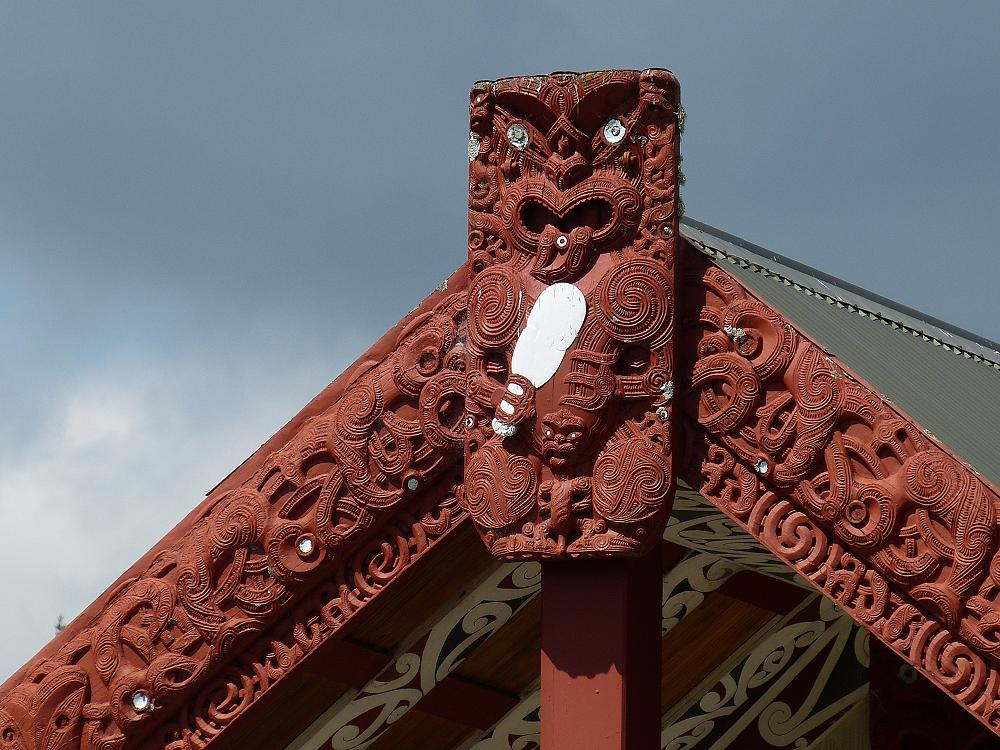
Traditonally, tangihanga are held on marae for three to five days. The tūpāpaku (deceased person) is held in state on the marae, in the wharenui (meeting house) or a wharemate (house of mourning). They are surrounded by the kirimate, their closest female relations, who are supported by the female elders of the marae. The role of the immediate whānau is to tangi, to cry, weep, mourn, shed tears.
This time to grieve is a gift and possibly the only time that the whānau will have to mourn while supported by a wide network of people.
Tangihanga Is Communal and Public
Death, dying and grieving is a public communal event, not held privately behind closed doors.
The immediate family is assisted by others who take responsiblity for the finer details such as welcoming visitors, providing hospitality and digging the grave.
The business of dying is an expensive event and the whānau, hapū and iwi often rally around to help with the financial aspects of the tangihanga. They include different ways of giving, such as koha (donation, contribution) moni whakaaro (considerable money) and kōkohu, which is not only monetary but includes food, energy, time
and skills.
Tangihanga is a communal event. In Māori society the value is that when a person dies, they no longer belong to the whānau, they belong to the hapū or iwi who will make the major decisions concerning their tangihanga. The sole role of the whānau at this time is to tangi, to weep. At times there is a clash in values as by law the next of kin takes precedence in decision making.
Adapting Tangihanga to Circumstances
With most of the Māori population living in large urban centres now the tangihanga are held in homes, halls, sheds, funeral homes and other venues. But this does not mean that the integrity of the underlying values is compromised. The tangihanga is the same as one held on a marae, though it may be modified.
The international diaspora has also seen tangihanga change and adapt as whānau in Australia return their tūpāpaku (deceased one) to their tribal home in Aotearoa New Zealand.
A custom now emerging, especially since the pandemic, is that tūpāpaku are held overnight on the marae and buried the next day.
At different stages of the pandemic, Covid-19 also meant restrictions around the number of people able to gather under social distancing protocol. QR codes and scanning needed to be observed. There were also restrictions concerning the serving of food and sharing the hongi (to press noses in greeting), both of which have deep theological meaning.
In spite of these restrictions, the principles remained the same: aroha ki te tangata, whanaungatanga, manaakitanga and wairuatanga.
Role of Kaikarakia
During a tangihanga everyone has a role to fulfil, based around care of people. One important role is that of kaikarakia (religious leader). When a death happens people will immediately look for a kaikarakia, a religious leader whose task is to lead karakia. That includes morning and evening prayers, closing of the coffin, the funeral service, the burial service and takahi whare (blessing of the house).
Karakia can also include prayers at the time of death, the blessing of the room where the person died if it was in a hospital or hospice and prayers at the funeral home before the deceased travels to the place where their tangihanga will be held.
The late Pā Henare Tate once said to me that throughout his ministry he had officiated at least 500 funeral services at tangihanga, especially in the Hokianga. He felt that, as a priest, it was important for him to be there.
Māori have a value of kanohi kitea (the seen face). If you are seen at tangihanga fulfilling your responsibilities, your mana is enhanced; if you are not seen, the respect from the people towards you diminishes considerably.
The role of the kaikarakia includes not just the tangihanga itself, but also the dying process and the post-tangihanga context, including the hura kōhatu (unveiling of memorial headstone), which is normally held one year after the tangihanga.
While at a time of death and grief some people are falling apart and others are bravely holding it together, ministry in te ao Māori cannot afford to be one-dimensional. It has to keep pace with the constant changes in our world while remaining grounded to the principles of aroha ki te tangata, whanaungatanga and manaakitanga.
Tui Motu Magazine. Issue 287 November 2023: 6-7