
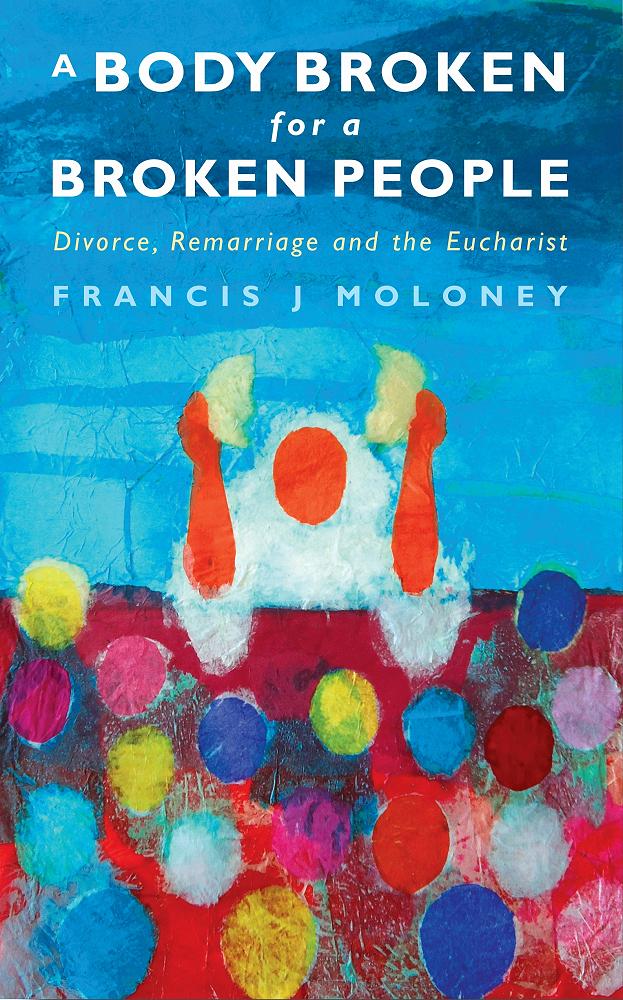
A Body Broken for a Broken People: Divorce, Remarriage, and the Eucharist
By Francis J. Moloney SDB. Published by Garratt Publishing (3rd Edition). Reviewed by Teresa Wackrow
The stated aim of this revised and expanded work is “to guide Roman Catholics, and especially Catholic leaders, in our attempt to rethink some traditions in the light of the difficult questions that contemporary Catholic life has posed to the Synod on the Family”.
Francis Moloney’s concern in this volume is with the meaning that the early Church gave to the traditions it received in the celebration of the Eucharist. Chapter One raises questions in relation to our eucharistic practice: “What are we doing in memory of Jesus?” and “For whom was this memory evoked?”
The second chapter looks at St Paul’s first letter to the Christians at Corinth, which contains the first written witness to the Christian tradition of the practice of the Eucharist. Following chapters look at each of the four Gospels in turn to uncover the Eucharistic thought and practice of the early Christian communities. Moloney reminds us that the Eucharistic tradition was lived out by these communities even before Paul’s letters and the four Gospels were written.
The bread miracles and the accounts of the Last Supper are examined in the chapters on Mark’s, Matthew’s and Luke’s Gospels. In addition Jesus’ practice of meal-sharing throughout Luke’s Gospel and the journey to Emmaus are also reflected on in the fifth chapter. Moloney looks at the approach of the Gospel writers to telling the story of Jesus and what each wanted to say about the Eucharist. He shows that each writer puts before us failed and broken disciples who are touched by the presence of the Lord in the bread broken and shared.
The chapter on John’s Gospel focuses on the last discourse, foot washing and the giving of the morsel to Judas. Jesus’ love for his own to the end, “even to those who will deny him, betray him, and misunderstand him,” illustrates that “the Eucharist celebrates and proclaims the presence of Jesus to the broken.”
In the final chapter Francis Moloney warns that his study must not be used to argue for “free-for-all” admission to the eucharistic table. However, on the basis of the authentic Tradition found in New Testament evidence and the pastoral approach of the early Christian communities toward the divorced, he calls on the Church to examine its Tradition.
This thoughtful and thought-provoking study steeped in scholarship is truly a gift to the Church and its people as we face the challenges in contemporary society.