
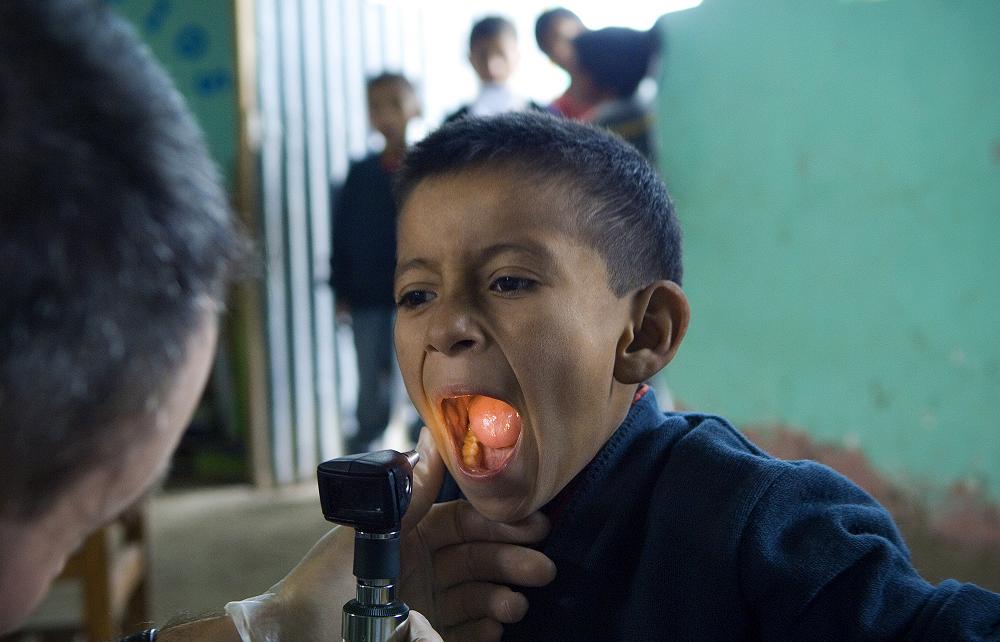
Removing Barriers to Health Care
The idea of access to healthcare as a human right is one to which almost all of us subscribe. According to the Office of the United Nations High Commmission for Human Rights (OHCHR), the right to health is a “fundamental part of our human rights, and our understanding of a life with dignity”. In its constitution developed in the wake of World War II, the World Health Organization (WHO) defined health as “a state of complete physical, mental and social well-being and not merely the absence of disease or infirmity.” The WHO further affirms that “the enjoyment of the highest attainable standard of health is one of the fundamental rights of every human being without distinction of race, religion, political belief, economic or social condition.” Despite these bold and aspirational phrases, we know that the right to health is not evenly distributed across the globe, or even in our own country.
One of the determinants of access to health is the state of a nation’s healthcare system — a crucial component in ensuring that appropriate and quality healthcare is available. In New Zealand, we are lucky to have a well-functioning health system, with many skilled and passionate healthcare workers dedicated to looking after us. By and large, the issue in New Zealand is not a lack of quality services in terms of our health professionals, hospitals, and clinics, but of connecting people in need with these services.
According to recent research published by the Health Funding Authority, the groups with the highest unmet need in terms of access to primary health (GPs, hospitals and after hours clinics) are Māori and Pacific peoples, and those living in areas of economic deprivation. The cost of visiting the doctor or an after-hours clinic is cited as one of the main reasons why people are unable to access healthcare. It is also the reason why many doctors’ prescriptions go unfulfilled — meaning illnesses are left untreated. Recently I read an article by Glenn Colquhoun, a GP and poet working on the Kapiti coast, about the struggles of inequality in New Zealand. He exposed the simple truth that in a region where the median annual income is $18,500, many people don’t have $5 for a prescription, let alone $40 for a doctor’s consultation, or $60 for an after-hours appointment.
With the amount of research that has been conducted and the debate that has circled through parliament, health agencies and advocacy groups about these barriers, what solutions have been formulated and how are they faring in closing these critical gaps?
A well-known figure in the health equity field, Dr Lance O’Sullivan, a GP practising in Kaitaia, has focused his career on removing barriers for Māori and kickstarting initiatives that work on a community level. One of his key messages is to democratise healthcare by giving the users of health services — the people — access to information and the ability to make decisions about their health in collaboration with health professionals.
An example of one of these initiatives is iMOKO, a digital-based service which gives trained staff in kohanga reo (Māori immersion kindergartens) the ability to make health assessments for children. With the support of a telehealth team a management plan is designed specifically for each child, which is then sent directly to parents and caregivers via the imoko app. Prescriptions can even be sent to a nominated pharmacy so they are ready for collection. This digital platform creates incredible new opportunities — parents and caregivers can raise concerns or questions with teachers who they already know and trust and information can be presented in a culturally familiar way. This system also solves the problem of getting to a doctor, particularly in rural areas or for those without transport and also eliminates the cost barrier at the same time.
Another key project that Dr O’Sullivan has initiated is Kainga Ora — a place-based initiative which works on the principle that to fix patients, we must also fix their homes. This community-level project attends to the holistic health of the person — one of the weaknesses of traditional medicine is its focus on the health of the physical body, ignoring the importance of emotional, mental, spiritual and environmental wellbeing in the overall health of the individual.
Tui Motu magazine Issue 216 June 2017: 26