
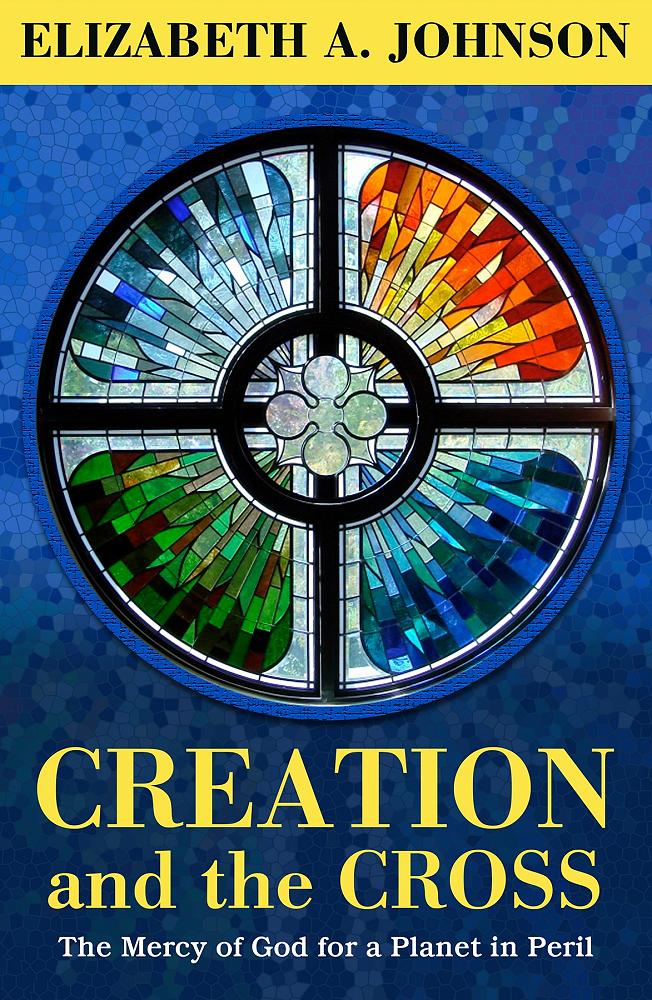
Creation and the Cross: The Mercy of God for a Planet in Peril
By Elizabeth A Johnson. Published by Orbis Books, 2018. Reviewed by Mary Thorne
Reading this book, pencil in hand, my excitement mounts and I want to underline nearly every syllable! Contemporary Christian theological thought wrestles with the theology of salvation as atonement for human sin and the difficult image of God it evokes. In Creation and the Cross, Elizabeth Johnson closely examines the meaning of this central matter of faith and explores what the cross says to us in this time of advancing ecological devastation.
Elizabeth Johnson is a respected theologian and author of many ground-breaking books. She skilfully re-expresses understandings of faith in fresh and relevant ways, soundly based in scholarship and comprehensive knowledge of the scriptures. Here, she also refers to Pope Francis’s encyclical Laudato Si’, which insists on ecological care as an essential part of a faith-filled life.
The eleventh century theologian Anselm devised the satisfaction theory of atonement. It reflects the way a feudal system of justice ordered society. The theory, outside its cultural context, distorted and eventually became a central tenet of a theological system focused on fall and redemption.
Anselm’s theological proposition is set out as a dialogue with a questioning student. Elizabeth Johnson has made use of this literary device, bringing us her re-envisaged theology in the form of an engaging and accessible conversation between Elizabeth and Clara, who seeks a more holistic understanding of salvation. “We are not shackled to the thought forms of any particular culture,” says Elizabeth.
Abundantly plain in Christian Old Testament writing is the infinitely good creator God, who moves to save and to make new futures possible. God does not change between the testaments so the nature of God remains faithful, merciful and kind. There is no betrayed honour which must be mollified.
In Jesus of Nazareth, God is present in the flesh of all creation. The same gracious mercy is expressed in the life, death and resurrection of Jesus. The cross did not begin the outpouring of divine mercy to the world. The satisfaction theory is not only inadequate but erroneous.
The conversation culminates in brilliantly drawn, fresh insights into ancient images. We can rethink the significance of incarnation in an ecological direction and stretch our prayer, “bless US’’, to include the whole community of creation.
This wonderful book deserves to be widely read and widely discussed. Together with science, Christian theology is repositioning the human species more closely within the vulnerable, mortal condition of all the creatures whom God loves. We learn new language with which to speak to our children about the presence of God in our world.
Tui Motu Magazine. Issue 228, July 2018: 26.