Living Benedictine Wisdom
Wendy Ward reflects on her experience with sheep in England and goats in New Zealand and how they have taught her something of the Benedictine vow of stability.
The coincidental arrival of a newsletter from a Benedictine monastery and borrowing a book about the Yorkshire Moors from the library led me to reflect on the wisdom of St Benedict and on sheep.
Too often inexperience shows the critical need for wisdom. A hill-country farm was sold and the new owners did not want the resident flock of sheep that had lived in the tough conditions over many years. Instead they bought a flock of pregnant ewes from a different district despite their not being bred for hill-country conditions. The ewes did not know how to shelter from southerly gales, snow and freezing rain. They had no experience of how to adapt to the new conditions. Many ewes and their lambs perished.
Ignoring a sheep’s wisdom to "heft" to a particular territory and pass on that knowledge to her lambs, proved to be a costly lesson for the owners.
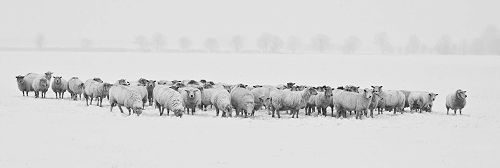
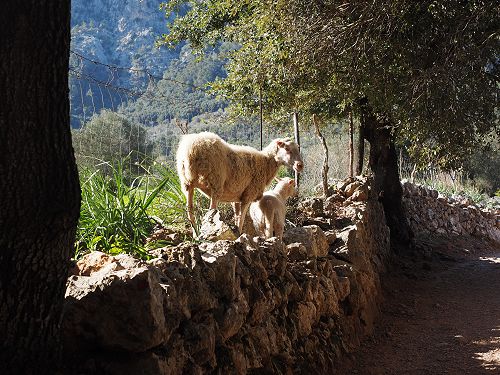
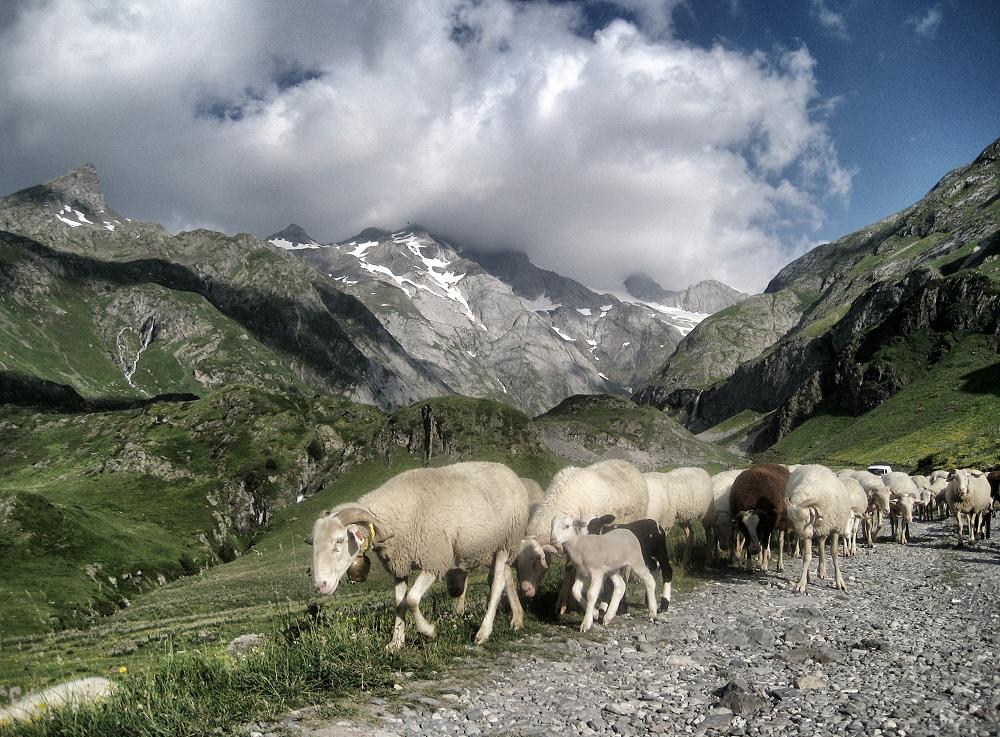
Will Cohu says that "hefting" is a word of quiet wonder that describes how sheep make a secure home in a wilderness. Sheep become attached to a particular area and learn where the best pasture is, where to find water, shelter and the best lambing sites. Sheep learn to "heft" through example. Initially the shepherd teaches the flock and then the ewes teach the lambs and so on through generations of sheep.
Unknowingly I hefted our first small group of dairy goats on our small farm. They came to us from the soft pastures of the Waikato. I had chronic fatigue syndrome and could not walk far. But the goats needed to browse on the many succulent weeds we needed chewed out. So each day we would set out with the alpha female leading. She would decide where and for how long the goats would spend eating a particular patch. I rested while they ate then we would move off to another unexplored place. Over several months we covered the whole farm, including the very steep bits that had seemed at first as unattainable as Everest.
After those months the goats could be left to roam freely. I had recovered my health and had become as hefted to the farm as the goats!
Benedict lived in a cave in the Italian countryside for years before he wrote The Rule of St Benedict, a founding document for Christian monasticism. Although he was a hermit he probably observed shepherds and sheep and exchanged words about weather and livestock as country people do. I like to think that stability, one of the three monastic vows, came out of those humble observations.
Today the treasures of Benedictine spirituality can be lived in our in ordinary lives.
For example the vow of stability has three interconnected components:
First is the external and geographical aspects. Benedict discouraged monks from moving from monastery to monastery. So stability refers geographically to a permanent location. It gives the sense of sticking with whatever life throws in our path. Perhaps the word, "dwell", sums up what Benedict is saying as "dwelling" implies a deep abiding which cannot be rushed.
Second, Benedict grew to be a master of psychology, learned as self-knowledge alone in a cave and then through community monastic life. Stability is about being at home with ourselves wherever we have landed. Stability is the cure for restlessness and discontentment. Paul Tournier, the Swiss doctor and pastoral counsellor, recognised that a sense of place is necessary for psychological well-being.
Third, the core of stability dwells in the heart. The call is discerned in the heart and it is our place of knowing despite all contra-indications.
Benedict and the hefted sheep demonstrate perseverance. In the 1970s I had to cross the Pennines to go to work in Sheffield. As I slid through two feet of snow on Mam Tor, I would see moorland ewes nuzzling into snowy scrub to find food. Later in spring, I saw them with their lambs and marvelled that they could lamb and survive in the conditions. Their perseverance kept them alive. And Benedict's value of stability invites us to focus on the here and now and to stick with the ups and downs right where we are.
In Benedictine spirituality the invitation to persevere in the place where we are, highlights that in that place is where our "best self" will flourish, where we will learn to live with ourself, where forgiveness and healing will take place and where we can take off our mask or other camouflage.
Stability refers to the importance of community and commitment in life. For a monk or nun it refers directly to a commitment to the monastery where they will live for the rest of their life. While we all may not be a member of a monastic order, we can make our vow of stability to our families, to our faith communities, to our local and global communities, and to our fellow pilgrims along the journey of faith. The vow of stability also speaks to our current environmental crisis—for when we remain committed to the earth we learn how to be good stewards of that which God has given us.
From: Friends of St Benedict http://www.benedictfriend.org/article/3/the-rule-of-st-benedict
Gallery