
Capital in the 21st Century
Directed by Justin Pemberton. Reviewed by Paul Sorrell
Based on the bestselling book by Thomas Piketty and directed by Kiwi Justin Pemberton, this compelling documentary might just as well have been titled “Inequality in the 21st Century”, as Piketty’s major thesis is that we are entering an era of massive inequalities of wealth and power, little different from conditions in 18th-century Europe.
Aiming to inform viewers how capital — the accumulation of privately owned goods and property — has developed over time, the film’s survey begins in the 18th century when capital resided in landholdings, owned in vast swathes by the aristocracy, who derived handsome incomes from rents charged to peasant farmers. This pattern changed radically with the Industrial Revolution, when factory owners sought to maximise profits so as to expand their operations. This led in turn to labour being seen as a liability rather than an asset — a trend that has continued unabated despite brief interludes when workers enjoyed a greater share of economic rewards, such as the postwar period.
Familiar waymarkers roll by — the Great Depression, Roosevelt’s New Deal, the stagflation of the 1970s, Thatcherism and Reaganism, the 2008 crash . . . This background lends cogency to the analysis presented by Piketty and his collaborators (including our own Bryce Edwards), as we learn about the hollowing out of the middle class, the tax evasion strategies of mega-companies like Google and Apple and the vast transfer of private wealth that will occur over the next decade as the baby boomers pass on their savings to their children.
Today big money plays it safe, avoiding investment in productive enterprises and speculating in areas like housing. Any job growth is happening at the bottom of the pay scale, in “McJobs” like fast food or Uber driving. As inequalities widen, those at the sharp end scapegoat migrants, Muslims and other “outsiders”, fuelling often violent nativist movements based on exclusion and blame.
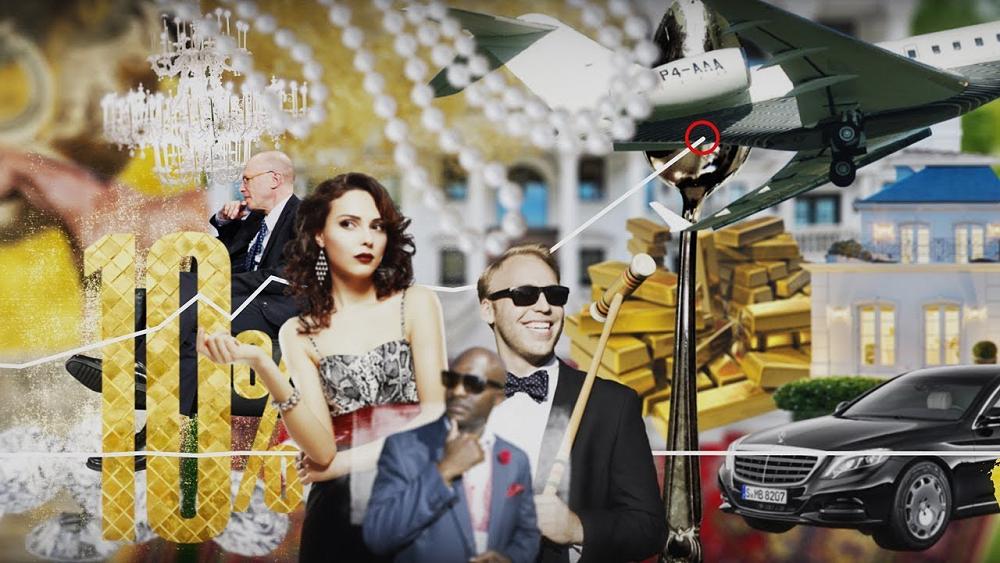
While this film demands our attention, it is no mere procession of talking heads; the soundtrack is enlivened by old documentary and feature film footage as well as inventive graphics and catchy pop tunes — including Lorde’s Royals.
Capital in the 21st Century contains much to inform a Christian analysis of wealth, poverty and inequality. It demonstrates that left to its own devices, any economic system will favour those who hold the largest share of wealth and, therefore, power. The chief culprits are those toxic twins, selfishness and greed. The system, like all of us, is in dire need of redemption.
Tui Motu Magazine. Issue 243 November 2019: 29