
Chaplaincy is a Privilege
Michele Lafferty tells Michael Fitzsimons about her great good fortune in stumbling into the role of hospital chaplain.
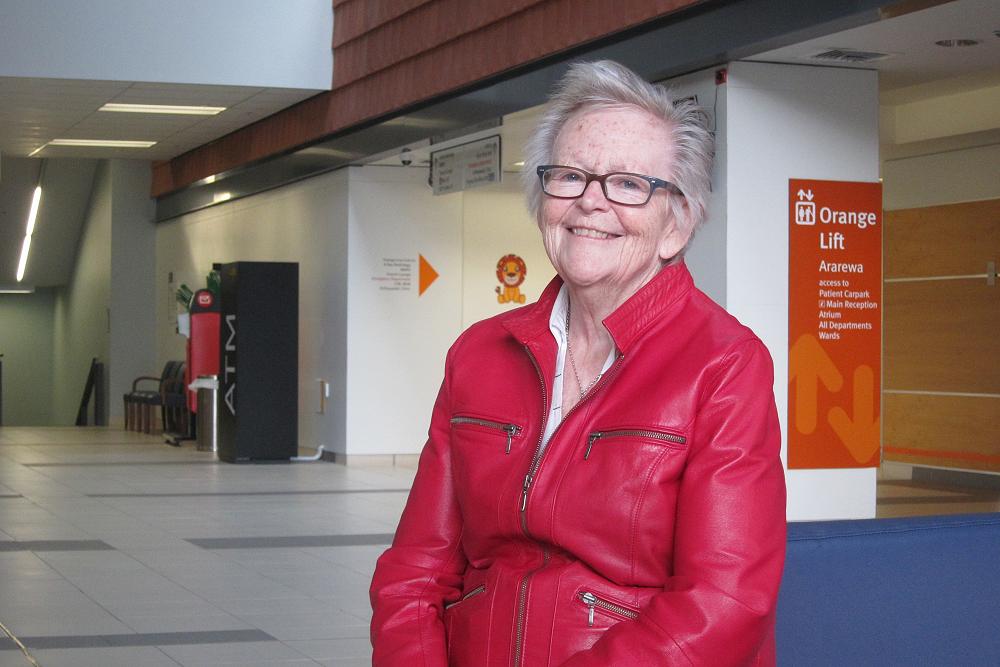
We meet late Friday afternoon in a church hall, a stone’s throw from Wellington hospital, where Michele works four days a week as a Catholic chaplain. She’s wearing a red leather jacket but there’s no sign of a Harley.
Michele Lafferty has been a Catholic chaplain for 18 months and still considers herself a newbie. She has plenty of vitality and a puckish humour that’s quick to surface.
She’s not quite sure how she came to be a chaplain. She was in a big job, manager of Catholic Schools for the Wellington Archdiocese, and had been doing that for 20 years. She did a Clinical Pastoral Education course (CPE) while in the role because a lot of her involvement with principals had a pastoral dimension.
“Then someone asked me if I would be interested in doing 20 hours a week as a chaplain at Wellington Hospital, and without a thought in the world out of my mouth came a ‘Yes’.”
And so she left her Catholic Schools role and took up the chaplaincy position alongside long-time chaplain, Sister Sia, who has been a great mentor to her. They take a number of wards each. Michele’s round includes oncology, ICU and the children’s ward.
The Shock of Sickness
“The thing about being sick — sick enough to be in hospital — is that it usually comes as a surprise,” says Michele.
“Sickness is something you don’t even think about until it hits you. You think you’re healthy until you are sick and then you think: ‘What’s this?’ It’s a surprise event, from the beginning. Even if you have cancer for a long time you have to first get cancer, and you might have been healthy your whole life.
“It’s a surprise to you and the people that love you. Suddenly you’re sick and you are not in control. Often people are quite scared, nervous and frightened and that’s what they want to talk about.
Relating is Key
“The key to the chaplaincy role is relationship. You are someone who isn’t their family, someone they don’t have to worry about telling they’re frightened. So that’s often the beginning. You become a person that they can talk freely to, which is not something I’d thought of. I’m sure that happens to every chaplain in the world — you become an independent person that the patients can tell their worries to. It’s a lovely thing to be that person.
“You do a lot of listening, you hear their stories. You don’t just go in and give communion or say a prayer. You build up a relationship with them. I’ve found it’s easy to build up a relationship with someone who’s sick in bed. It happens quickly. You don’t have to do it over weeks or months. You ask what’s happening, is there anything you can do but mostly it’s just listening to their stories.”
One reason Michele finds fulfilment in the role is that she herself has experienced quite a lot of sickness.
“I think that does help a bit. Not that I would ever discuss it with patients, but I know the feeling of being ill and things being out of control.”
Presence with no Strings
As a Catholic chaplain, Michele organises her visits around those who have declared themselves Roman Catholic on the daily patient list. Mostly, but not always, she gets a good reception. Sometimes it can be a slow process.
“When I visited one woman, she said: ‘No thanks’. So I just kept going and asking how she was doing, every day. And then one day she had someone visiting and she said to her: ‘Oh, this is my friend, Michele’. This was over months. And then one day she said: ‘Oh, I might have a prayer’. And a few weeks later: ‘Communion would be all right’. When she died, her children couldn’t believe she’d told her friends that she wanted the chaplain to be there when she was dying because it had so not been a part of her life.
Learning all the Time
“There’s a lot to learn in this job. Every day I think I’m learning. I don’t think I’d ever be able to say: ‘Oh yes, I know exactly what to do when this happens.’”
The usual routine when she visits is to sit down and have a chat and just listen. And then, if it’s the first time, she asks whether the person would like communion or would like them to say a prayer together. That’s when she offers them what she calls (with a grin) her “turbo-charged blessing”.
“I was in Europe last year where you trip over shrines wherever you are. I started collecting holy water and when I got home I put it all together in one bottle. Now I can give a turbo-charged blessing.
“I say a little prayer and tell them I’m not promising any miracles but that I absolutely believe with all my heart that something good will come of it. And then they look for it and, you know, they’ll tell me something lovely that’s happened. It’s the most amazing thing.”
Giving from my Spirituality
Michele believes that as a chaplain what she brings is “me and the spirituality that I have. I don’t even really think about it being Catholic. I’m bringing me, to be honest. I’m funny sometimes and I’m nice sometimes and I do care. I’m doing my best.
“Your spirituality is what you bring of your relationship with God. You don’t need to be anyone but yourself and people feed off that. It lifts their spirits. What I want people who are sick or dying to think about is the compassion of God. I don’t deny anyone who wants communion because I don’t believe Jesus would.”
Michele is very impressed with the hospital system and the amazing standard of care she observes at so many levels, with the involvement of social workers and whānau alongside health professionals.
“I went to a palliative care meeting recently with doctors, surgeons and nurses. They talked about the patients’ needs, including spiritual needs, and they were into it. At the end of the meeting they lit a little candle. It was really beautiful and I was amazed.”
Visiting Relieves Loneliness
Visiting the sick is a fundamental of the Christian life, says Michele “and you don’t even have to be sick because loneliness makes people sick.”
“As well as the sick, there are many lonely people in our parishes to be ministered to and visited. There are old people who like being in hospital because they have people around them whereas at home there is nobody. Loneliness is huge.
“When you think of how your grandmother lived in a house with all her siblings and mother and father, and maybe a maiden aunt who might have been still there. That was a family community. Often it doesn’t happen now for all kinds of good reasons and so many people live on their own.”
Being a chaplain is not really a job, says Michele. It’s a privilege, a tiring one at times that requires boundaries and a good supervisor, but a privilege nonetheless.
“I’m very lucky.”
Published in Tui Motu InterIslands Magazine. Issue 205, June 2016.