
Peter and Cornelius: Sifting the Tradition Anew - Part One
In this first of a two-part article Mike Riddell looks in a new way at what happened to Peter in Acts 10 and suggests that the event encourages us to sift our tradition to look for clues to negotiate new situations.
We live in interesting times. The claim of Yeats that the centre cannot hold has become an all too literal reality for the citizens of Christchurch and Japan. Both in the recent history of Western thought and in the affairs of the church, we may suspect mere anarchy has been loosed upon the world.
All of us have our own mechanisms for responding to crisis. Some of us shut down, others opt for escapism, and a few brave souls confront the new situation head on. As a generalisation, institutions deny crisis.
But how about faith? How about the long and persistent interplay between humanity and the divine? What of the history of God in the world? I want to propose that Christianity is relatively unique in the history of religions in that it is a self-subverting tradition. That is to say, when the chips are down and the institution threatens to control what it perceives as danger to its own survival, the living spirit it carries in its belly ruptures the regulatory structures and enables a form of evolution.
There’s a kind of IED – an improvised explosive device – buried within the Christian tradition. It’s always present but seldom activated, for good reason. It requires a set of circumstances to arm the device; circumstances that generate a genuine crisis for the survival of the faith. In the history of the Judaeo-Christian tradition, we might look at situations such as the settlement of nomadic peoples in Palestine, the period of Babylonian exile, the inclusion of the Gentiles, the desecration of the Temple, and the abuses of medieval Catholicism as periods that generated explosive reform. Here I’m not talking about institutional reform, but a reconfiguring of self-understanding.
It’s what might be described as theology in extremis. A kind of radical reframing that is normally locked behind glass with the warning: “In case of emergency only”. My thesis is that we are in such an emergency situation currently in the West, where Christianity is crumbling with a haste not seen since the collapse of Russian communism. Of course the church could seek to hide from the crisis by ignoring its surrounding culture. It might indulge in some cheap escapism through Pentecostal smoke and mirrors. It might seek to manage the crisis as the Vatican does, desperately seeking a reverse gear.
None of these strategies are credible or sufficient in a world in which “there’ll be nothing you can measure any more.” It’s time to break the glass and resort to crisis theology.
The Future
Conservatism is a defensive position in relation to the future. It seeks to preserve what has proved useful and valuable in the past against forces that threaten to destroy it. When the barbarians are at the gate, it is perhaps time to guard the treasures against violations. And the great majority of us are conservationists if not conservatives when it comes to looking after natural resources.
The counter position to conservatism is, in my opinion, not liberalism but radicalism. This is a philosophy that while recognising the apparent dangers of the future, acknowledges that it presents an invitation to participate in something worthwhile. Radicalism is the sifting of an inherited tradition for clues to negotiating a previously unknown situation. This is a looking back not to preserve but to equip. Other generations have faced threats and despair before. How did they respond in such a way as to enter the so-called promised land of the future?
It will come as no surprise that I believe our present circumstances at the threshold of the twenty-first century call for radicalism rather than conservatism.
I believe in a God of the open future. It is the openness of an uncreated future that provides hope for humanity. Whatever spiritual journey any of us may subscribe to, it is a journey of becoming – one that requires the element of possibility rather than blind fate. This understanding posits God as luring us into a future as yet uncreated and therefore unknown. I find this more in accord with my experience than a God who calls us to return to the past.
Given that all theology is a legitimation of experience, how might we reconcile this approach to the legacy we have inherited? Can we move forward with the wind of the Spirit at our backs? Can we make our exploration an act of radicalism rather than liberalism?
Forbidden Flesh
In reading Christian tradition from the perspective of contemporary Western society, I want to focus on what is arguably the single most subversive text in the entire canon of scripture.
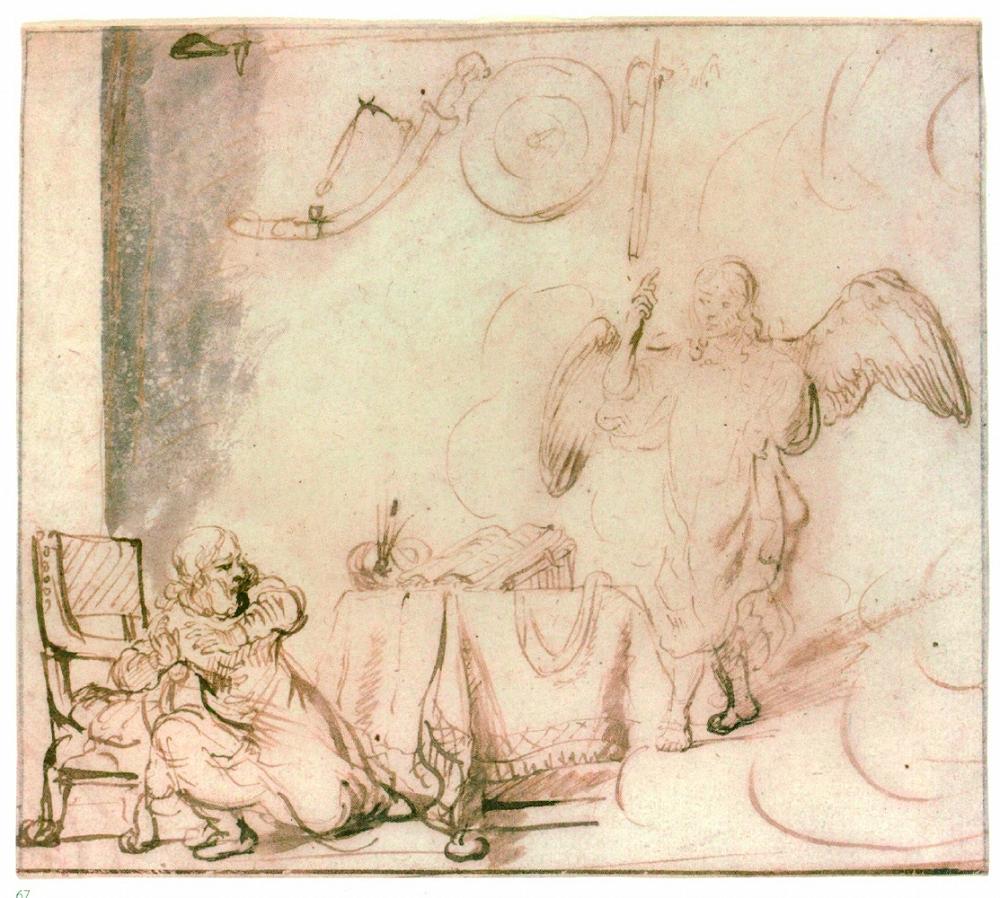
It is the account of Peter’s sojourn in Joppa, as described in chapter 10 of the book of Acts. On the surface it is the story of Cornelius, the Gentile. But in truth it is a conversion experience for Peter. To summarise for those of you who may not have an encyclopaedic knowledge of scripture, the chain of events starts with Cornelius. An earnest seeker after God, despite the fact that to the followers of Jesus he is an infidel, Cornelius receives a visit from the angels. Interesting enough so far, with the reminder that divine work extends far beyond whatever boundaries might be imposed upon it.
The angel instructs Cornelius to travel to the nearby village of Joppa, where at the house of a local tanner he will find Peter. The next day, in his lodgings in Joppa, Peter is praying on the roof of the house. Deep in contemplation, he nods off – as you do. In his dreaming state, he has a vision. A sheet descends from heaven, containing animals of various kinds. And then Peter hears a heavenly voice saying, “Rise Peter, kill and eat.” But Peter, recognising the poisoned chalice, refuses on scriptural grounds. He knows that the food being offered is deemed unclean by the God-given law. But the voice insists: “What God has made clean, you must not call profane.” This is repeated three times, lest the point should be missed.
And there you have the detonation of our IED. In one incident, the entire bedrock of scripture is relativised. What has been given as holy writ and observed faithfully, now turns out to be transitional. To the delight of Pentecostals everywhere, living experience of the voice of God trumps exegesis. In this exchange, Peter is the one exhibiting orthodoxy by championing the received tradition. Unfortunately he makes the mistake of seeking to correct God – somewhat like offering Eric Clapton a few tips on how to improve his guitar playing.
A Subversive Encounter
Of course there is a point to this deadly subversive encounter. While Peter is still struggling to make sense of it all, there’s a knock on the door. He finds the gentile Cornelius eager to learn more. After a bit of storytelling Peter gets to witness the Holy Spirit descending on Cornelius and his entourage. Suddenly it all makes sense. That which was previously unclean is now clean. People who were previously excluded are now included. Eyes, minds and hearts that were previously shut are now open. The ongoing work of God in the world is moving on, and it’s time for people to get with the programme.
Watershed Moments
Theology in extremis. At watershed moments in the history of humanity, the game changes. It had seemed to Peter that he knew what the rules were. Now he’s forced to reconcile three things: his knowledge of scripture; the vision of God speaking; and his experience with Cornelius. In that nexus, something has to give. The result is the broadening of the seemingly fixed boundaries. From now on it’s going to be recognised that what God is doing in the world through Jesus is a whole lot bigger and deeper and wider than had been thought. To stick with the movement requires a substantial rethinking of what’s acceptable and what’s not.