
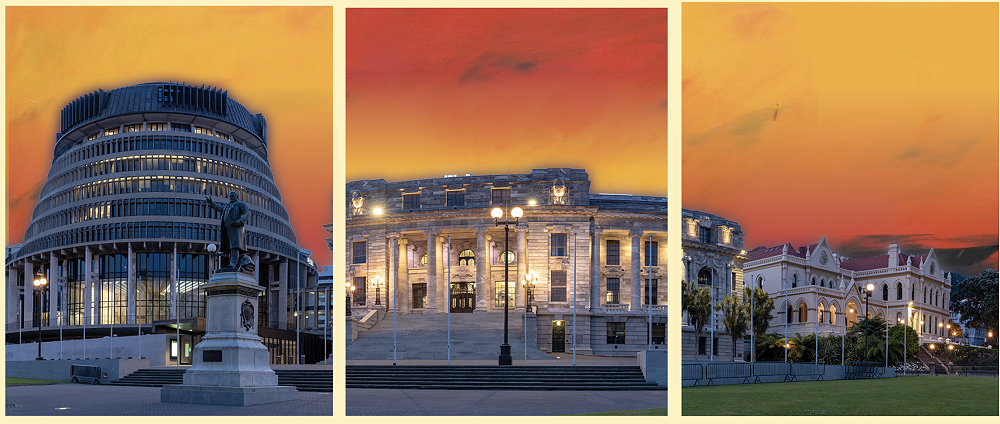
It's about Giving Service
SINCE LEAVING POLITICAL life in 2020, I’m regularly asked two questions. The first is: “Do you miss public life?” To that, my answer is a flat “No”. But then I pause and confess: “Well, I miss the contact with constituents.”
The second question is: “How’s retirement going?” This infuriates me because I’m not retired. I need to work because there’s still the mortgage to pay, and because I want to make a positive contribution. When I respond with a slightly huffy: “I’m not retired”, the inquirer usually comments: “But I thought politicians received a pension for life!”
Let me clear up this myth. Anyone elected to parliament before 1992, and who has served continuously from that date, is entitled to membership of the Government Superannuation Fund scheme which provides a pension when they leave parliament commensurate with their years of service. (1992 is over 20 years ago and I’m not sure there’s anyone left in parliament now who would qualify!)
Members of Parliament (MPs) elected after 1992 are entitled to a superannuation subsidy contribution during the time they serve as an MP. All New Zealand employees are entitled to this subsidy. The MP scheme is generous. An MP can gain a maximum of 8 per cent on top of their salary, if they choose to contribute 8 per cent of their own salary. But that’s it. When they leave parliament they receive three months’ salary from the time of their leaving, which for me was the date of the 2020 election. These conditions are documented on the Remuneration Authority website.
The perks for former and existing MPs were phased out in the mid to late 2000s. The reasoning was sound. There is no cause for elected representatives to continue to benefit from the taxpayer once they cease to be an elected representative.
When I was a new MP I remember sitting in the Labour caucus listening to some of the debates about restricting perks. I was still in awe of the privilege my position provided and would not argue to hold on to allowances and extras afforded to retiring MPs. But I remember the impassioned counterarguments.
I wonder at the lack of media coverage of these changes — then or now. Does the media want to keep alive a false narrative that politicians are “pigs with their heads in the public trough”? I suspect that many people believe that being a member of parliament is a lifelong ticket on the taxpayer-funded gravy train.
The reality is that political life is mostly hard graft, long hours away from family, almost no social life and a lot of stressful moments. Tenure in parliament can be uncertain — you can be voted out, or booted out because of a scandal. And yes, there are many rewarding moments.
Which brings me to the admirable and painful steps two of my former close parliamentary colleagues and friends took in the last months. When Jacinda Ardern announced in January she was stepping down as Prime Minister, her decision would have been the culmination of months of introspection. Sleepless nights. It was not a spur-of-the-moment decision.
And when Chris Hipkins stepped up as prime minister, his was by no means an easy decision. Politics can be thrilling. It is ego-boosting. But it can also be ego-deflating and dangerous to the psyche and to physical health. That Chris chose to step up was a more selfless decision than most will ever know. Whether we support their political party or not, we owe Jacinda and Chris our respect — for themselves and for the generosity of
their service.
As a friend I’m relieved for Jacinda and I worry for Chris. And I’m tremendously proud of both of them.
Tui Motu Magazine. Issue 280 April 2023: 3