
Looking Out and In — September 2018
Starting out.
Taking small steps.
Doing what I can.
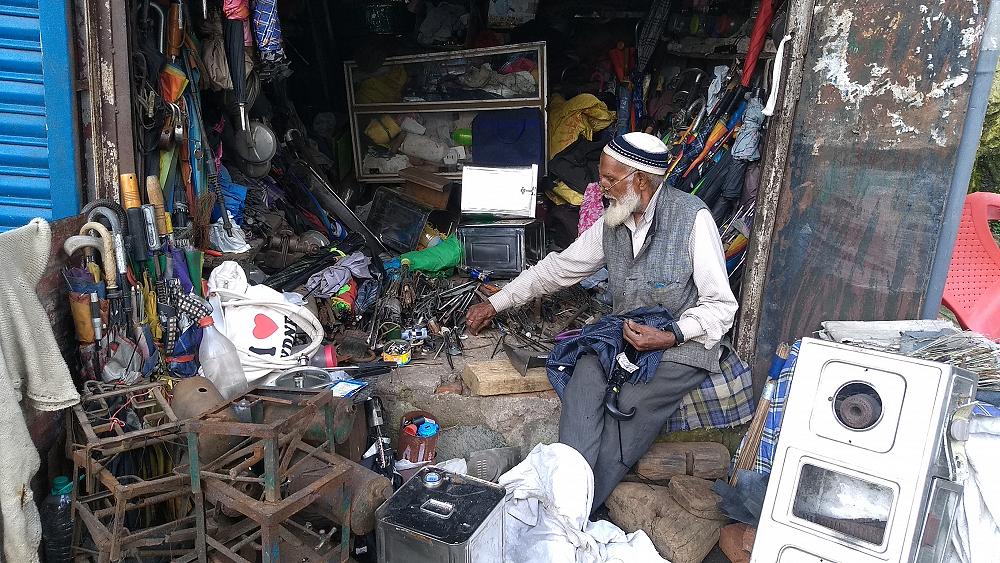
I arrive at Haji Aafa’s shop armed with a sheaf of five broken umbrellas. Haji Aafa repairs kerosene stoves most of the year, with umbrella repairs a seasonal sub-specialty in monsoon. He immediately puts aside the fiddly umbrella handle he is mending to survey the unwieldy tangle of nylon, mould and broken umbrella spokes lashed onto my backpack. One by one he assesses each umbrella, checking his spare parts. And then, in neat Urdu handwriting, he adds up the costs for repairs and spare parts to declare that repairing all five umbrellas will total Rs400 (NZ$8.79). I agree to the price, and he carefully ties up our umbrellas and attaches a tag. “They will be ready by Sunday afternoon.”
My life, almost daily, seems to offer me choices that are vexed and morally complex. On waking, I wonder if I should go cycling to strengthen my legs after recent knee surgery, or spend time helping my daughter with clarinet practice. At work, I query whether to spend time writing a project proposal which could assure funding so our team can continue to work with communities for mental health, or instead sit in the community with a person with psycho-social disability who is lonely. In the evening, do I read a book that can inform, entertain or inspire me, or visit my neighbour who is always keen for me to come and admire her nine-month old granddaughter?
This week, I travelled to the other end of India to teach a session in a course training junior academics in researching health equity. But was this trip a wise use of carbon or time? The return trip meant I spent six hours flying and another six hours in taxis. At the same time, the inequalities in India related to caste, gender, geographical disparity, educational opportunities and access to healthcare are stark. The research evidence to support the need for policy and programmes has been almost entirely absent, meaning building capacity for pro-equity research is urgently needed.
On my way home through Delhi I stayed a night at my cousin’s comfortable, air-conditioned home, rather than visit our friends in a slum who would have loved to see me after many months. I chose to get a good night’s sleep. Instead, I could have chosen to build my relationship with friends who are disadvantaged by all the structural causes of injustice I had been teaching about on the course.
For help with all my daily decisions and priority-setting dilemmas, I could seek discernment in the Scriptures. But then in many ways I love that the Gospels are not prescriptive — that I have to search my heart to find answers to these daily dilemmas. It seems like loving God and loving my neighbour is probably more about who I am than what I do. Perhaps Haji Aafa has got it right — attending to the work that comes to him with full attention, patience and good humour. I, too, can choose to start each day without too much hand-wringing. I can take small steps, starting with the work in front of me. Do what I can.
I arrive at Haji Aafa’s shop armed with a sheaf of five broken umbrellas. Haji Aafa repairs kerosene stoves most of the year, with umbrella repairs a seasonal sub-specialty in monsoon. He immediately puts aside the fiddly umbrella handle he is mending to survey the unwieldy tangle of nylon, mould and broken umbrella spokes lashed onto my backpack. One by one he assesses each umbrella, checking his spare parts. And then, in neat Urdu handwriting, he adds up the costs for repairs and spare parts to declare that repairing all five umbrellas will total Rs400 (NZ$8.79). I agree to the price, and he carefully ties up our umbrellas and attaches a tag. “They will be ready by Sunday afternoon.”
My life, almost daily, seems to offer me choices that are vexed and morally complex. On waking, I wonder if I should go cycling to strengthen my legs after recent knee surgery, or spend time helping my daughter with clarinet practice. At work, I query whether to spend time writing a project proposal which could assure funding so our team can continue to work with communities for mental health, or instead sit in the community with a person with psycho-social disability who is lonely. In the evening, do I read a book that can inform, entertain or inspire me, or visit my neighbour who is always keen for me to come and admire her nine-month old granddaughter?
This week, I travelled to the other end of India to teach a session in a course training junior academics in researching health equity. But was this trip a wise use of carbon or time? The return trip meant I spent six hours flying and another six hours in taxis. At the same time, the inequalities in India related to caste, gender, geographical disparity, educational opportunities and access to healthcare are stark. The research evidence to support the need for policy and programmes has been almost entirely absent, meaning building capacity for pro-equity research is urgently needed.
On my way home through Delhi I stayed a night at my cousin’s comfortable, air-conditioned home, rather than visit our friends in a slum who would have loved to see me after many months. I chose to get a good night’s sleep. Instead, I could have chosen to build my relationship with friends who are disadvantaged by all the structural causes of injustice I had been teaching about on the course.
For help with all my daily decisions and priority-setting dilemmas, I could seek discernment in the Scriptures. But then in many ways I love that the Gospels are not prescriptive — that I have to search my heart to find answers to these daily dilemmas. It seems like loving God and loving my neighbour is probably more about who I am than what I do. Perhaps Haji Aafa has got it right — attending to the work that comes to him with full attention, patience and good humour. I, too, can choose to start each day without too much hand-wringing. I can take small steps, starting with the work in front of me. Do what I can.
Tui Motu Magazine. Issue 230 September 2018: 36