

How Tui Motu Magazine Started
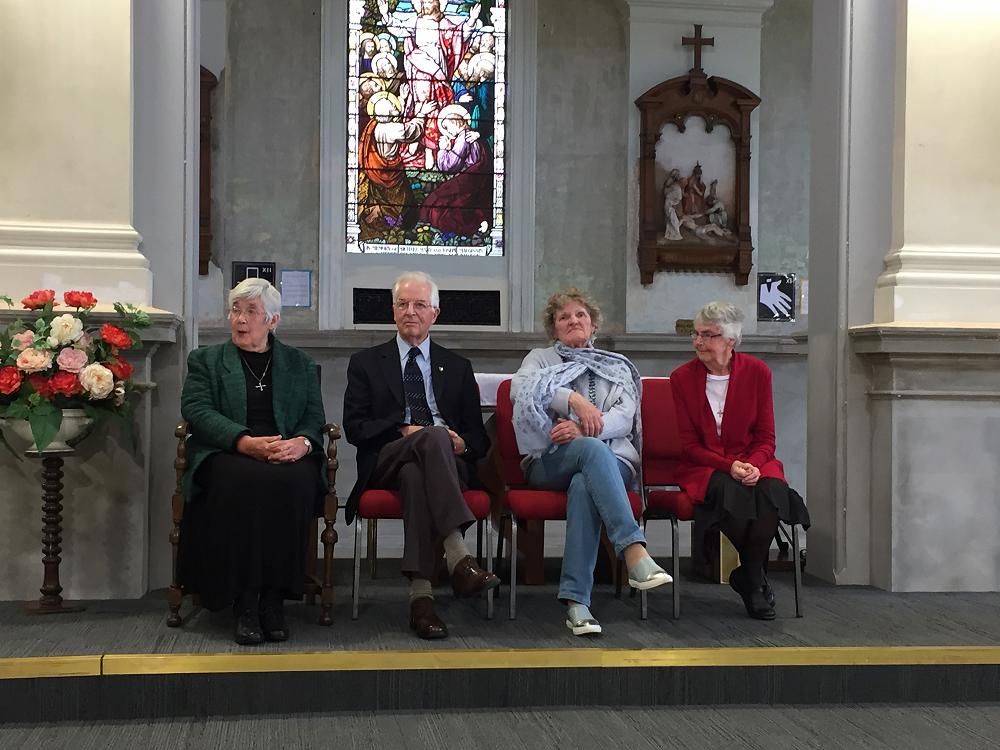
In this extract Rosminian Michael Hill tells how he and Frances Skelton became the first editing team of Tui Motu.
Demise of the New Zealand Tablet
Tui Motu magazine did not simply drop out of the sky. It had its origins in the New Zealand Tablet. When I came to live in Dunedin in 1993 Bishop Boyle invited me to become editor of the New Zealand Tablet, which he owned. I had no journalistic experience and had limited writing expertise. However, I was passionate about the value of good religious journalism. It was important to me that the New Zealand Tablet tried to be objective in its opinions and did not simply repeat the party line. To be critical of what might be going on in the Church is not to be disloyal. It is to note where integrity or truth might be inadequate and propose other ways of achieving the common good.
We were fortunate that Bishop Boyle gave us complete editorial freedom. However, the Tablet Board was interested basically in the business operations of the publishing company, of which the Tablet was one part. The truth was that the Tablet was leaking money at an alarming rate, so when the publishing business ran into financially difficult waters, the Board decided to close the paper.
Many people throughout New Zealand anguished over this decision and over 800 subscribers sent donations to try to keep the Tablet afloat. In vain! The strength of the response indicated that there were many readers who valued its style of independent comment.
New Challenge Emerges
Maura Toomey, a Dunedin teacher, particularly lamented the demise of the New Zealand Tablet and wrote to her brother Kevin Toomey OP, in Rome at the time and assistant to Timothy Radcliffe, Master General of the Dominicans. Kevin heard the alarm and despondency not only from his sister, but also from among the Dominican Sisters. This elicited an interesting response from Rome. The Sisters were having a Congregational meeting in Dunedin when to their astonishment they received a message from the Master General himself. The challenge he set them was: “Rather than complaining over the closure of the paper, what are we Dominicans going to do about it?”
So the Sisters began planning. I was invited to a meeting with them, along with Frances Skelton, who had been my assistant at the Tablet. The Sisters proposed that they were prepared to look at launching a new paper if we would be the editors. I remember that the meeting was on or near the feast of Pentecost — an auspicious date. As a first stage a meeting was held in Auckland of people from all over the country who might be interested in supporting the venture. The interest was high.
I remember doing a logistical exercise at the time to see what it would cost to produce a 32-page, A4-size magazine for 11 issues per year, priced at $4 per copy. The figures told us we would need to attract a readership of at least 2,000 to break even. I showed the budget to a local accountant, who approved it but commented: “There is no fat in this!”
The Dominican Sisters held a further meeting in Christchurch, and after receiving positive support for the idea, they made the decision to go ahead. The Dominican Fathers offered their premises at 52 Union Street West in Dunedin as a publishing office (still Tui Motu’s home). And the Sisters sought and received backing from other Religious Congregations in the country. The Sisters of St Joseph came aboard as co-owners.
Making it Happen
Frances Skelton and I started preparatory work for the magazine at the beginning of 1997. Our first task was to raise money. We produced a brochure to distribute to prospective subscribers, including, of course, the 800 people who had tried to save the New Zealand Tablet. Then we had to learn the necessary computer skills, which was not easy since neither of us was particularly computer literate.
Judith McGinley, Congregational Leader of the Dominican Sisters, and I paid Bishop Boyle a visit to allay his fears that he might be getting a cuckoo in the nest in his diocese. He supported the idea and immediately became a subscriber. Nearly all the New Zealand bishops became subscribers and some have contributed articles or letters. They were supportive from the beginning.
First Issue Is Produced
The first issue of Tui Motu InterIslands magazine was published in September 1997 and it has been produced monthly ever since. And from the start, the editorial team has enjoyed the enthusiastic support of a group of volunteers for promotion and various other necessary tasks.
One defining character of Tui Motu magazine has been the inclusion of what is sometimes called “right brain” material: poetry and prayers, artwork and graphic images to illustrate articles, as well as care with the design and layout. While people buy a magazine to be informed and entertained, it takes more than just words to achieve this. It is perhaps this aspect which has helped earn Tui Motu magazine many accolades from the Australasian religious press associations.
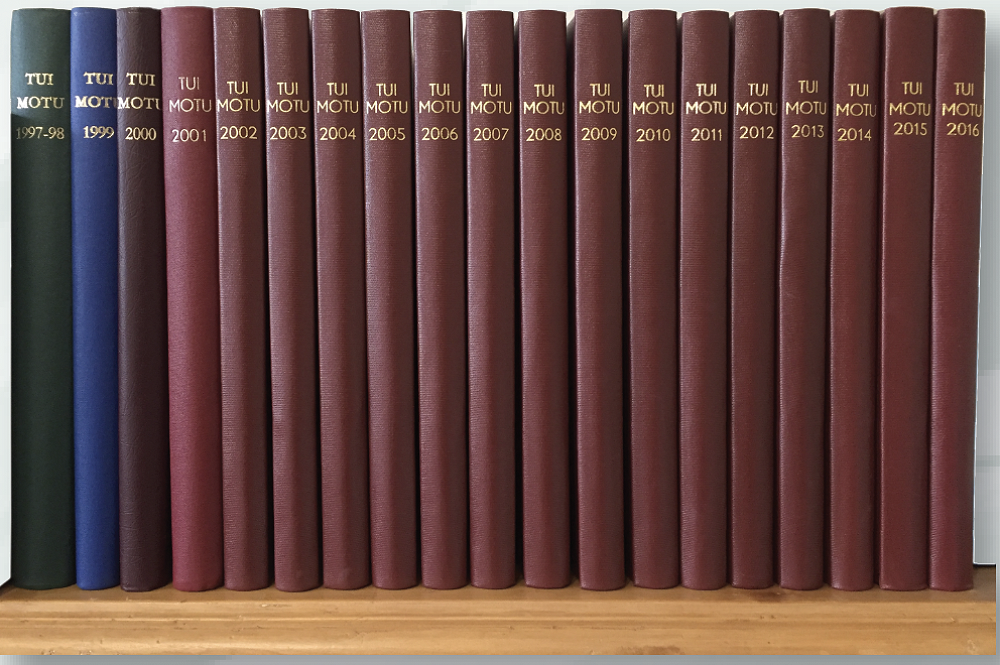
I edited 135 issues of the magazine and finished in February 2010 when Kevin Toomey OP took over. Frances Skelton remained as Assistant Editor until the end of 2010, the 145th issue of Tui Motu magazine.
Full article published in Tui Motu Magazine Issue 209 September 2017: 6-7