
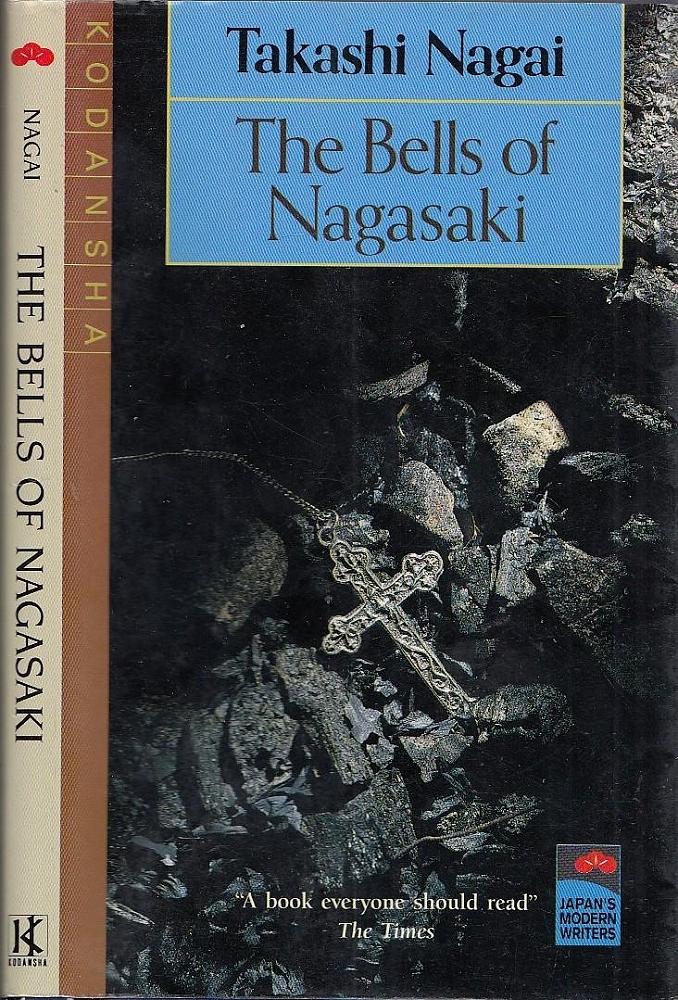
The Bells of Nagasaki
By Takashi Nagai. Published by Kodansha America, 1984. Held in the Rita Mayne Collection, Hewitson Library, Knox College, Dunedin. Reviewed by Simon Rae
The Bells of Nagasaki was written initially in Japanese for Japanese readers and is by Takashi Nagai, professor of radiology in the University of Nagasaki, at the centre of the Urakami district where the bomb fell. He was swept up into the air and buried in rubble as “our Nagasaki School of Medicine lost the battle and was reduced to ashes”. Unlike Dr MacCarthy in A Doctor's War, Professor Nagai understood, scientifically, what had happened. His wife and many colleagues were dead and he had two young children to care for but he set about doing two things. He gathered surviving lecturers, students and nurses and worked to exhaustion caring for those who still clung to life, then, aware that he was scientifically equipped to observe the effects of a new and deadly phenomenon, he noted all he could — in his head, initially having nothing to write with. His survival is described as a “mystery”. A devout Catholic, Nagai’s faith had been nurtured by the cathedral bells ringing the hours of prayer in this ancient centre of Japanese Catholic life. The bells survived the bombing and their fall from a great height.
The book ends with Nagai’s motherless children praying as the bells ring the Angelus and he pleads: “The people of Nagasaki prostrate themselves before God and pray: grant that Nagasaki may be the last atomic wilderness in the history of the world.” After the bombing Nagai wrote a scientific account of his observations followed by The Bells of Nagasaki which has had many printings. He built a little hut on the site where his house had been and where his wife had died and devoted himself to prayer, meditation and peace advocacy. A patriot, Nagai was devastated by Japan’s defeat and, struggling to find a way forward, he concluded simply: “Love your neighbour as yourself. This is the way, the only way, to world peace”. Nagai died in 1951, widely honoured. The English translator William Johnson SJ, a professor at Sophia University, Tokyo and translator of Shusaku Endo’s Silence: A Novel, provides a valuable Introduction.
Tui Motu Magazine. Issue 220, October 2017: