
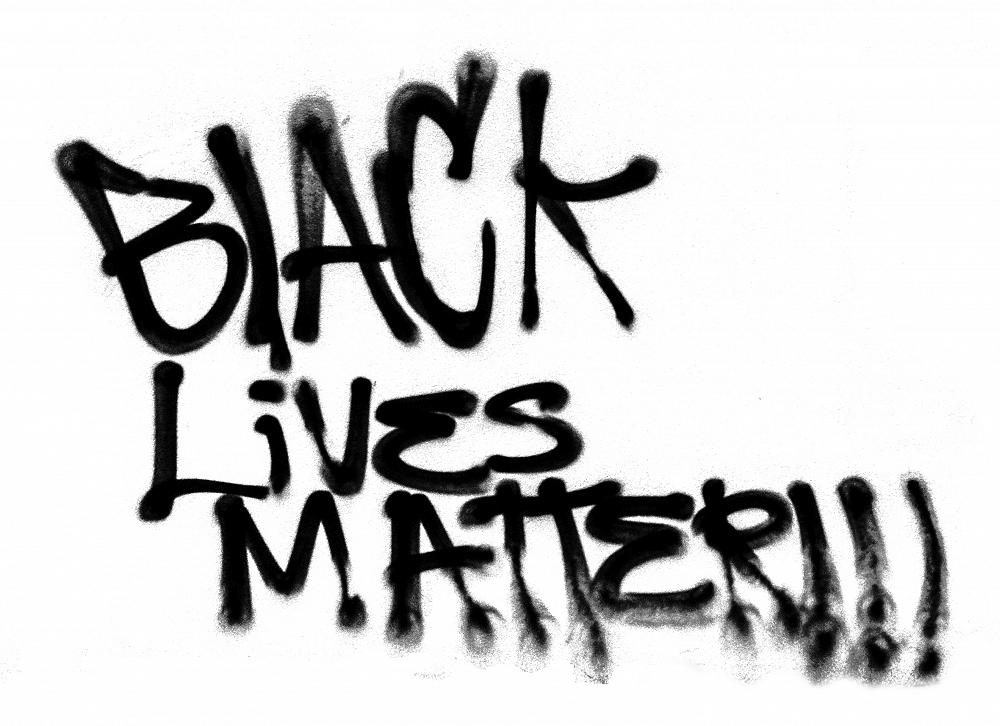
Make Sure Black Lives Matter
Isaac Going, Destiny Lim, Emma Golightly and Aisha Atiq examine the connection between the social issue, Black Lives Matter, and Catholic social justice principles.
Why do you think it is important to educate your Religious Studies classes about this topic?
Teacher: Black Lives Matter is one of the defining issues of our day. From newspaper headlines to the new History curriculum, we see people calling for the recognition and addressing of racial injustices. As Catholics we are inspired by our Social Justice Principles to stand in solidarity with those who are opppressed and to advocate for the human dignity of all people.
Have you ever experienced racism towards yourself or someone you know?
Student: When I was younger, around 10 years old, a boy would regularly say "Konnichiwa" to me, then proceed to pull his eyes backwards and laugh. Not only did he make fun of my facial features but he also assumed I was Japanese when I'm Filipino. Another instance is when I was on a school trip and one of the instructors asked me "How are you enjoying New Zealand so far?" assuming that I was an exchange student.
Do you think New Zealand is as open-minded as our country is made out to be?
Student: I don't think that we are as accepting as a nation because there are so many instances in which Māori and other people of colour are treated differently from Pākehā. One example of this is New Zealand's prison ratio. 52 per cent of our prison population is Māori however only 17 per cent of our population is Māori. I think it is better than what it used to be but a large majority of New Zealanders are still racially prejudged whether it's on purpose or unconscious racism.
Was there a time when someone else did/said something racist and you didn't speak up?
Student: Unfortunately, yes. One of my friends made a racist comment towards someone else and wanting to be "cool", I laughed along. Looking back, I was ignorant of the impact that prejudiced comments can have on people and since then, I've educated myself more on racism and discrimination and have apologised to the person.
What privileges do you have that others don't?
Student: When turning to the media as a white individual, I see people of my race widely represented. I can swear, or dress in second-hand clothes, or get bad grades without having people attribute these choices to the "bad" morals, the "poverty", or the "illiteracy" of my race. If I am accused of a crime, I'm less likely to be presumed guilty, less likely to be sentenced and more likely to be portrayed in a fair manner by the media.
What privileges do you not have that others do?
Student: Being a person of colour, I have to work twice as hard as the average white individual to achieve the same privileges that they are immediately born with. I have to worry about employers judging me based on what I look like rather than the skills I could offer. As a minority, speaking out against the discrimination that I, and many others face, is difficult. However, it is not impossible and I want to do what I can to help future generations.
What is White Privilege?
White privilege means that people who are born with white coloured skin tend to have more opportunities in society than those born with coloured skin. An excerpt from George Cunningham, a student from Pompallier is a prime example of this: “Before studying this topic, I never gave much thought to my unearned privilege because I never noticed it. I don't attract the suspicion of security guards when I walk into a store. I have a white-sounding name which might help me get a job one day. I have never experienced racial abuse. I can see plenty of white faces when I watch a movie, read the news, or browse social media. I realised that these very normal benefits for me are not common to everyone in our society. But perhaps the most powerful privilege I have is to be able to be silent in the face of racial inequality. While I could live in blissful ignorance of the social issues going on around me, to uphold the human dignity of my neighbours I need to stand in solidarity with them."
What is Microaggression?
Microaggression is a form of racism, in which a comment, situation, or action unintentionally subtly discriminates against an ethnic group. It is important to understand that what separates macro- and microaggression is up to the oppressed themselves. However, it is important for all individuals to understand what microaggression can look like on a daily basis for people of colour.
Examples include but are not limited to: assuming a bad driver is Asian, telling someone they "speak good English", clutching your purse in the presence of a person of colour, saying that you or someone else isn't racist because they have a friend of colour.
You may have seen or heard these things. You may have done or said these things yourself.
Subtle or unconscious racism is often swept under the rug in social situations with authority, friends, family.
Effectively, racism thrives as long as microaggressions and like situations continue to occur. We must reconcile with our own faults surrounding microaggression and improve in our daily lives. We must learn to speak out for the hopes of progression in society when unconscious and subtle racism occurs.
Are You Aware of Systematic Racism in New Zealand?
DID YOU KNOW that the percentage of school leavers leaving with less than NCEA Level 1 was 19.1 per cent for Māori and only 7.6 per cent for non-Māori?
DID YOU KNOW that the percentage of adults receiving welfare support was 24.5 per cent for Māori and 7.1 per cent for non-Māori in 2017? And for Māori in 2018, it increased to 24.7 per cent, whereas for non-Māori, decreased to 7 per cent?
DID YOU KNOW that the percentage of the unemployment rate for Māori was 10.1 per cent and for non-Māori 3.9 per cent in 2017? In 2018 the percentage for Māori was 8.9 per cent and for non–Māori was 3.6 per cent.
DID YOU KNOW that the average personal weekly income from wages and salary was $985 for Māori and $1,136 for non-Māori in 2017? For Māori in 2018 the average income was $994 (increase of $9) whereas for non-Māori it was $1,192 (increase of $56).
DID YOU KNOW that in 2017 the imprisonment rate (per 100,000 population) for Māori was 700 and only 122 for non-Māori? In 2018 it increased by 17 for Māori, whereas the non-Māori rate only increased by 4.
DID YOU KNOW that the demand for social housing (per 1,000 households) was 15.5 per cent for Māori and 1.7 per cent for non-Māori in 2017? In 2018 the percentage increased by 24.9 per cent for Māori, however for non-Māori it only increased by 2.8 per cent.
How to Help
To take action against institutional racism you can help those who are being negatively impacted by the system through giving back to those affected. This can be carried out by volunteering for organisations that take care of those suffering and signing petitions for a reform of the system. A way Pompallier students give back is through Young Vinnies — students from our school and around New Zealand serve the less fortunate in their local communities.
Taking action can also involve recognising and gaining a deeper understanding that institutional racism impacts nearIy every aspect of life for people of colour. You can become an advocate through educating others about how our system is causing the bias in favour of white skinned people. This can be achieved through social media, protesting and discussions on how racial discrimination is prevalent in our society.
Overall, through recognising it then creating awareness, we can each play our part in dismantling institutional racism. However, to create effective change will involve solidarity.
Tui Motu Magazine. Issue 265 November 2021: 8-9