
New Companions in the Common Good
Mary Betz discusses how the meaning of the common good now includes all of the Earth community.
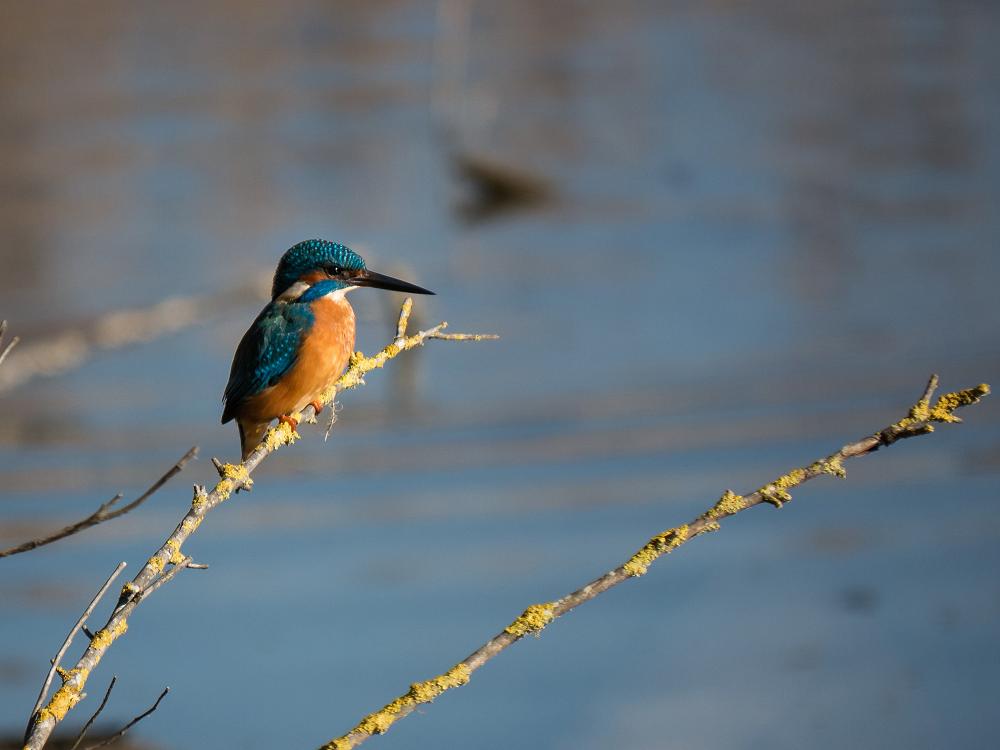
Like many of us, I have walked more over the past few months. I often “loiter with intent” at Paturoa Bay on the Manukau Harbour, where hundreds of oystercatchers overwinter, resting single-legged at the water’s edge. Stilts elegantly prod the shallows. A pair of shelducks squeal and “galumph” as they scour the intertidal zone. Kingfishers perch on overhanging branches, and herons wade knee-deep, alert for the movement of small fish below. A lone cormorant glides along water, then dives, surfacing with a beak full of wriggling smelt. Entranced, I sometimes spend most of an hour with this avian community, grateful that its members share their space with me, allowing me simply to be there as they interact, feed and rest.
Non-human Creation as Family
We, humans, are created beings like the ones I spend time with by the sea. In the experiential knowledge of indigenous peoples all over our globe, the natural world is full of beings as sentient as ourselves. Māori whakapapa includes people, land, sea, forest and all living creatures as family.
Genetics confirms human relatedness to other beings: we share 90 per cent of our DNA with our cats, 80 per cent with cows, 65 per cent with birds and 50 per cent with bananas. As biologist Christopher Uhl reminds us, we are “a part” of the Earth, not “apart” from it. Genesis names the first human “the earth creature” (hā-‘ādām) from the earth (hā-adāmâ). Our English word “human” comes from the same root as humus, the rich nutrient layer of the soil. And Māori name themselves tangata whenua, people of the land.
Kinship in Earth Community
In Laudato Si’, Pope Francis calls us to this almost forgotten kinship relationship with non-human creation using the example of St Francis of Assisi: “He would call creatures, no matter how small, by the name of ‘brother’ or ‘sister’. Such a conviction cannot be written off as naïve romanticism, for it affects the choices which determine our behaviour. If we approach nature and the environment without this openness to awe and wonder, if we no longer speak the language of fraternity and beauty in our relationship with the world, our attitude will be that of masters, consumers, ruthless exploiters, unable to set limits on their immediate needs.”
American Indian theologian George Tinker draws this same conclusion about human behaviour toward the rest of creation: “As fellow createds … there can no longer be any rationale for exploitation and oppression … If we believe we are all relatives … then we must live together differently than we have.”
My avian relatives gift me with awe and wonder. But unbeknown to them, I endanger their survival by the consumer society I am part of. In our “need” for cars, electronics and other possessions, and truer need for food, clothing and homes, humans participate in the destruction of waters, forests and landforms which are always the existing home of other branches of our family. Relentless extraction and processing of minerals and petroleum and intensive, often wasteful and destructive agriculture and forestry practices must give way to kaitiakitanga.
Humans differ from our wider family because we can see the big picture and change the large scale narrative. We know how ecosystems work, how past choices have proven enhancing or damaging, and how today’s decisions will shape the future of our common home. This knowledge and the ability to take action, which can bring our common home to ruin or flourish, give us a huge responsibility.
Teaching on the Common Good
The phrase “common good” has been in Christian parlance since the time of Augustine. Popes from Leo XIII to Francis have spoken of it as the good of all of us, the good of the whole. But that whole has been conceived of as humanity, not our whole Earth community.
In Catholic Social Teaching, the common good is linked with the equitable distribution of social and economic “goods” and more recently, ecological ones like water and climate. We have been charged with the responsibility (accepted or not) to ensure that decisions on the “goods” of Earth are made for the common good of all people.
Extending the Teaching
But the teaching of Pope Francis on kinship with our Earth, coupled with his (and others’) insight that our attitudes toward non-human creation affect our behaviour, leads us to another step in our understanding. What would it mean to work for the common good of our whole common home rather than solely the common good of human beings?
Governments would then have the raison d’etre (John XXII, Mater et Magister) not only to create social conditions, but ecological conditions, to achieve the common good.
The economic sector (industry, business and finance), meant to be used not for wealth creation but as a means of distributive justice (Benedict XVI, Caritas in Veritate), would be charged with ecological responsibility for its use of or impact on the non-human community (which we currently call “natural resources”).
Individuals, already obliged to bring our own interests into harmony with the needs of community (John XXIII, Pacem in Terris), would make decisions not only for the betterment of all human life, but of the whole Earth community.
Living Our New Understanding
My graced avian encounters feed my spirit. But if I don’t translate those kinship experiences into how I live the rest of my life, mine is a false spirituality. As our economy gains traction after COVID-19, I want to be more reflective about how I consume petrol, clothing, meat, electronics or anything I buy. If I need it, was it produced ethically and sustainably or was our common home wantonly damaged because I generate demand for it? Opening our eyes about how production of our “necessities” has led to the tearing of the ecological fabric of our common home — almost beyond repair — should impel us to live differently.
To live for the common good of our common home means not only changing our individual choices, but advocacy. Government, councils and corporations need our support and critique to make decisions on transportation, energy, infrastructure, construction and agriculture which will protect the land, freshwater, sea, animals, plants and climate of our common home.
We can applaud recent policy and standards for freshwater in New Zealand which will make rivers and lakes swimmable again for humans, and habitable for aquatic life, as well as reduce carbon emissions through more tree-planting.
We can push for further reforms to the Emissions Trading Scheme and our carbon emissions budget to ensure we are doing our part to keep climate change from tipping our world into further ecological and social chaos.
We can ask for long overdue adjustments to building standards so solar energy can heat more water and space, water tanks supply more of our water, and buildings are constructed with low-carbon materials. And why aren’t we gradually phasing out petrol vehicles in favour of electric ones?
Living the common good of all our Earth community will protect this wide interdependent family we live among, as well as our own.
For courage and perseverance, and our willingness to learn from all members of our common home, we pray.
Tui Motu Magazine. Issue 250 July 2020: 4-5