A Time to Care for People and Earth
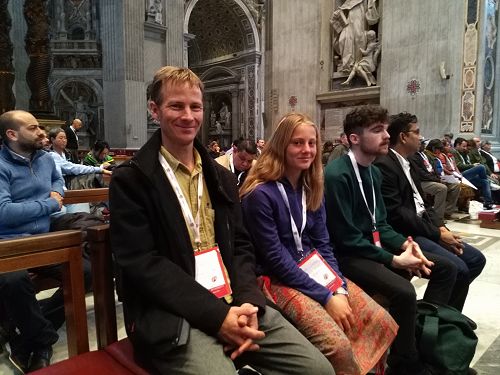
Forrest Chambers and his daughter Maia travelled to Rome in November to participate in the Third World Meeting of Popular Movements. He writes of how capitalism is causing poverty and damage to our planet and of Pope Francis's encouragement of all people to tackle the root causes of poverty.
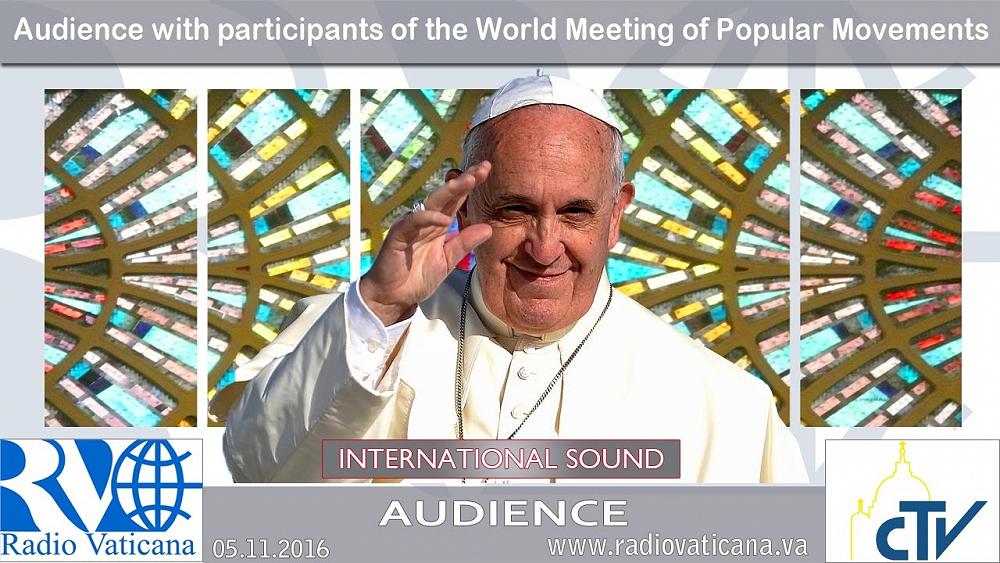
“The world’s future depends not solely on world leaders. It is fundamentally in the hands of peoples who are working for change,” Pope Francis said to the 2015 Second World Meeting of Popular Movements in Bolivia.
A "popular movement" is people
gathered around an issue working for change; those who see or experience suffering, organise to prevent it in order to improve the lives of the poor and
the environment.
Third World Meeting of Popular Movements in Rome
The Third World Meeting in November this year was attended by a rich diversity of people - "waste pickers" (recyclers), prisoners, street vendors, refugees, campesinos (peasant farmers), slum dwellers, seed-savers and the unemployed – to name a few. The 150 delegates from 70 countries (see video below) represent the people concerned with the future of humanity.
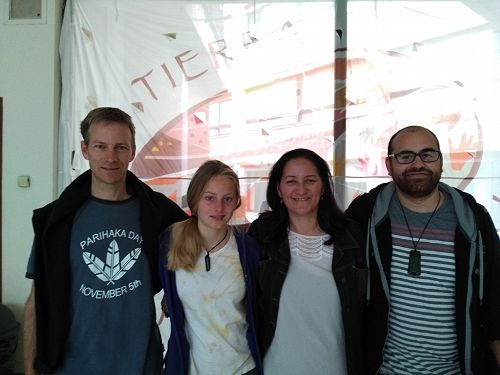
Three New Zealand delegates participated. Te Ao Pritchard of the Auckland Pacific Panthers (a Polynesian activist group), Taneora Ryall of the Council of Trade Unions and myself with my 14-year-old daughter Maia, as Catholic Workers.
Differences in World Contexts
As Kiwis we were struck by the difference between our context, a wealthy country with an imperfect but still comprehensive social service, and the "third world" countries of many other delegates. For example, we paid tribute to Berta Caceres of Honduras, a delegate at the First Popular Movements Meeting in 2014, who had been murdered in 2015 because of her work organising the campesinos to resist land-grabbing. No one has faced trial for her murder. The people in such countries live in poverty and struggle for survival every day.
Key Issues - Land, Labour and Lodging
We discussed three key topics: land, labour and lodging. There was a consensus that increasing poverty and environmental destruction is caused ultimately by the logic of capitalism and pursuit of wealth. The philosophy of capitalism regards people and nature as exploitable and expendable resources. As Pope Francis said: "Money has become the idol which tyrannises us and consumes the world."
Although I was surprised at how few Catholics attended the convention and while the discussion focused on "practical solutions" with less attention to theological reflection on the bigger issues, I could also see Pope Francis's recognition that tackling the problems is the mahi of all people (of all faiths and no faith).
Speaking directly to the Church the Pope reminds us that the Gospel calls us to work with and for the poor, addressing the root causes of poverty and suffering as extensions of the works of mercy. It is not enough to lead a life of "personal holiness" without concern for the suffering of our sisters and brothers in poverty and for the state of the planet.
A world dominated by money exploits our fear. Fear leads us to build bigger walls, armies and pension funds – which ultimately leads to exclusion, environmental destruction and a world in which we are all endangered. This in turn heightens our fears. It is a vicious circle.
Francis proposes mercy as the antidote to fear together with a "joyful, unselfish, and disciplined austerity". He recommends that we do not indulge in the world of wealth with its empty promises of happiness and security. “Your example (of how you live) is more powerful than words, Facebooking, and Tweets.”
Call to Work Locally
The Third World Meeting was also the last and from now people will meet and work regionally. We recognise that there is much to be done and that we need to clarify what should be done to tackle the "spirit of money" dominating human life. Pope Francis is giving a clear direction.
To become involved or for more information try your local groups, or:
The Catholic Worker
Caritas Aotearoa New Zealand
Gallery