
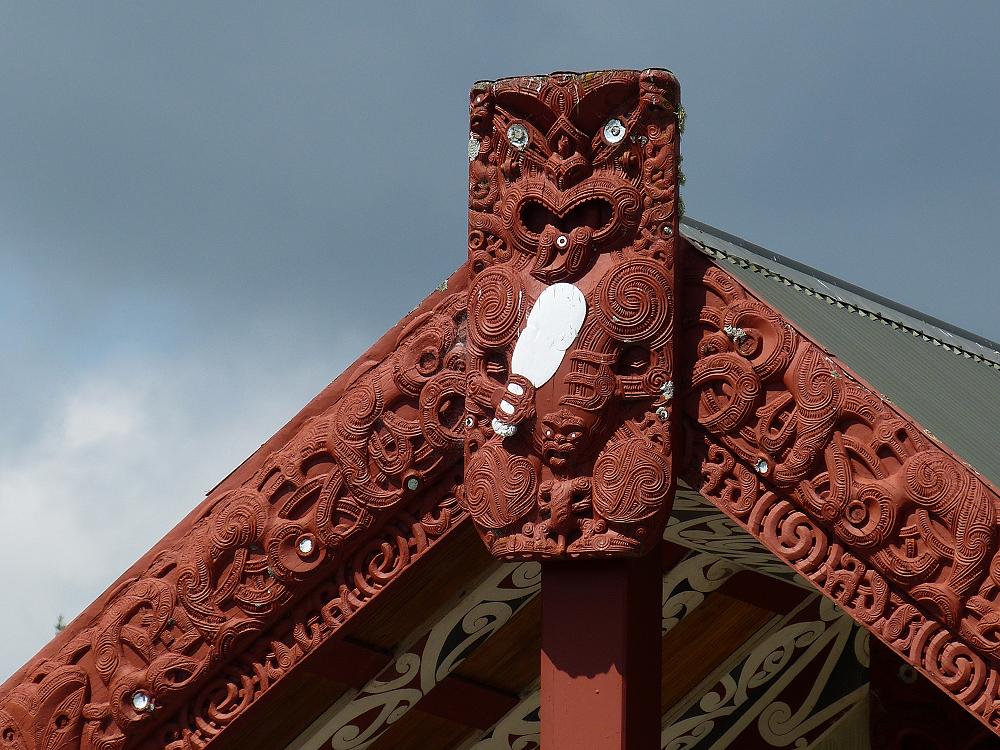
A Role For Everyone
MANUEL BEAZLEY explains that when his whānau gather for a tangi or hui they take on roles which ensure that the mana of all is acknowledged and reverenced.
I was born and grew up in Auckland, but my family ancestry is connected to two small villages (in fact, only a marae, a church and a smattering of houses make up the villages) in the Hokianga, Northland. My family almost always refer to our villages of Omanaia and Motukaraka as “home” even though none of us live or have ever lived there.
Every time we go “home” for a tangi or a hui, it never ceases to amaze me how smoothly these functions are run. We have become quite good at putting on these gatherings, as have many other marae around the country.
Very few of my whānau live up home now and those who do are mainly all kuia and kaumātua. The younger generations have either been born in the cities, or have left home in search of work or higher education. So, it is a small miracle perhaps that the hui happen at all considering the limited workforce available.
Learning Kaiwhakakapi Tangata
Why, then, are we so good at it?
On the marae, and in our whānau, hapū and iwi, tikanga is the principle of kaiwhakakapi tangata. On the marae there are roles and each role has someone to fulfil it. When I was growing up, my grandfather decided that I would be the one that would become a speaker for my family. I remember having to go with him to all the hui and sit beside him absorbing all the korero, learning the art of oratory in a Māori way. I also remember countless times being at hui looking out the door of the wharenui watching all the other kids playing, desiring desperately to join them. Instead, I was stuck with all the elders inside. It felt like prison.
As the years passed, those kids playing outside no longer played. Instead, they took their place in the kitchen, out on the water fishing or up in the block slaughtering the beast. Again, I wished I was there too — anywhere but in the wharenui.
Practising Our Roles
I can remember being at one hui when I was 17 years old. I was in my usual place beside my grandfather. I knew our kawa very well by then, and so I knew it was his turn to speak soon. The previous speaker had just sat down and so I expected my grandfather to stand. However, this time, out of the blue, he leaned his tokotoko to me and said: “Okay boy, your turn now.” He looked into my eyes with pride, gave me a little smile and away I went. Well, I haven’t stopped speaking since!
So I’ve learnt that my role on the marae is to speak. My brothers and sisters work in the kitchen. My mum and my aunties give the orders. My cousins, uncles and everyone else have their roles, too. We all know our roles so well that when we have a hui we go straight to those roles without even thinking. It is the DNA of the marae. And that’s why we are so good at hosting hui. We know our roles and do them without interfering with the roles of others.
Why Participation Is Necessary
Tika, pono and aroha are fundamental concepts in the Maori worldview. They are the means by which mana is demonstrated, enhanced or restored. When tika is present or something is tika, there is a correct ordering of relationships; things are being done in a way that is just and correct. In the context of a hui on the marae, it is tika that there is a pōwhiri – a welcome offered to the visitors — so that they will be acknowledged and subsequently made to feel at home and relationships built. It is not tika that visitors be ignored or not offered hospitality.
When there is pono, there is a sense of truth and integrity about the occasion or the interaction. Again, in a hui setting, if the purpose of the hui is to discuss a serious or contentious matter, all who wish to be involved are given the opportunity to participate. In order to be pono, all those who wish to speak may do so, no matter how controversial or offensive their comments might be perceived to be. Nothing is off the table. The free exchange of korero is pono in the sense that those who speak to the kaupapa do so freely and those who wish to affirm or challenge have an opportunity to do so. A process which is pono works to ensure that there is spiritual, emotional and physical safety for all the participants. Navigating the way to a successful resolution can be a challenge, but this too is an element of pono. To leave a kaupapa without resolving it would not be pono. Demonstrating pono in this context requires integrity of purpose and process.
Aroha essentially means love. When acting in a spirit of aroha, our words and actions express not only love but also a myriad of other elements such as compassion, respect and empathy for others and for the environment around us. Aroha is at once the source of tika and pono and it is also the fruit of tika and pono. We cannot possibly demonstrate tika or pono without the ability to love. When someone or something is tika or pono this invariably increases the aroha shown or felt towards the person or thing.
Mana Is Upheld
When the roles necessary for a marae to function are carried out with tika, pono and aroha, the mana of our marae is upheld. Each of us has our tasks to do and we have the freedom and duty to do them. None of these roles is more or less important. Each of them is necessary for the smooth running of our hui but also for the life of our hapū. Now, when I attend hui up home and other places, I look outside through the doors of the wharenui and I am completely happy to be inside. This is where I belong. This is my role.
Tui Motu magazine Issue 216 June 2017: 6-7